

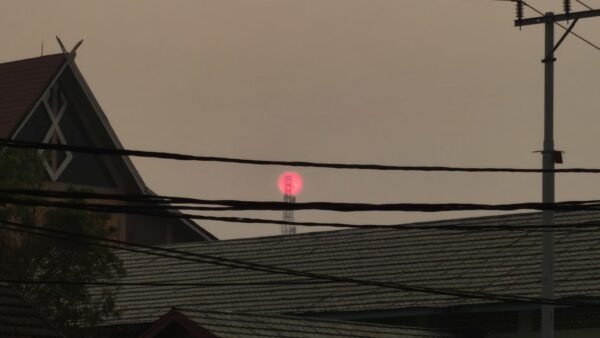
Malaysia’s government will raise the issue of transboundary haze at an Association of Southeast Asian Nations (ASEAN) foreign ministers’ meeting ahead of the bloc’s 49th Summit in Manila next month.
Over the past four months, massive wildfires have raged across Indonesia, particularly on the islands of Borneo and Sumatra, causing a toxic haze that has seriously impacted Malaysia, Brunei, Singapore, and parts of the Philippines.
Foreign Minister Mohamad Hasan told reporters in Sepang yesterday that the haze issue required special attention as it was not covered by existing ASEAN mechanisms for natural disasters, the state media agency Bernama reported.
“We already have an ASEAN mechanism for natural disasters, but haze is not included or classified as a natural disaster,” he said. “So, this will be one of the issues that I will personally raise at the meeting with my counterparts.”
Air pollution from the fires, which have been prolonged and exacerbated by an unusually severe dry season, has forced the closure of schools across Malaysia in recent weeks. Last week, the government ordered schools to close in Melaka, Negri Sembilan, Selangor, Kuala Lumpur, and Putrajaya due to the worsening haze. The Malaysian capital rated among the world’s most polluted major cities globally. This came after hundreds of schools across the state of Sarawak on Borneo shut last month due to the hazardous air pollution in neighboring Kalimantan.
Malaysia has already been in touch with the Indonesian authorities about the fires. Last week, Prime Minister Anwar Ibrahim said that he had discussed the situation with Indonesian President Prabowo Subianto, who had “agreed to take the necessary steps.”
Mohamad Hasan said yesterday that Indonesia’s new foreign minister Arrmanatha Nasir had informed him that poor visibility in affected areas was hampering aerial firefighting operations. Many of the fires were also located deep inland, where water supplies were limited, and that some were in peatland areas, where fire-fighting is particularly challenging.
“Indonesia has between three to four aeroplanes and 34 helicopters, but they cannot take off because visibility is so poor that it is unsafe for any flights in the affected areas,” he said, as per Bernama.
Rizal Irawan, a senior official at Indonesia’s Environment Ministry, said last month that the country’s authorities were investigating 19 companies that it believes may be linked to the wildfires, and said it would investigate who might be responsible. Whether or not these investigations result in prosecutions and punishments remains to be seen.
“Transboundary haze” has become a seasonal crisis in large parts of Southeast Asia, much of it caused by agricultural burn-off on monoculture plantations, including palm oil, maize, paper pulp, and sugar. These are compounded by vehicle and industrial emissions and naturally occurring dry season forest fires.
This year’s particularly prolonged haze season has once again exposed the void in national and regional efforts to combat the problem. Some nations have introduced their own legislation to tackle the haze problem, but effective enforcement requires support from the nation where the fires are located, something which has not always been forthcoming.
In 2002, ASEAN member states signed the ASEAN Agreement on Transboundary Haze Pollution (AATHP), a recognition of the need “to co-ordinate national action for preventing and monitoring transboundary haze pollution.” In April, the 11-nation bloc inaugurated the ASEAN Coordinating Center for Transboundary Haze Pollution Control in Jakarta, which reflects member states’ “shared determination to achieve a haze-free region through stronger cooperation and faster response,” as Environment Minister Hanif Faisol Nurofiq put it at the time.
Much like the bloc’s human rights instruments, however, the AATHP and other ASEAN mechanisms are weighted heavily toward consensus and national sovereignty. As Rizky Ihsan of Griffith University put it in a recent article, “rather than restricting the states that signed up to it, the AATHP was designed to be acceptable to them.” Under the agreement, Rizky argued, “national governments have considerable control over how problems are reported, how emergencies are defined, and when outside help is requested.” He noted that similar issues also apply to the new Coordinating Center, which “will assist only when the national authority declares an emergency and asks for help.”
ASEAN is clearly aware that more effective regional mechanisms are necessary to combat the problem. Further discussions at next month’s ASEAN Summit to this end could be a welcome, if belated, move in this direction.
The challenge is that it not only requires cooperation between nations that often jealously guard their own sovereign prerogatives; it also, in many cases, requires confrontations with entrenched business interests that are unpalatable for national governments, and likely very challenging for regional mechanisms. Without serious coordination and a willingness to cede a degree of sovereignty in the service of the regional interest, Southeast Asia’s annual haze problem is only likely to continue.
