

HAL will expand AL-31FP engine capacity from 30 to 50 a year at Koraput and add a second Shakti line to support India’s fighter and helicopter fleets.
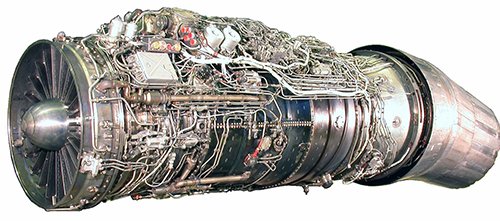
AL-31FP turbofan engine in a manufacturer product image. Image: HAL.
India’s Ministry of Defence (MoD) announced on 6 October 2026 that Hindustan Aeronautics Limited (HAL) will raise its annual AL-31FP turbofan production capacity from 30 to 50 engines. According to Defence Minister Rajnath Singh, the expansion involves an investment of ₹335 crore.
The announcement came during Singh’s visit to HAL’s Koraput Division in Odisha, where he witnessed the delivery of its 2,000th aero-engine. Since it was established in 1964, the division has manufactured engines for the MiG-21, MiG-27, MiG-29 and Su-30MKI and overhauled more than 9,000 engines.
The Indian Air Force’s (IAF) Su-30MKI fleet uses the AL-31FP. In September 2024, the MoD placed an order with HAL for 240 engines under a ₹26,000 crore (US$3 billion) contract scheduled for completion by 2032. Singh said the company handed over the first engine ahead of schedule despite disruptions to global supply chains and raw-material difficulties.
HAL’s deliveries reached 63 AL-31FP engines by the end of the program’s second year, exceeding the target of 60. Production of the remaining 177 engines under the order will now proceed at 50 a year.
An indigenization target is also part of the order. HAL expects the AL-31FP’s indigenous content to rise to 63% by the contract’s end, with an average of more than 54% over the full production run.
HAL is undertaking the engine work alongside its airframe obligations for the Su-30MKI. A December 2024 agreement requires the company to supply 12 additional fighters for ₹13,500 crore (US$1.58 billion).
Singh also used the Koraput event to announce a second Shakti engine production line at the facility, with ₹218 crore in investment. The line is designed to produce up to 100 engines annually and is scheduled to be fully established by 2028-29. Its additional capacity is intended to bolster domestic aero-engine supply as orders for indigenous military helicopters rise sharply.
An Indian derivative of Safran’s Ardiden 1H1, the Shakti powers HAL’s Dhruv advanced light helicopter and Prachand light combat helicopter. Together, the AL-31FP and Shakti projects account for the ₹553 crore in combined investment announced at Koraput.
Calling the aero-engine the “heart” of an aircraft, Singh said reliable propulsion enables advanced airframes, radars, weapons and avionics to be used to their full potential. He said aerospace self-reliance must include indigenous aero-engine capability, especially for the Advanced Medium Combat Aircraft (AMCA) program.
For helicopters, Singh said the Defence Forces require engines available when needed, with support throughout their lifecycle and upgrades that keep pace with technological change. The MoD said the Koraput delivery calls for a propulsion ecosystem bringing together micro, small and medium enterprises (MSMEs), start-ups, industry, academia and research institutions.
The government has also put forward an investment of about ₹5,000 crore for an indigenous high-thrust engine program. Singh urged HAL to expand Koraput’s role from engine production to a broader aerospace propulsion ecosystem.
HAL has since appointed DRDO Director General (Aero) Anindya Biswas to its board as a government nominee director, effective 7 October 2026. Its next quarterly results are due to be reported on 11 November 2026.
