
Close Menu
Defence Line
    What's Hot

    Defence Secretary visits Defence Services Staff College, Wellington for convocation ceremony of 81st Staff Course

    April 11, 2026

    Enhancing Nuclear Triad With INS Aridhaman’s Stealthy Induction

    April 11, 2026

    The UAV-Enabled Anti-Air Defense Campaign in the Third Gulf War

    April 11, 2026
    Facebook X (Twitter) Instagram
    • Home
    Facebook X (Twitter) Instagram
    Defence LineDefence Line
    • Home
    • Asia Pacific
    • US-Russia
    • NATO Europe
    Subscribe
    Defence Line
    Home»India Defence»How The Ghatak UCAV Approval Might Finally Give The Kaveri Engine Its Wings
    India Defence

    How The Ghatak UCAV Approval Might Finally Give The Kaveri Engine Its Wings

    Defenceline WebdeskBy Defenceline WebdeskMarch 5, 2026No Comments3 Mins Read
    Facebook Twitter Pinterest LinkedIn Tumblr Email
    Share
    Facebook Twitter LinkedIn Pinterest Email


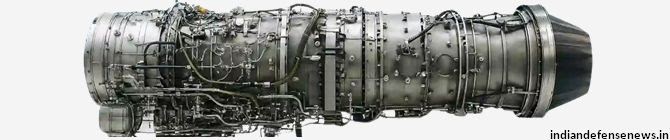
    The long-awaited Kaveri engine, once intended to be the heart of India’s premier fighter jets, appears to have found a new lease on life through the shadows of stealth technology. Recent recommendations by the Defence Procurement Board to acquire 60 Ghatak Unmanned Combat Aerial Vehicles (UCAVs) have effectively pivoted the Kaveri program from a stalled ambition into a critical strategic asset, The Week reported. 

    This move signals a significant shift in how India intends to achieve self-reliance in aerospace propulsion.

    Developing a domestic jet engine is widely considered the “holy grail” of aeronautical engineering, a feat only a handful of nations have mastered. The Gas Turbine Research Establishment (GTRE) has spent decades refining the Kaveri, but the engine famously struggled to meet the high-thrust demands required for the TEJAS in full combat configuration.

    By transitioning the project toward the Ghatak drone, engineers have cleverly bypassed the need for a complex afterburner, focusing instead on a “dry” derivative of the engine.

    A “dry” engine operates without the additional fuel injection of an afterburner, which is typically used by supersonic fighters to achieve bursts of high speed. For a stealth UCAV like the Ghatak, removing the afterburner is not a compromise but a tactical advantage.

    The absence of the afterburner significantly reduces the aircraft’s infrared signature, making it much harder for heat-seeking missiles and enemy sensors to track, thereby enhancing its “invisible” profile.

    The Ghatak itself is a sophisticated evolution of the Autonomous Unmanned Research Aircraft (AURA) project. Designed as a flying-wing aircraft, it lacks the vertical tail fins found on traditional planes, a design choice specifically intended to deflect radar waves.

    This shape, combined with the dry Kaveri engine, allows the drone to penetrate deep into contested airspace to perform high-stakes missions such as the Suppression of Enemy Air Defences (SEAD) and Destruction of Enemy Air Defences (DEAD).

    In terms of performance, the Kaveri-powered Ghatak is expected to operate at high subsonic speeds, reaching approximately Mach 0.9. With a service ceiling of 13,000 metres and a two-hour mission endurance, the drone provides the Indian armed forces with a persistent, low-observable platform for both reconnaissance and precision strikes. These specifications suggest a highly capable “loitering” weapon system that can wait for the opportune moment to strike without being detected.

    The procurement recommendation for 60 units is more than just a purchase order; it is a vote of confidence in indigenous research and development. It provides the GTRE with a stable production run and real-world flight data, which are essential for the iterative process of engine design.

    If the Kaveri performs reliably in the Ghatak, it could pave the way for more powerful variants to eventually find their way back into manned fighter programs or larger transport aircraft.

    The integration of the Kaveri engine and the Ghatak UCAV represents a pragmatic “Plan B” that has turned into a primary strategic objective. By matching the engine’s current capabilities with a platform that specifically benefits from its “dry” configuration, India is successfully bridging the gap between experimental technology and operational military hardware.

    The Kaveri may not have powered the TEJAS into the supersonic realm, but it is now poised to power India into the era of autonomous stealth warfare.

    The Week


    Source link

    Share. Facebook Twitter Pinterest LinkedIn Tumblr Email
    Defenceline Webdesk

    Related Posts

    Defence Secretary visits Defence Services Staff College, Wellington for convocation ceremony of 81st Staff Course

    April 11, 2026

    Enhancing Nuclear Triad With INS Aridhaman’s Stealthy Induction

    April 11, 2026

    Jaishankar calls for ‘collective stewardship’ as Indian Ocean faces rising turbulence

    April 11, 2026

    Beijing’s ‘Invisible’ Pivot: The Strategic And Financial Stakes of Pakistan’s J-35 Stealth Acquisition

    April 11, 2026
    Add A Comment

    Comments are closed.

    Economy News

    Defence Secretary visits Defence Services Staff College, Wellington for convocation ceremony of 81st Staff Course

    India Defence April 11, 2026

    New Delhi. Defence Secretary Rajesh Kumar Singh visited the Defence Services Staff College (DSSC) at…

    Enhancing Nuclear Triad With INS Aridhaman’s Stealthy Induction

    April 11, 2026

    The UAV-Enabled Anti-Air Defense Campaign in the Third Gulf War

    April 11, 2026
    Top Trending

    Defence Secretary visits Defence Services Staff College, Wellington for convocation ceremony of 81st Staff Course

    India Defence April 11, 2026

    New Delhi. Defence Secretary Rajesh Kumar Singh visited the Defence Services Staff…

    Enhancing Nuclear Triad With INS Aridhaman’s Stealthy Induction

    India Defence April 11, 2026

    India has taken a significant stride in fortifying its nuclear deterrence posture…

    The UAV-Enabled Anti-Air Defense Campaign in the Third Gulf War

    Strategic Affairs April 11, 2026

    FPRI The current American and Israeli campaign against Iran has demonstrated the…

    Subscribe to News

    Get the latest sports news from NewsSite about world, sports and politics.

    Facebook X (Twitter) Pinterest Vimeo WhatsApp TikTok Instagram

    News

    • World
    • US Politics
    • EU Politics
    • Business
    • Opinions
    • Connections
    • Science

    Company

    • Information
    • Advertising
    • Classified Ads
    • Contact Info
    • Do Not Sell Data
    • GDPR Policy
    • Media Kits

    Services

    • Subscriptions
    • Customer Support
    • Bulk Packages
    • Newsletters
    • Sponsored News
    • Work With Us

    Subscribe to Updates

    Get the latest creative news from FooBar about art, design and business.

    © 2026 Defenceline. Designed by Digitwebs.
    • Privacy Policy
    • Terms
    • Accessibility

    Type above and press Enter to search. Press Esc to cancel.