

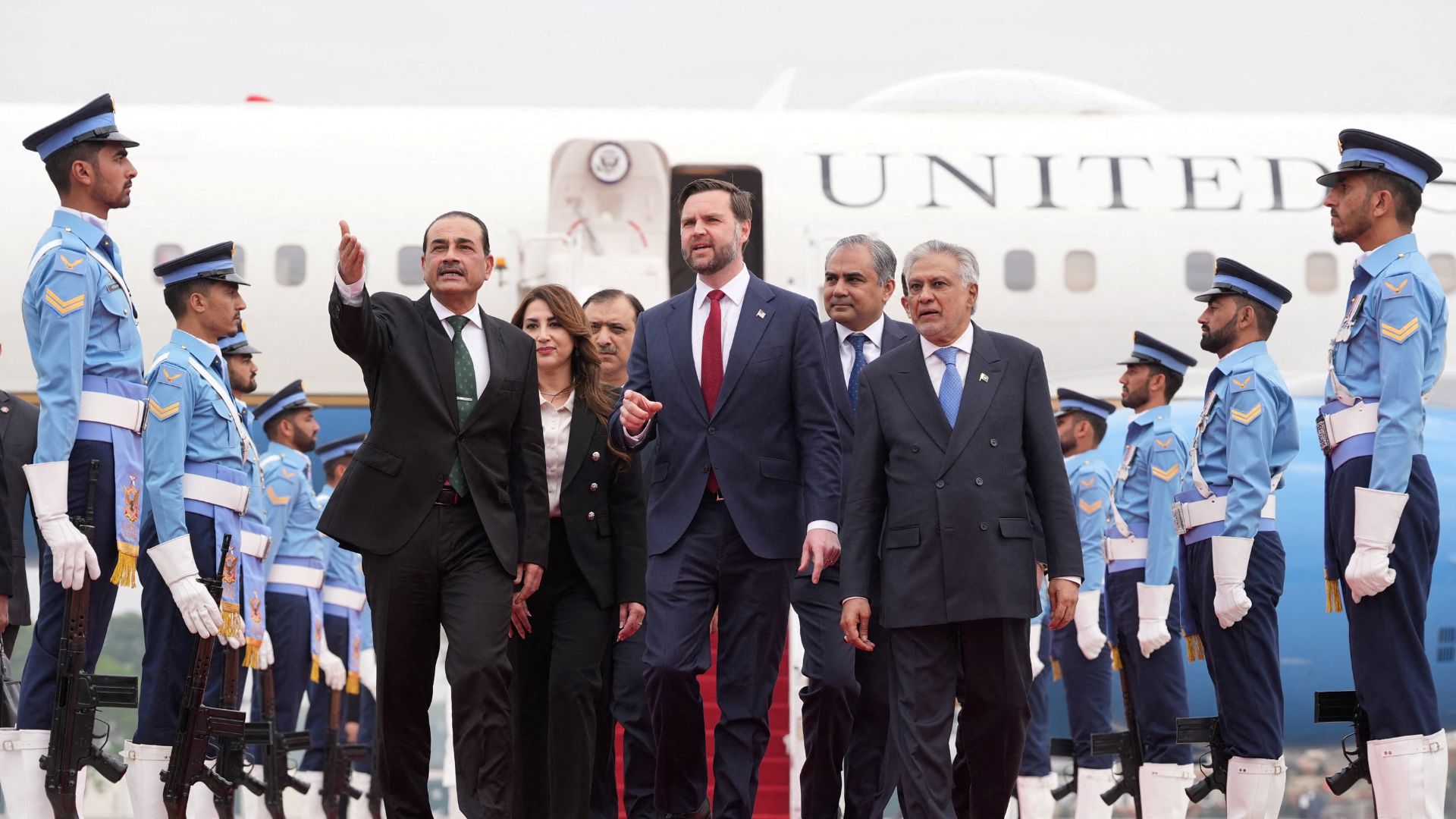
The Islamabad talks between the United States and Iran ended without a deal on Sunday, April 12, after 21 hours of negotiations at the Serena Hotel. US Vice President JD Vance said that Iran had refused to commit to abandoning its nuclear programme. Iran’s Foreign Ministry countered that several issues had been resolved but that Washington’s demands were excessive.
In the latest episode of Defence Uncut – recorded to coincide with the Islamabad talks – hosts Bilal Khan and Arslan Khan break down what happened at the negotiations, what was not reported in mainstream coverage, and what it all means for Pakistan’s strategic positioning in the region.
The episode is available on YouTube and all major podcast platforms.
The Talks: Beyond the Headlines
The mainstream narrative focused on the nuclear sticking point. In the episode, Bilal and Arslan argue that the more consequential dynamic was the US effort to establish contact with the Islamic Revolutionary Guard Corps’ (IRGC) emergent leadership – the younger commanders who took over after the joint US-Israeli strikes decapitated much of the senior command structure on 28 February.
The Iranian delegation that arrived aboard the “Minab 168” flight was led by Parliament Speaker Mohammad Bagher Ghalibaf and Foreign Minister Abbas Araghchi – figures from Iran’s political establishment, not the operational IRGC commanders running the mosaic defence strategy on the ground. However, as Bilal notes in the episode, IRGC-affiliated aircraft were tracked landing in Pakistan during the talks, suggesting that the operational leadership may have engaged with Pakistani officials even if they did not sit across from the Americans directly.
The hosts draw a parallel to Pakistan’s role as the intermediary between the US and China before the 1972 Nixon visit. If Pakistan becomes the channel through which the US and the IRGC exchange messages, it would represent a significant expansion of Islamabad’s diplomatic weight – and a foundation on which to build a longer-term security role.
Iran’s Asymmetric Strategy and Lessons for Pakistan
A substantial portion of the episode examines what Pakistan’s military can learn from Iran’s performance in the war. Arslan highlights Iran’s asymmetric cost imposition – using the Strait of Hormuz closure and naval mine deployment to impose economic pressure on the global economy – and argues that Pakistan could apply a more localised version of this model against India in a future conflict scenario.
The discussion turns to the Pakistan Navy’s (PN) geographic position in the Arabian Sea. Bilal and Arslan lay out how the PN’s expanding submarine fleet – particularly the Hangor-class (Type 039B) programme and the planned shallow water attack submarines – could create a dense subsurface presence across trade routes that Indian commerce depends on. The episode explores the idea that Pakistan could declare sections of the Arabian Sea as restricted zones during an active conflict, effectively reducing India’s trade volume without imposing a formal blockade.
The hosts also discuss the case for devolving combat authority down to corps and brigade level, drawing on Iran’s mosaic defence doctrine as a model. Bilal argues that pre-planned, locally driven responses – integrating loitering munitions, localised rocket forces, and immediate air-land coordination – would give Pakistan a faster escalation response that could serve as a deterrent in its own right.
Pakistan as the Region’s Security Guarantor
The episode’s core thesis centres on Pakistan’s post-conflict positioning. Bilal and Arslan argue that Pakistan has been systematically undercharging for the security services it provides to the Gulf – and that the Islamabad talks represent a turning point.
During the talks, Pakistan proposed joint naval patrols of the Strait of Hormuz, according to Al Jazeera. The PN is already conducting escort operations under Operation Muhafiz-ul-Bahr, and it remains the only navy in the region with dedicated mine countermeasures (MCM) vessels. The US demining effort is unlikely to be acceptable to Iran. The Gulf navies lack the capacity for independent operations. Pakistan, as the hosts argue, is the only party acceptable to all sides.
The hosts outline a detailed framework for what a funded security role could look like: joint fighter squadrons stationed in Saudi Arabia – potentially F-16s flying under a Pakistani flag – loitering munition production lines established within the Gulf using Chinese industrial inputs, Pakistani-operated drone interceptor units deployed to protect Gulf infrastructure, and Pakistani ISR and integrated battle management systems made available to Saudi Arabia and its neighbours.
Bilal points out that during the 1980s, Saudi Arabia paid Pakistan $2–3 billion per year – roughly $10–15 billion in today’s terms – for a deeply integrated security presence. That arrangement was unwound after the Gulf War as the US assumed the guarantor role. The current conflict has demonstrated the limits of that model, and the episode argues that now is the moment for Pakistan to reassert its value at a commensurate price.
The Saudi Defence Agreement Problem
One of the episode’s sharpest points concerns the Saudi-Pakistan Strategic Defence Agreement (SMDA). Bilal and Arslan note that the agreement was signed but never operationalised – no mechanisms, no action items, no frameworks for activation. When the Iran war erupted, both sides were left without a clear path to mutual support.
The episode argues that the SMDA needs addendums establishing specific commitments: minimum force levels on Pakistan’s eastern border, conditions under which assets can be deployed westward, and a funding structure in which Saudi Arabia underwrites the cost of the capabilities it expects Pakistan to provide. Pakistan, the hosts contend, cannot go into debt for another country’s security.
The Western Front
The episode closes with a discussion of Pakistan’s ongoing counterinsurgency operations against the TTP on the Afghan border – a reminder that the security premium argument extends beyond the Gulf. Bilal argues that even the counterinsurgency campaign suffers from the same structural underinvestment, and that Gulf funding channelled into Pakistan’s military capacity would benefit both theatres simultaneously.
Defence Uncut Season 2, Episode 2 is available now on YouTube and all major podcast platforms, including Apple Podcasts and Spotify.
