
Close Menu
Defence Line
    What's Hot

    New test range opens for the startup-war era

    April 17, 2026

    HAL’s Light Utility Helicopter (LUH) To Replace Ageing Fleet, Strengthen Indian Army Operations At Siachen

    April 17, 2026

    Drones Change How Wars Are Fought—UGVs Will Decide Who Wins Them

    April 17, 2026
    Facebook X (Twitter) Instagram
    • Home
    Facebook X (Twitter) Instagram
    Defence LineDefence Line
    • Home
    • Asia Pacific
    • US-Russia
    • NATO Europe
    Subscribe
    Defence Line
    Home»India Defence»India’s Agnikul Cosmos Validates 3D-Printed Agnite Engine In Landmark 77-Second Test
    India Defence

    India’s Agnikul Cosmos Validates 3D-Printed Agnite Engine In Landmark 77-Second Test

    Defenceline WebdeskBy Defenceline WebdeskApril 17, 2026No Comments2 Mins Read
    Facebook Twitter Pinterest LinkedIn Tumblr Email
    Share
    Facebook Twitter LinkedIn Pinterest Email


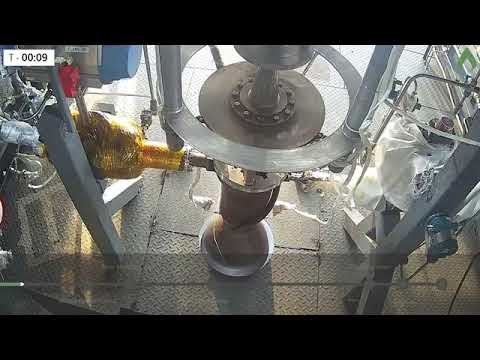
    Agnikul Cosmos has marked a significant breakthrough in India’s private space
    sector with the successful hot-fire of its Agnite engine during a 77-second
    test sequence in Chennai.

    This achievement confirms the repeatability and flight readiness of the
    country’s premier private rocket technology, moving it beyond the prototype
    stage into a reliable system prepared for orbital missions. 

    Operating from the
    IIT-Madras ecosystem, the start-up has demonstrated that home-grown hardware
    can meet the stringent standards required for spaceflight.

    The Agnite engine is semi-cryogenic, meaning it uses a combination of liquid
    propellant and a super-cooled oxidiser. Specifically, it runs on a refined
    version of kerosene and liquid oxygen to generate the thrust necessary to
    escape Earth’s gravity.

    Unlike conventional rocket engines, which are assembled from thousands of
    parts, Agnite is the first in the world to be 3D-printed as a single seamless
    unit. Built layer by layer from a digital blueprint using the high-strength
    superalloy Inconel, the design eliminates joints and welds, making the engine
    lighter and removing structural weak points that often cause failures in
    rockets.

    The 77-second test sequence was crucial because it validated repeatability,
    the gold standard in aerospace engineering. The engine performed with
    identical efficiency, pressure, and temperature as in earlier trials, proving
    that it is not a one-off success but a dependable workhorse.

    This consistency is what allows a start-up to transition from laboratory
    experiments to actual launchpad operations. The test also showcased the
    engine’s ability to throttle, meaning its power can be adjusted in real time,
    much like pressing the accelerator in a car.

    This capability is vital for steering rockets and ensuring satellites are
    placed into precise orbits with zero margin for error.

    With this milestone, Agnikul Cosmos is now on the verge of the debut flight of
    its Agnibaan rocket. Supported by expertise from both ISRO and NASA, the
    success of the Agnite engine demonstrates that Indian private innovation has
    matured into a sophisticated reality, capable of contributing meaningfully to
    the global space industry.

    Agnikul Cosmos X Handle


    Source link

    Share. Facebook Twitter Pinterest LinkedIn Tumblr Email
    Defenceline Webdesk

    Related Posts

    HAL’s Light Utility Helicopter (LUH) To Replace Ageing Fleet, Strengthen Indian Army Operations At Siachen

    April 17, 2026

    India’s First Multi-Barrel Loitering Munition Launcher: Redon Systems’ Bheeshan Sets A New Benchmark

    April 17, 2026

    GAGANYAAN Mission: Astronauts Safe Return to Earth-Explained

    April 17, 2026

    India’s MRFA Choices Complicated As France Pivot’s To Rafale F5 Development

    April 17, 2026
    Add A Comment

    Comments are closed.

    Economy News

    New test range opens for the startup-war era

    Geopolitics April 17, 2026

    A new, 400,000-acre testing and training facility aims to bring troops and defense firms together…

    HAL’s Light Utility Helicopter (LUH) To Replace Ageing Fleet, Strengthen Indian Army Operations At Siachen

    April 17, 2026

    Drones Change How Wars Are Fought—UGVs Will Decide Who Wins Them

    April 17, 2026
    Top Trending

    New test range opens for the startup-war era

    Geopolitics April 17, 2026

    A new, 400,000-acre testing and training facility aims to bring troops and…

    HAL’s Light Utility Helicopter (LUH) To Replace Ageing Fleet, Strengthen Indian Army Operations At Siachen

    India Defence April 17, 2026

    India is preparing to induct its indigenously developed Light Utility Helicopter (LUH),…

    Drones Change How Wars Are Fought—UGVs Will Decide Who Wins Them

    Strategic Affairs April 17, 2026

    MWI … while drones have undeniably transformed how engagements are fought, they…

    Subscribe to News

    Get the latest sports news from NewsSite about world, sports and politics.

    Facebook X (Twitter) Pinterest Vimeo WhatsApp TikTok Instagram

    News

    • World
    • US Politics
    • EU Politics
    • Business
    • Opinions
    • Connections
    • Science

    Company

    • Information
    • Advertising
    • Classified Ads
    • Contact Info
    • Do Not Sell Data
    • GDPR Policy
    • Media Kits

    Services

    • Subscriptions
    • Customer Support
    • Bulk Packages
    • Newsletters
    • Sponsored News
    • Work With Us

    Subscribe to Updates

    Get the latest creative news from FooBar about art, design and business.

    © 2026 Defenceline. Designed by Digitwebs.
    • Privacy Policy
    • Terms
    • Accessibility

    Type above and press Enter to search. Press Esc to cancel.