

Ten years ago, the emerging conventional wisdom among many defense planners was that the United States Army would not serve a meaningful role in a potential conflict with China — that there would be little role for tanks, howitzers or infantry in a conflict that would be dominated by the Air Force and the Navy.
Today, thanks to a series of reorganization efforts and investments in long range fires, the reality is far different. The Army now has the capabilities to impact China from a distance. But progress cannot stop. As budget season spins up, Congress and defense leaders must double down on these in order to ensure that the Army can play a meaningful and potentially decisive role in a future conflict in the Pacific.
Let’s take a moment to understand how the Army went from out of a China fight to having an integral role in one. Start in 2018, with the establishment of Army Futures Command to in part answer questions about the Army’s role in the Pacific. That led to a focus and commiserate investment in long range fires to hold enemy targets at range at risk.
That decision was backed by a 2019 analysis by the RAND Corporation which suggested that long-range Army fires had a role to playing in targeting “critical targets in China, such as command-and-control (C2) sites, airfields, missile sites, and ports,” as well as defending controlled land from Chinese attacks.
That same study went on to suggest that the Army do two things to make itself relevant in a Pacific conflict: Develop a “long-range surface-to-surface missile system, with a range of 1,000 km or more,” in order to strike the Chinese mainland from controlled territory, and secondly, develop a Land-Based Anti-Ship Missile to keep Chinese ships at arms length.
Informed by this and other similar analyses, the Army established new program offices. Over time that morphed into the recently formed Portfolio Acquisition Executive Fires, or PAE Fires, to integrate, develop, and field offensive and defensive fires. Organized under a three-star general, the effort is part of the broader Army Transformation Initiative, and gives a single office to lead the effort — an important bureaucratic step to making sure new weapons don’t get bogged down.
The other half of the Army’s effort is technological. Much of that is being led out of Joint Base Lewis-McChord, where the Army’s 7th Infantry Division is fielding the 1st Multi-Domain Taks Force, or MDTF.
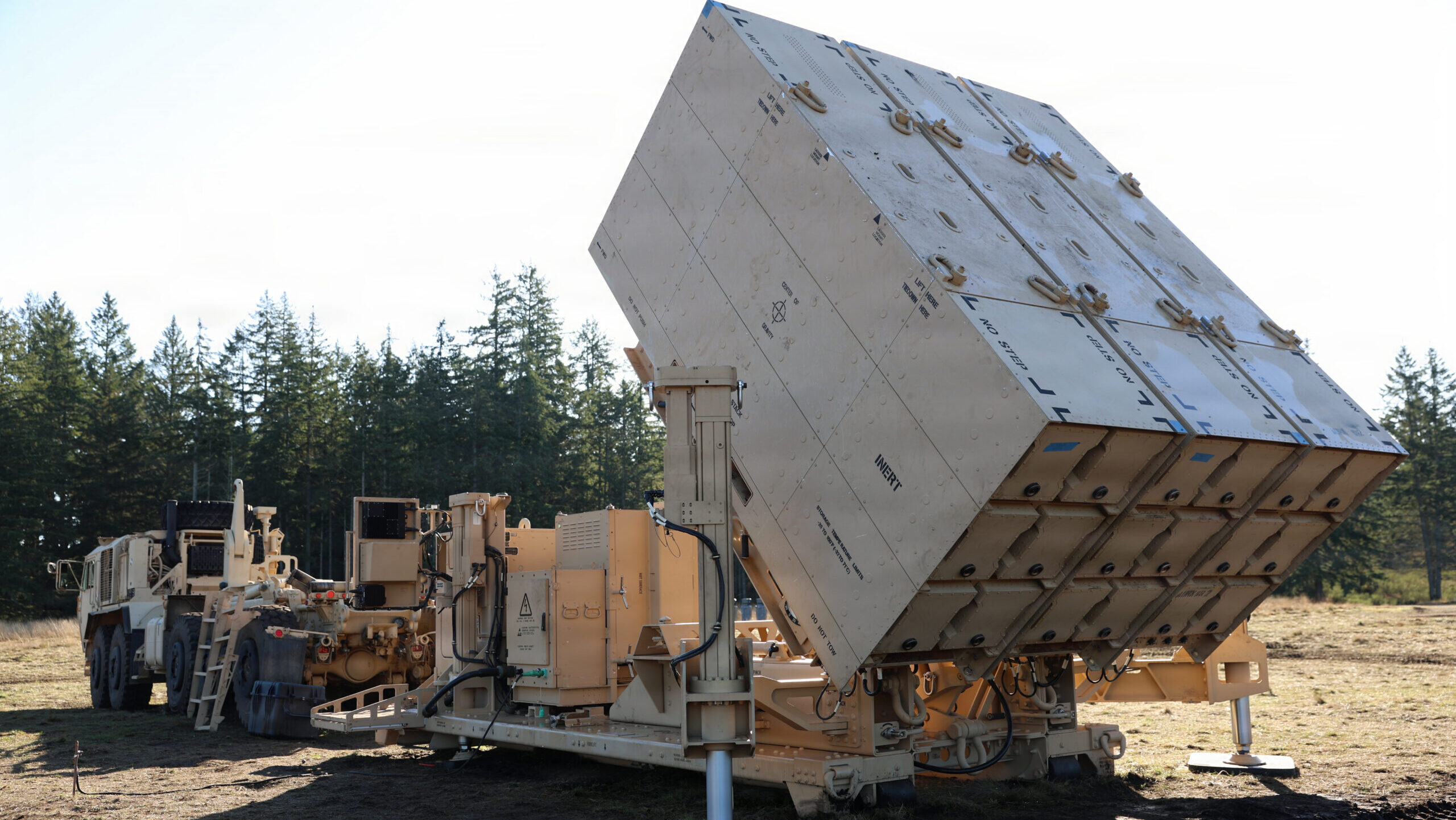
These forces are deploying systems such as the Long-Range Hypersonic Weapon, a long-range missile that can travel at hypersonic speeds and destroy targets with precise conventional warheads. They also field the Typhon system, a mid-range capability that can fire Tomahawk cruise missiles or SM-6s, and operates the Aegis Weapon System (or AWS) fires command and control system. At the same time, the Army has invested in highly capable dedicated missile defense systems, to include Patriot missile defenses (PAC-3) and the Terminal High Altitude Air Defense (THAAD) systems.
The combination enables Army units to engage maritime or land targets and provide credible air and missile defenses, thereby creating an effective A2/AD capability of its own. And at the heart of the future of fires is the Integrated Battle Command System (IBCS), which fires among US and allied forces. IBCS’ ability to serve as a decision support tool helps warfighters reduce air and missile interceptor expenditures, an important consideration of modern conflict, particularly given recent lessons from Operation Epic Fury. (Last year, the then-Vice Chief of Staff of the Army, Gen. James Mingus said capabilities like IBCS, when coupled with Patriot interceptors, results essentially in a doubling of effective interceptor magazine depth.)
Now, the trick is to merge the back-end reorganization and the front-end technological developments into something operational for the Pacific.
Fundamentally, this means getting Army forces and mobile shooters, such as the Typhon and other systems, inside adversary A2/AD bubbles before the initiation of conflict. This is already happening, as the Army is putting additional Typhon systems into the Philippines, augmenting the systems that were placed there in 2024 and in Japan in 2025. By having capabilities in place before the onset of a conflict, Army units can not only be combat relevant at the start of hostilities, but they will not be encumbered by trying to flow forces into theater — stressing American air-refueling and airlift capabilities trying to get into theater — and past an adversary’s own air defenses and A2/AD capabilities.
Once in theater, Army units can intercept enemy air and missile threats, target and engage enemy surface ships, and conduct long-range strikes on strategic targets on the enemy’s mainland. Further, by being able to engage and destroy enemy air, maritime, and land-based threats, the Army can create effective “friendly” A2/AD bubbles that are difficult for enemy forces to penetrate and from which American and coalition forces can operate and strike additional enemy targets.
In this way, the Army is positioning itself to act as a key player in a Pacific conflict. However, systems such as IBCS must continue to evolve and improve rapidly in order to address the ever advancing threats posed by our adversaries, particularly Chinese missile forces. And Army stockpiles must not be allowed to fall empty.
On April 2, the White House delivered its fiscal 2027 budget request to Congress. The Pentagon is slated for $1.5 trillion in funding, with $350 billion of that proposed funding coming from reconciliation.
The budget request quadruples the procurement budget of the Army’s intermediate range Precision Strike Missile (PrSM), which is a good start. But Congress should use the historic defense budget to similarly procure far greater numbers of PAC-3s, THAAD systems, and LRHWs.
The Army has done the hard work internally to make itself relevant for a Pacific fight. Now is the time to reward that work by helping arm the nation’s oldest military service. Doing so may be the best way to deter Chinese aggression in the Western Pacific.
Robert Peters is the Senior Research Fellow for Strategic Deterrence and Assistant Director of the Allison Center for National Security at the Heritage Foundation.
