

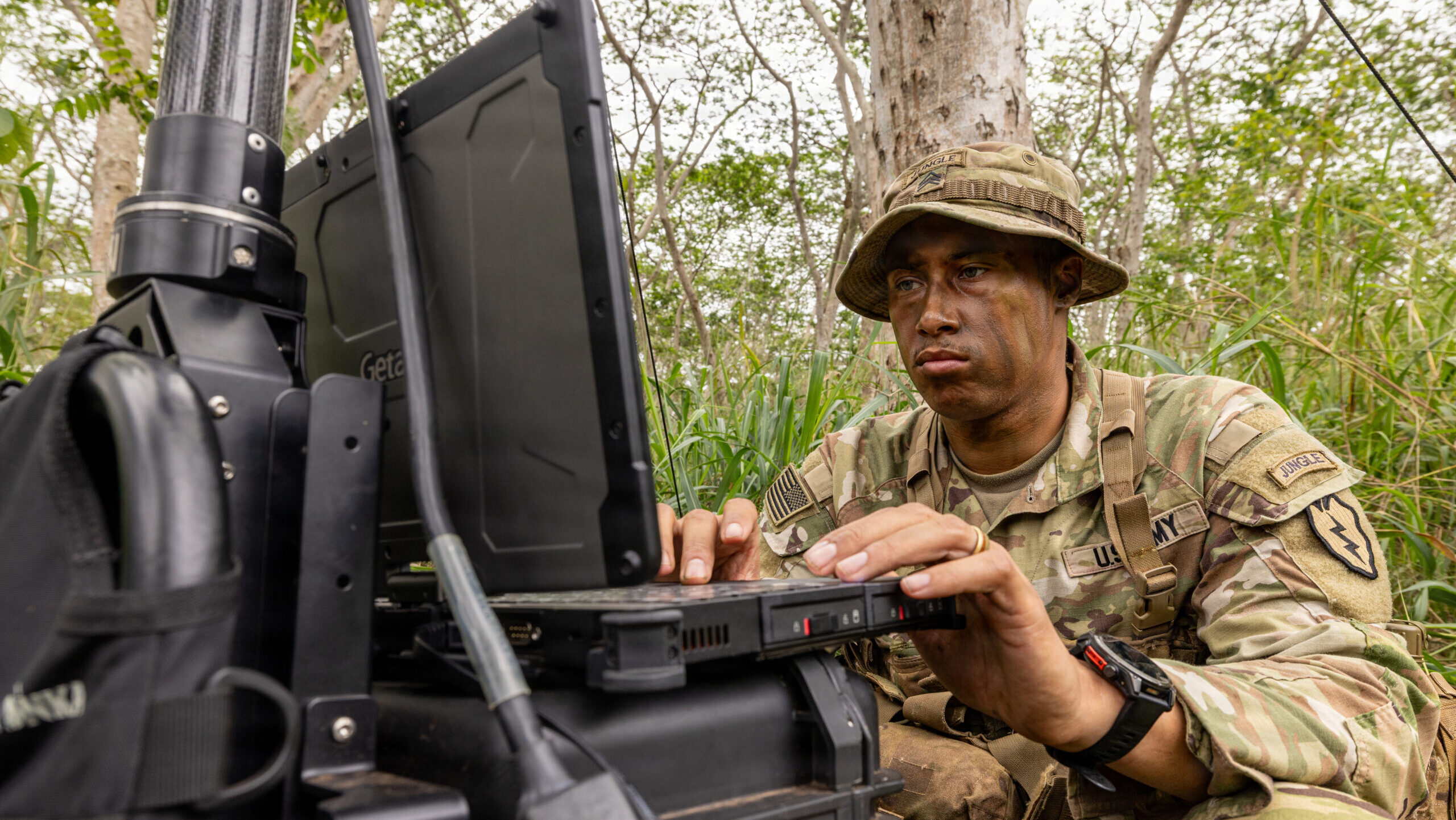
WASHINGTON — The Army’s newly established Data Operations Center pilot program aims to help tactical units handle data connections and latency, so they can focus on the fight rather than fighting data, according to the director of the center.
“It is the issue of trying to figure out how to connect data objects from different cloud environments. It’s trying to figure out how to learn and work with a data owner from an enterprise mission system and pulling that data into the tactical space for Next Gen C2,” Brig. Gen. Michael Kaloostian, who also serves as the director of the Command and Control Future Capability Directorate, told reporters Tuesday. “Those are the type of problems that have been causing headaches for those divisions and what the ADOC is ultimately intended to be is the 9-1-1 for the operational force. … We are the ones are going to alleviate the burden from those divisions and those division ODTs [operational data teams], so they can focus down and in and on their commanders’ priorities.”
The organization, officially stood up April 3, is a pilot under Army Cyber Command that will run for 180 days to provide a blueprint for the Army on what a permanent structure for such an organization might look like.
The goal of the program, Kaloostian said, is to help units with data connections to systems and tools they use. That could look like getting access to a full motion video feed from a partner nation to be ingested to a commander’s common operational picture, or fixing latency issues with capabilities
Those types of data connections can be difficult given different cloud environments or areas of operations requiring multiple access requests.
“That’s what we saw the majority of the frustration. It’s the red tape and the bureaucracy, or antiquated bureaucracies that are continuing to prevent us from really achieving data centricity,” Kaloostian said. “We are seeing these lieutenant colonels and these operational data teams that are banging their heads against the wall trying to figure out how to make these connections happen. They need somebody to call. There isn’t a help desk for them to call.”
In one example, Kaloostian noted that members of 4th Infantry Division during an exercise experienced data latency with the Army Intel Data Platform disrupting the flow of targeting. The users couldn’t figure out the culprit of the latency and had to spend time looking into it rather than focusing on their fight.
With the ADOC, they’d be able to submit a ticket and a cadre of dedicated data staff would be able to help.
Over the past several months, officials have often repeated that data is the new ammunition and crucial to win conflicts. While the Army is drowning in data, the ADOC can serve as a central place to manage it, unburdening those units.
“I just heard from all the senior leaders where we lacked the ability to really move data echelon and have it in a way that they can make informed decisions as we embark on ongoing operations and other things across our Army,” Lt. Gen. Jeth Rey, deputy chief of staff, G6, said on the same call. “The rubric on the battlefield is fundamentally changed for us on how things are done in the battlefield. It used to be about firepower. But it isn’t really about that anymore. It’s really about who can get the data, make decisions faster and dominate because of AI and machine learning and other things.”
Since it was stood up Friday, the ADOC has already received requests from organizations ranging from the two divisions executing pilots for Next Generation Command and Control, XVIII Airborne Corps and even the office of the Surgeon General.
The ADOC will serve divisions, corps, Army Service Component Commands and other large commands, vice smaller, units or echelons. Right now, it doesn’t have any vendors providing services, but rather it is using existing capabilities, though there is the chance that over time, vendors could be brought in. It is also staffed by mostly civilians right now in career fields that span data engineers, software engineers and artificial intelligence/machine learning pipeline engineers.
Kaloostian said that the center is open for everything right now, including current operations, which would go immediately to the top of the list.
