

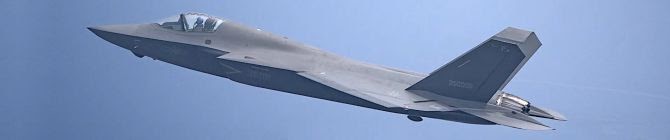
The prospect of Pakistan acquiring the Chinese Shenyang J-35 stealth fighter has transitioned from mere speculation to a formalised strategic objective. In January 2024, Air Chief Marshal Zaheer Ahmed Baber Sidhu publicly confirmed that the foundations for acquiring the J-35 had already been laid, marking it as a centrepiece of the Pakistan Air Force’s (PAF) modernisation drive.
This announcement followed the successful induction of the J-10C “Vigorous Dragon” and the JF-17 Block-III, suggesting a systematic progression towards a fifth-generation fleet. By June 2025, reports indicated that Pakistan had signed a framework agreement for approximately 40 of the J-35A export variants, potentially making Islamabad the inaugural international customer for the platform.
The credibility of this deal is reinforced by China’s apparent willingness to fast-track the project. Recent reports from April 2026 suggest that Beijing has moved the delivery schedule from late 2026 to as early as mid-2026.
This acceleration is viewed by regional analysts as a response to shifting power dynamics in South Asia, specifically aimed at addressing the capability gap posed by India’s Rafale fleet and its future AMCA program.
The J-35 is not being sold as an isolated unit but as part of a comprehensive “operational ecosystem” that includes KJ-500 airborne early warning aircraft and HQ-19 long-range surface-to-air missile systems, mirroring the integrated warfare models used by the world’s leading air powers.
Technically, the J-35 is a twin-engine, low-observable fighter developed from the FC-31 prototype. It features canted vertical stabilisers, internal weapons bays, and advanced AESA radar systems, allowing it to compete with Western platforms like the F-35 in terms of sensor fusion and stealth.
While specific performance data for the export version remains classified, the jet is expected to reach speeds of Mach 1.8 and carry long-range PL-16 or PL-17 missiles. The induction process is reportedly well underway, with Pakistani pilots and technicians already undergoing training in China to ensure a smooth transition once the airframes arrive.
Despite the high-level official endorsements, there are significant hurdles regarding the deal’s timeline and financial viability. While social media “leaks” in early 2026 falsely claimed that the first batch of six jets had already landed in Pakistan, senior PAF officials and defence sources have clarified that such claims are premature.
Realistic estimates suggest that while the framework is in place, actual operational induction is more likely to occur between late 2026 and 2027. Furthermore, the deal has faced criticism within China, where some citizens and analysts question the wisdom of selling a 50% discounted, high-tech asset to a financially unstable neighbour that is still clearing debts for previous aircraft purchases.
Finally, the acquisition represents a major geopolitical shift. For China, exporting the J-35 serves as a proof of concept for its fifth-generation technology on the global market, positioning it as a politically unrestricted alternative to American hardware.
For Pakistan, the jet is a vital tool for maintaining strategic parity and deterrence. While the exact arrival date remains subject to production schedules and funding arrangements, the intent from both Beijing and Islamabad is clear: the J-35 is intended to be the future vanguard of Pakistan’s aerial defence.
Strategic Hesitation: Defending The “Credibility Gap” Exposure
The credibility of Chinese military hardware has faced intense international scrutiny following the events of Operation Sindoor in May 2025. Credible independent reports, including analysis from The Hill and regional defence observers, indicate that Pakistan’s Chinese-supplied air defence umbrella—specifically the HQ-9B surface-to-air missiles and the YLC-8E “anti-stealth” radars—suffered catastrophic failures during the 23-minute Indian strike.
Despite Beijing’s claims that these systems could track stealth targets like the Rafale, they were reportedly rendered “blind and deaf” by Indian electronic warfare (EW) and Suppression of Enemy Air Defences (SEAD) tactics, allowing BrahMos missiles to neutralise key batteries and air bases undetected and with impunity.
Furthermore, the recovery of unexploded PL-15E air-to-air missiles by Indian forces purportedly revealed significant flaws in rocket motor reliability and software guidance. These battlefield humiliations, mirrored by similar failures of Chinese tech in Venezuela and Iran, have created a strategic “credibility gap.”
Consequently, Beijing may now be extremely reluctant to deploy the J-35 stealth jet in active skirmishes. Exposing their premier fifth-generation fighter to advanced Indian jamming or potential loss would not only shatter the platform’s export value but also publicly dismantle the myth of Chinese technological parity with the West, making the J-35 a “prestige asset” that China might prefer to keep grounded rather than risk in a high-stakes encounter.
IDN (With Agency Inputs)
