

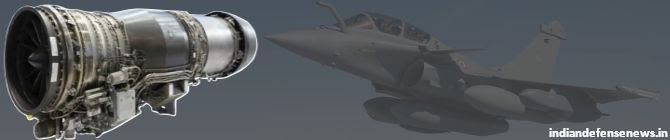
India has long aspired to develop its own world-class fighter jet, complete with a domestically produced engine. This ambition has faced numerous setbacks, high costs, and frustrations over decades. Yet, recent developments suggest a quiet but significant shift that warrants close scrutiny.
On 12 February, the chief executive of Rolls-Royce visited Delhi for talks with Prime Minister Modi. The discussions centred on Rolls-Royce’s potential role in developing a next-generation engine for India’s Advanced Medium Combat Aircraft (AMCA).
The AMCA represents India’s bid for a fifth-generation stealth fighter, akin to the United States’ F-35 or China’s J-20—a platform designed for near-invisibility to enemy radar and superior combat effectiveness.
Such an aircraft demands more than advanced airframes; it requires a robust powerplant. Rolls-Royce’s involvement could provide the technological backbone, marking a pivotal step towards self-reliance in aviation propulsion.
Concurrently, France’s Safran, which supplies engines for India’s Rafale fighters, inaugurated its largest aircraft engine service centre in Hyderabad.
More strikingly, Safran’s chief executive declared the firm’s readiness to transfer complete engine technology to India. This goes beyond mere sales or assembly; it encompasses the design and production secrets of the “hot section”—the engine’s core where temperatures exceed 1,500 degrees Celsius.
The hot section includes turbine blades and combustion systems crafted from exotic materials under extreme conditions. These technologies are closely guarded, often comparable to nuclear secrets in strategic value. Safran’s offer signals an unprecedented willingness to elevate India from buyer to co-creator.
For the average Indian, these overtures carry profound implications. For over four decades, India has struggled to master jet engine technology, with failures exacting a heavy toll on national security and the economy.
The story traces back to 1983, when the TEJAS Light Combat Aircraft (LCA) program was launched alongside the Kaveri engine project. The Kaveri was intended to power the TEJAS indigenously, with an initial deadline of 1996. Deadlines slipped repeatedly—to 2008 and beyond—until the stark reality emerged: the engine lacked the thrust required by the Indian Air Force.
The Kaveri was decoupled from the TEJAS, forcing India to procure General Electric (GE) F404 engines from the United States. This dependency highlighted a recurring issue: foreign suppliers provided hardware but withheld critical know-how.
Reports from The Diplomat, a respected outlet on geopolitics, underscore GE’s export-only model for TEJAS MK-1 engines. For the TEJAS MK-2, a co-production deal promises about 80 per cent technology transfer, yet true co-development—where India designs from the ground up—remains elusive.
Delivery delays from GE have repeatedly stalled TEJAS production lines, exposing vulnerabilities in supply chains. This pattern has frustrated Indian defence planners, who seek autonomy over vital components.
A key distinction persists between “co-production” and “co-development.” Co-production involves assembling imported designs locally, building limited skills. Co-development entails joint design from inception, fostering deep expertise and innovation.
India has consistently prioritised co-development, but American partners have largely offered the former. This reluctance stems from export controls and strategic hedging.
Europe emerges as a compelling alternative. Rolls-Royce engines propel over 1,400 Indian defence assets, from Hawk trainers to naval vessels. Safran powers the Rafales. Both firms now appear poised to deliver the full technology partnerships America has eschewed.
Should Safran secure approval for AMCA engine co-development—with intellectual property rights vesting in India—it would herald a historic breakthrough. India would transition from dependent importer to equal innovator.
Bolstering this prospect is the evolving India-EU Free Trade Agreement, which strengthens Franco-Indian ties. Strategic convergence in the Indo-Pacific further aligns interests. GE retains strong leverage through four decades of TEJAS collaboration. It could yet propose enhanced co-development terms to reclaim prominence.
Progress will not be swift. The AMCA and the Indian Navy’s Twin-Engine Deck-Based Fighter (TEDBF) may span a decade or more. This timeline affords India leverage to negotiate rigorously—for comprehensive transfer, IP ownership, and domestic capacity-building.
DRDO and Hindustan Aeronautics Limited (HAL) have gained invaluable experience from TEJAS iterations and Kaveri efforts, despite shortcomings. Private sector involvement, via firms like TATA Advanced Systems and Bharat Electronics, adds momentum under the Atmanirbhar Bharat initiative.
Engine independence reduces risks from sanctions or embargoes, as seen in past CAATSA threats over S-400 purchases. A indigenous engine ensures operational readiness amid rising tensions with China and Pakistan.
Mastery of high-thrust turbofans could spawn a exportable industry, mirroring Israel’s success with drone engines or France’s global Safran footprint. Job creation in advanced manufacturing would follow.
Safran’s Hyderabad facility exemplifies commitment, servicing Rafales while training Indian engineers. Rolls-Royce’s overtures align with its India footprint, including M250 engine production.
The United States watches closely; F-35 co-production hints at flexibility, but engine tech remains ring-fenced. India’s multi-vendor strategy hedges risks effectively.
Finally, success hinges on policy resolve: enforcing “Make in India” clauses, funding GTRE’s revival, and nurturing talent pipelines. The payoff transcends jets—it secures aerial sovereignty.
India deserves its engine, ungrounded by foreign delays. The world now seems inclined to collaborate in forging it.
Agencies
