
Close Menu
Defence Line
    What's Hot

    U.S. Warships Begin Mine-Clearing Operation In Strait of Hormuz CENTCOM Says

    April 12, 2026

    U.S. Pursuing Collaboration With Allies in Military Space Programs

    April 12, 2026

    Netflix, Inc. $NFLX Shares Bought by Diligent Investors LLC

    April 12, 2026
    Facebook X (Twitter) Instagram
    • Home
    Facebook X (Twitter) Instagram
    Defence LineDefence Line
    • Home
    • Asia Pacific
    • US-Russia
    • NATO Europe
    Subscribe
    Defence Line
    Home»India Defence»Induction Ready: Indigenous Helicopter‑Launched ATGM ‘Dhruvastra’ Extends Reach And Resilience In High‑Altitude Warfare
    India Defence

    Induction Ready: Indigenous Helicopter‑Launched ATGM ‘Dhruvastra’ Extends Reach And Resilience In High‑Altitude Warfare

    Defenceline WebdeskBy Defenceline WebdeskApril 12, 2026No Comments3 Mins Read
    Facebook Twitter Pinterest LinkedIn Tumblr Email
    Share
    Facebook Twitter LinkedIn Pinterest Email


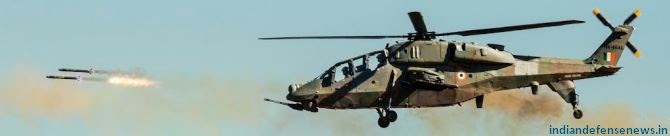
    Dhruvastra is now induction‑ready and represents India’s indigenous, helicopter‑launched third‑generation anti‑tank missile, offering a fire‑and‑forget, top‑attack capability with a strike range up to 7 km, optimised for high‑altitude operations such as Ladakh; this development is a significant step for India’s defence self‑reliance, as detailed in a report by The Times of India.

    Dhruvastra forms a key part of the Nag missile ecosystem, a flagship initiative under India’s Integrated Guided Missile Development Programme (IGMDP), where the original Nag missile was conceived in the late 1980s under A. P. J. Abdul Kalam’s leadership to create a modern, all-weather, top-attack capable anti-tank system.

    Over time, this has evolved into multiple variants, including the land-based Nag, NAMICA (Nag Missile Carrier), man-portable ATGM (MPATGM), and air-launched versions like Dhruvastra and the advanced SANT. Specifically, Dhruvastra is the air-launched iteration optimized for deployment from HAL-manufactured attack helicopters such as the Rudra and HAL Prachand.

    The missile’s core operational advantage is its third‑generation fire‑and‑forget guidance, which allows the launcher to disengage after launch because the missile autonomously tracks and destroys the target. This capability marks a clear evolution from legacy second‑generation ATGMs.

    Dhruvastra uses an imaging infrared (IIR) seeker for target acquisition and locking, enabling day‑and‑night operations and resilience against many electronic countermeasures. It supports both direct attack and top‑attack modes, the latter designed to strike the weaker upper armour of modern tanks.

    The missile’s strike range of up to 7 km extends engagement envelopes for attack helicopters, permitting stand‑off engagements that reduce exposure to air‑defence systems. Its weight of approximately 43 kg is tailored for performance in rarefied, high‑altitude environments so helicopter flight characteristics are not unduly compromised.

    In lethality terms, Dhruvastra is reported to be capable of penetrating up to 800 mm of armour, making it effective against most light and medium armoured vehicles in regional theatres. The missile follows a climb‑then‑dive flight profile optimised for top‑attack strikes.

    Design features inherited from the Nag platform include composite airframes, real‑time image processing for automatic target recognition, a centroid tracking mechanism for terminal guidance, a digital autopilot for stability, and an electric actuation system for improved manoeuvrability. These systems collectively enhance survivability and precision.

    Operational integration has been achieved with India’s indigenous attack helicopters, notably the HAL Rudra and HAL Prachand, where Dhruvastra is mounted on twin‑tube launchers on stub wings, converting these platforms into dedicated anti‑armour assets. HAL’s production ramp‑up, including an order book for 156 Prachand helicopters, supports wider deployment plans.

    Procurement steps are already under way: the Defence Acquisition Council approved around ₹700 crore in September 2023 for more than 200 Dhruvastra missiles for the Air Force variant.

    Initial induction plans estimate demand at 500 units and 40 launcher systems, with a projected cost per missile under ₹1 crore, aligning with the Aatmanirbhar Bharat objective to reduce reliance on imports such as Konkurs and MILAN.

    Strategically, Dhruvastra is expected to reshape anti‑armour doctrine by enabling stand‑off, precision engagements from rotary‑wing platforms, enhancing flexibility in mountainous and contested border regions and strengthening deterrence through indigenous advanced missile capability.

    DRDO’s work continues towards next‑generation systems such as Stand-off Anti-Tank missile (SANT), which aims for longer range and millimetre‑wave radar seekers, signalling a trajectory towards network‑centric, autonomous precision weapons.

    TOI


    Source link

    Share. Facebook Twitter Pinterest LinkedIn Tumblr Email
    Defenceline Webdesk

    Related Posts

    U.S. Warships Begin Mine-Clearing Operation In Strait of Hormuz CENTCOM Says

    April 12, 2026

    Indian Navy to review operational readiness, tech integration at Commanders’ Conference in New Delhi

    April 12, 2026

    India Masters Nuclear Submarine Construction Amid Persistent Delays In Simpler Weapons Programs

    April 12, 2026

    US‑Iran Talks Fails After 21‑Hour Marathon As Nuclear Commitments Remain Unresolved

    April 12, 2026
    Add A Comment

    Comments are closed.

    Economy News

    U.S. Warships Begin Mine-Clearing Operation In Strait of Hormuz CENTCOM Says

    India Defence April 12, 2026

    Two U.S. Navy warships have transited the Strait of Hormuz at the start of an…

    U.S. Pursuing Collaboration With Allies in Military Space Programs

    April 12, 2026

    Netflix, Inc. $NFLX Shares Bought by Diligent Investors LLC

    April 12, 2026
    Top Trending

    U.S. Warships Begin Mine-Clearing Operation In Strait of Hormuz CENTCOM Says

    India Defence April 12, 2026

    Two U.S. Navy warships have transited the Strait of Hormuz at the…

    U.S. Pursuing Collaboration With Allies in Military Space Programs

    Strategic Affairs April 12, 2026

    Space News Space Force pushing initiatives with allies to co-invest in programs…

    Netflix, Inc. $NFLX Shares Bought by Diligent Investors LLC

    Defence & Security April 12, 2026

    Diligent Investors LLC grew its holdings in shares of Netflix, Inc. (NASDAQ:NFLX…

    Subscribe to News

    Get the latest sports news from NewsSite about world, sports and politics.

    Facebook X (Twitter) Pinterest Vimeo WhatsApp TikTok Instagram

    News

    • World
    • US Politics
    • EU Politics
    • Business
    • Opinions
    • Connections
    • Science

    Company

    • Information
    • Advertising
    • Classified Ads
    • Contact Info
    • Do Not Sell Data
    • GDPR Policy
    • Media Kits

    Services

    • Subscriptions
    • Customer Support
    • Bulk Packages
    • Newsletters
    • Sponsored News
    • Work With Us

    Subscribe to Updates

    Get the latest creative news from FooBar about art, design and business.

    © 2026 Defenceline. Designed by Digitwebs.
    • Privacy Policy
    • Terms
    • Accessibility

    Type above and press Enter to search. Press Esc to cancel.