

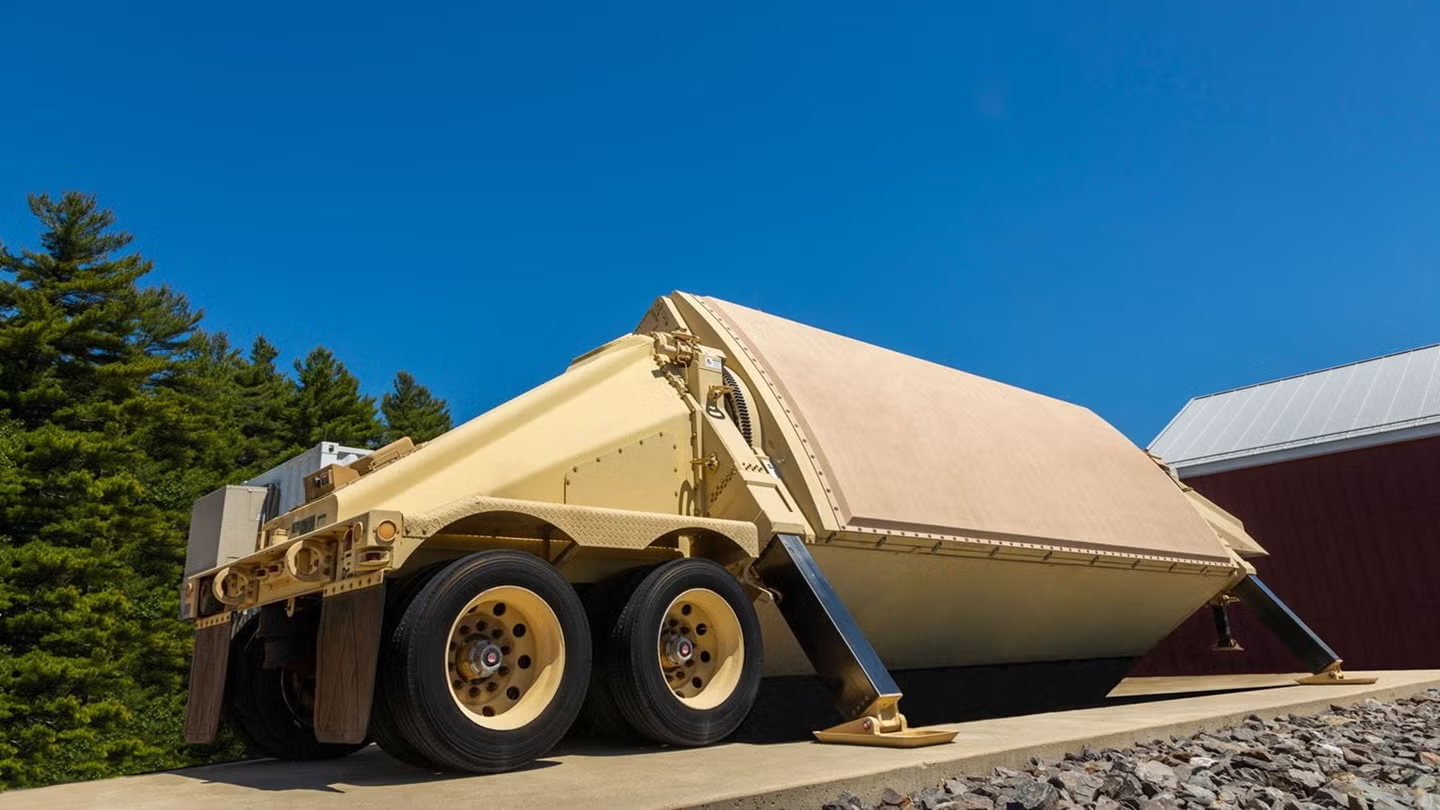
- Raytheon has gained more funds to develop the AN/TPY-2 radar system, used as the sensor layer of THAAD air defence systems
- Its efficacy is demonstrated against ballistic missiles amid the ongoing conflict in the Middle East
- But this latest modification will likely focus on new methods of tracking hypersonic weapons earlier
The US Department of War has allocated $773.5m to Raytheon for further research and development of the Army Navy Transportable Radar Surveillance Control Model 2 (AN/TPY-2) radar system on 26 March 2026.
Serving as the sensor layer – or the eyes – of the United States’ modern missile defence, AN/TPY-2 detects, tracks and discriminates ballistic missile threats.

Discover B2B Marketing That Performs
Combine business intelligence and editorial excellence to reach engaged professionals across 36 leading media platforms.
It operates in the X-band of the electromagnetic spectrum. This enables it to see targets more clearly and distinguish between an actual threat and non-threats, like launch debris.
AN/TPY-2 can operate in two modes: forward-based and terminal. While the former involves detecting ballistic missiles after they are launched, the latter sees the radar guide interceptors toward a descending missile in what is called the “terminal” phase of its trajectory. To this end, the radar is at the centre of the Terminal High Altitude Area Defense, or THAAD, system.
Iran War
The radar is used for Gulf air defence amid the ongoing conflict in the region, specifically defending against Iranian ballistic missiles. AN/TPY-2 is present in Jordan, Saudi Arabia and the United Arab Emirates.
The capability has proven so effective that widespread reports suggest Iran was forced to target the radar in an attempt to blind coalition forces, but Callum Kaye, a GlobalData defence analyst, emphasised the difficulty to ascertain the level of damage sustained by US bases in the Gulf and Middle East.
“Damaging one would render a THAAD unable to carry out high altitude interceptions of ballistic missiles, forcing defenders to rely on shorter range systems, thereby increasing the risk of a successful penetration of defences,” Kaye explained.
In early March, however, US Central Command stated that Iran’s ability to launch ballistic missiles reduced by 90% since the outset of the war. The Israel Defence Forces, likewise, claimed that 70% of the Islamic Republic’s ballistic missile launchers were disabled by day 16.
This has since prompted Iran to find other asymmetric means of gaining leverage in the conflict, such as disrupting international trade in the Strait of Hormuz.
More R&D: to what end?
Efforts to develop the AN/TPY-2 are recurring under the contract which has a total ceiling value of $2.24bn set to conclude on 30 October 2027.
Since 2020, Raytheon has transitioned the radar system from older Gallium Arsenide to Gallium Nitride (GaN) semiconductors. Raytheon have delivered 13 GaN array AN/TPY-2 radars to the US Missile Defense Agency as of May 2025.
This upgrade extends the detection range and discrimination sensitivity, which should the interception of a hypersonic missile before it initiates manoeuvres, specifically at the point where the booster separates from the warhead.
The term “hypersonic” denotes vehicles that can exceed five times the speed of sound (nearly 4,000 miles per hour). Hypersonic weapons take the form of either a cruise missile or a glide vehicle.
According GlobalData market intelligence, hypersonic weapons – which already appear in combat and are increasingly fielded by state actors – compress decision time, complicate tracking, and force a reappraisal of layered defenses.
Building on the GaN upgrade, it is likely that the latest $773.5m modification will continue this trend in advancing the hypersonic defence mission, but the latest methods have yet to be determined.

