

WASHINGTON — The Space Force has set up a pool of 14 vendors to compete for $1.84 billion over the next decade to provide future space monitoring satellites and/or services, the service announced Wednesday.
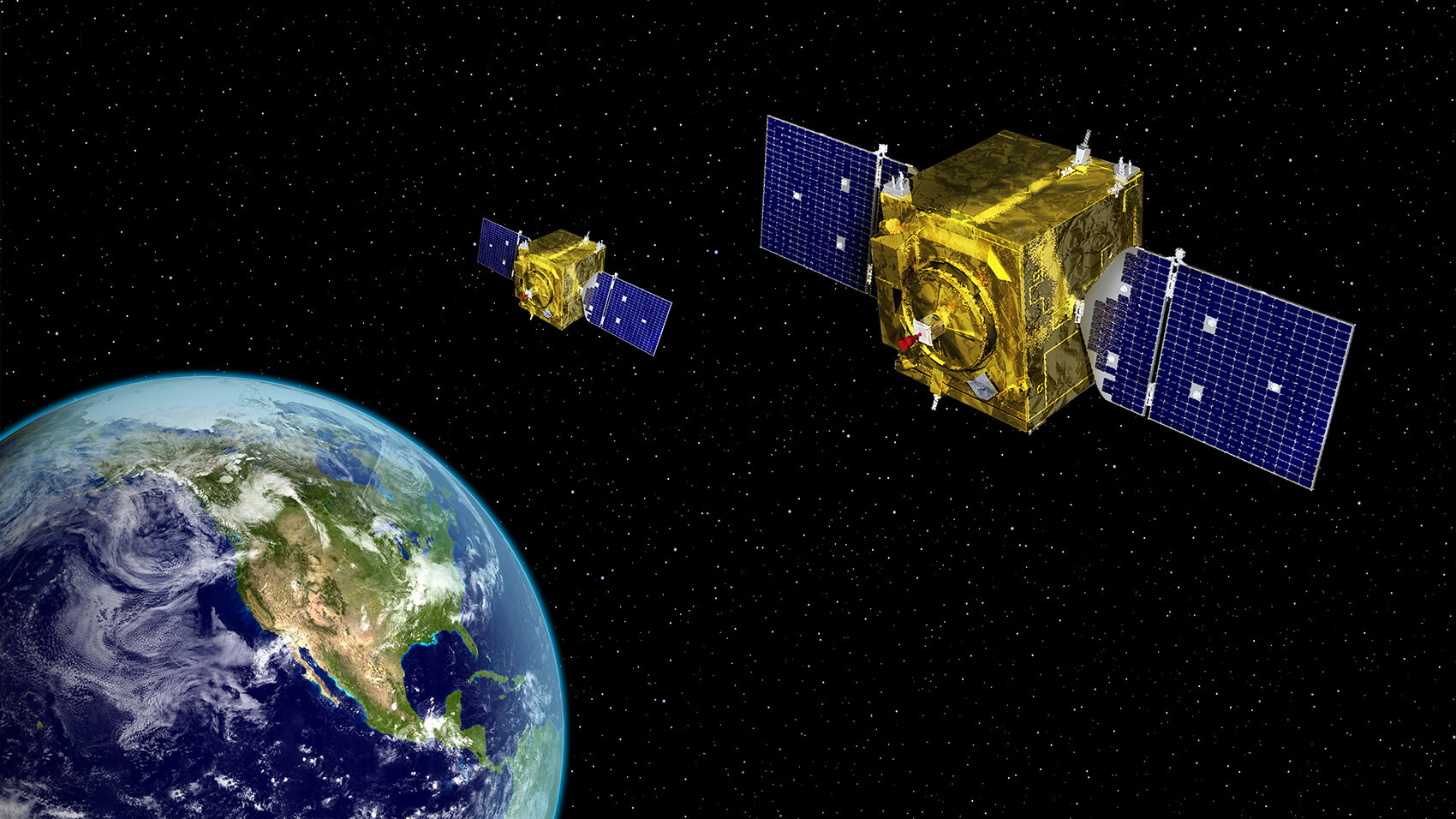
The first task order under the new indefinite delivery/indefinite quantity (ID/IQ) contract vehicle for the newly dubbed Andromeda program (formerly known as RG-XX), will buy commercial birds to replace the service’s venerable Geosynchronous Space Situational Awareness Program (GSSAP) constellation of neighborhood watch satellites that can snuggle up close to and inspect adversary spacecraft.
Geosynchronous Earth orbit, some 36,000 kilometers (22,369 miles) in altitude, is where many high-value military and intelligence community satellites are stationed.
The first GSSAP satellites were launched in 2014, and there are currently six on orbit. GSSAP has limited maneuver capabilities; whereas the Space Force intends the new commercial replacements to be more zippy while maintaining a long on-orbit shelf life.
Col. Byron McClain, program executive officer for Space Combat Power at Space Systems Command (SSC), told reporters in January that the idea is to issue new contracts annually based on service requirements and budgets.
SSC in October issued a draft request for proposals, and followed up in January, but all specific requirements were stamped as controlled unclassified information and thus not publicly revealed.
The 14 vendors, chosen from a total of 32 bids, include a mix of traditional defense firms and space startups, in order for the Space Force to be able to take advantage of rapid commercial innovation. They are:
Anduril Industries; Astranis Space Technologies; BAE Systems, Space Mission Systems; General Atomics Electromagnetic Systems; Intuitive Machines; L3Harris Technologies; Lockheed Martin Corp.; Millennium Space Systems; Northrop Grumman Systems Corp.; Quantum Space; Redwire Space Missions; Sierra Space Corp.; True Anomaly; and Turion Space Corp.
