

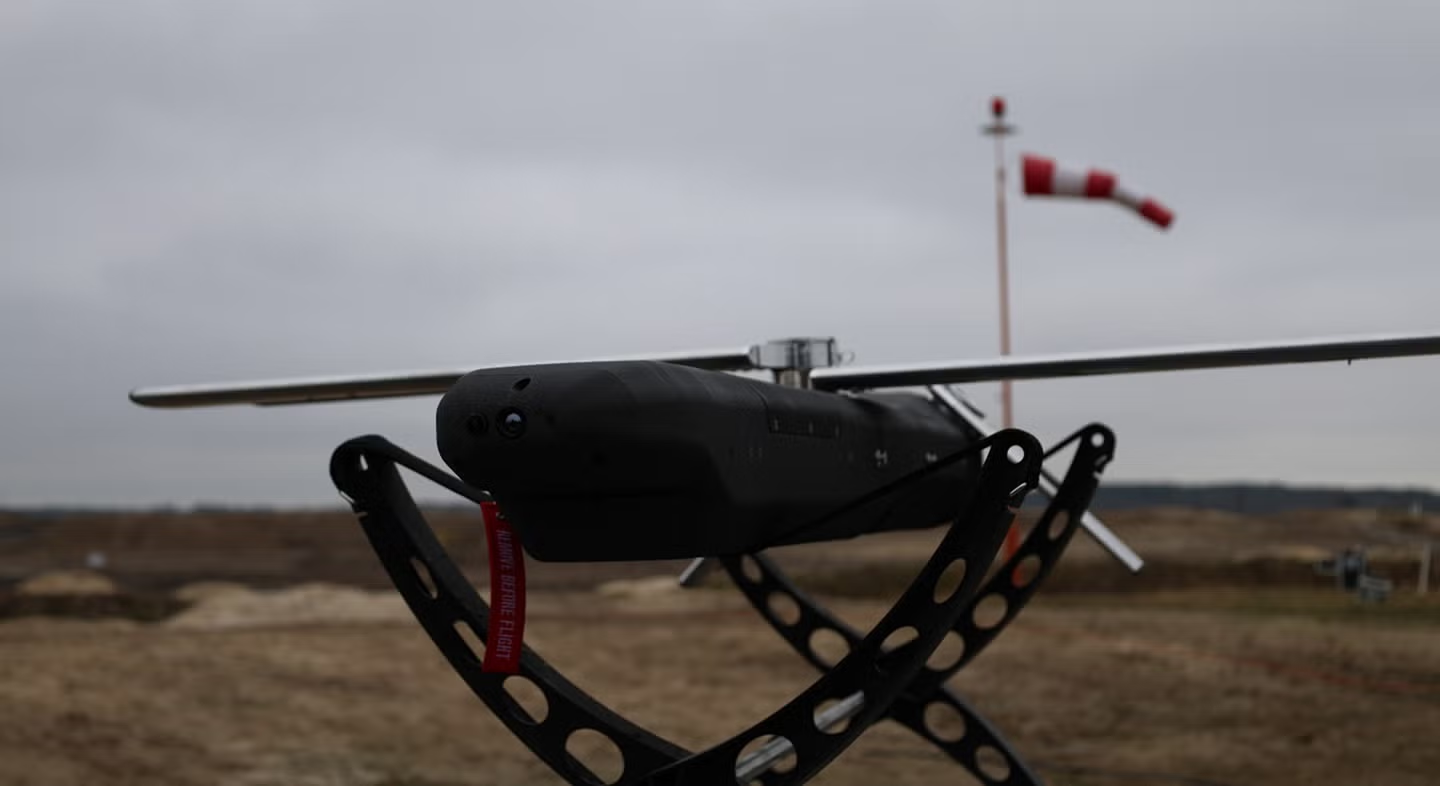
- At the London Defence Conference today (10 April), the UK Defence Secretary announced plans to buy Skyhammer air defence units
- The air defence system – a type of interceptor – is built by the start-up Cambridge Aerospace, which will deliver systems from May, over the next six months
- Skyhammer destroys Shahed-style attack drones at a speed of 700km/h at a distance of 30km
The UK Defence Secretary John Healey has opened the London Defence Conference today by announcing British and Gulf plans to procure Skyhammer air defence systems.
Skyhammer is a munition designed to defeat slow-moving Shahed-style one-way attack uncrewed aerial systems (UAS). This interceptor can reach speeds of 700km/h at a distance of up to 30km (nearly 19 miles).

Discover B2B Marketing That Performs
Combine business intelligence and editorial excellence to reach engaged professionals across 36 leading media platforms.
Initial deliveries will begin in May 2026, according to the contractor, Cambridge Aerospace, with an unspecified albeit “significant” number of units and launchers to be delivered over the next six months.
Meanwhile, in his speech, Healey accented the Government’s fast procurement approach of counter UAS (C-UAS) solutions, derived from the UK’s experience supporting Ukraine. Over the last several months, for example, the UK has been building Octopus drone interceptors at scale for Ukraine’s forces.
Lessons from the Gulf, Ukraine
Such a fast-moving munition like Skyhammer is one of a number of emerging C-UAS interceptors that have garnered interest in the global market. Others include the Estonian Mark I missile, developed by Frankenburg.
Notably, both Cambridge Aerospace and Frankenburg joined 11 other defence suppliers in a high level meeting with British and Gulf leaders in Whitehall on 18 March, which convened to consider lower cost options to intercept the hybrid salvos Iran launched across the Middle East for over a month.
The Gulf air defence response relied on formidable American albeit unsuitable systems like THAAD and Patriot.
But it is well understood, particularly in Europe last year, that one can no longer rely on conventional and costly air defence interceptors against increasingly autonomous (or pre-programmed) Shahed-type attack drones. A single PAC-3 missile, for example, can cost up to $3.7m and defence observers suggest it takes at least two per target.
Skyhammer features
Upon close inspection of system in available imagery, several features can be deduced.
First, the wings appear to be retractable, much like Raytheon’s Coyote effector, which implies the system is not only compact for storage but is likely tube-launched.
Next, there is no discernable propellor at the aft section which could mean that the interceptor is jet-powered. This is made more compelling by the fact that the system can travel at 700 kilometres per hour, a speed that is not achievable for a platform of this size with an electric motor or props.
Furthermore, the inverted V-tail fins allow allow for greater manouevring in flight.
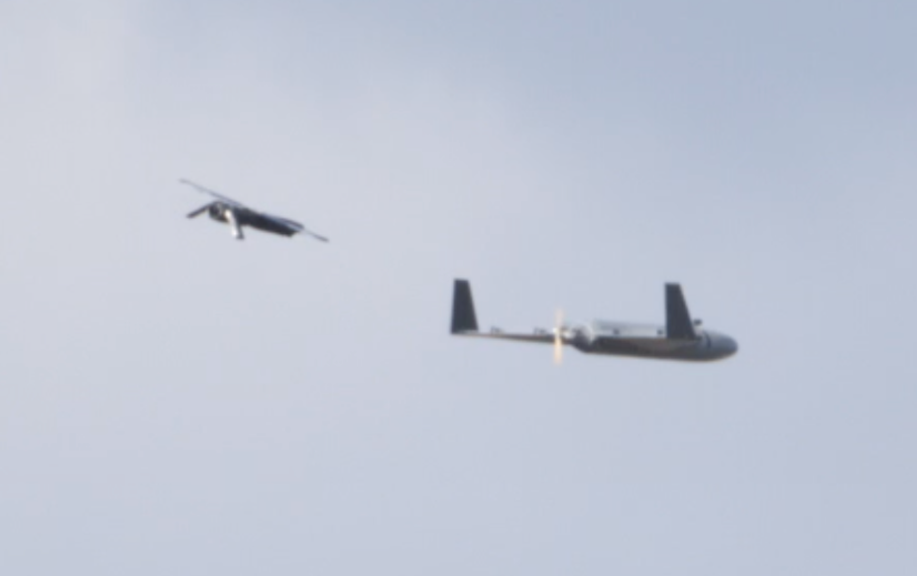
It is worth contesting the MoD’s description of Skyhammer as a “missile interceptor” since the munition likely uses a turbojet engine instead of a solid fuel rocket motor, much like Frankenburg’s micro missile, which is much closer to Mach 1 in speed. To this end, Cambridge Aerospace employ the vague term “air defence system” to describe Skyhammer.
Army Technology approached both Cambridge Aerospace, which declined to comment on details of the system, the contract and its production, and the UK Ministry of Defence, which did not respond before the time of publishing.
Rapid development cycle
Nevertheless, the manufacturer has clearly met the fast and sovereign procurement principles which the UK Government espoused in the Defence Industrial Strategy last year.
Founded in late 2024, the company soon developed its first product, Skyhammer, in January 2025, after which the interceptor undertook initial flight testing within six weeks.
Since then, the product has undergone “consistent, iterative testing” on a weekly basis, according to the start-up, to ensure it is able to counter a range of threats and integrate with various sensors to provide a layered air defence system.

