

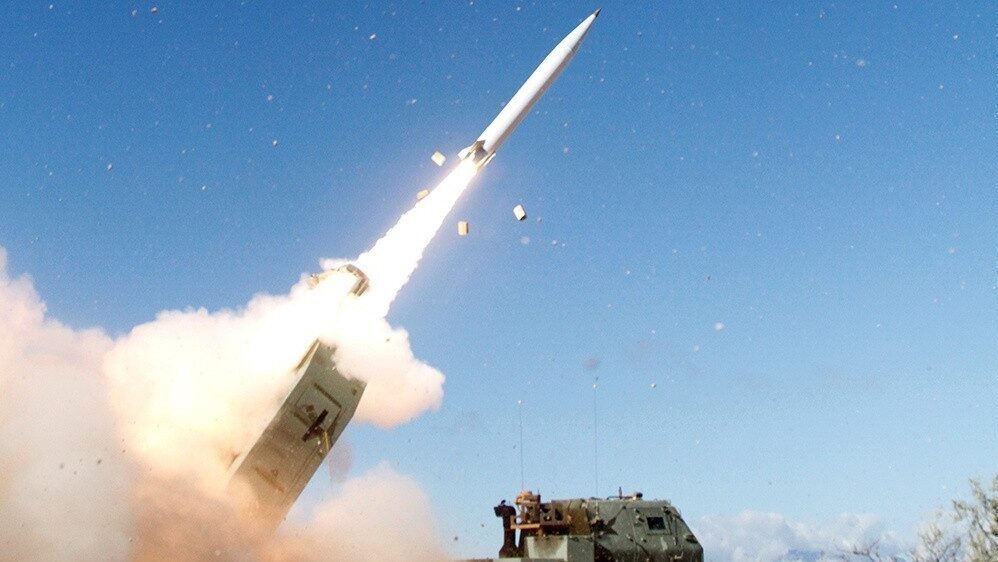
WASHINGTON — The Pentagon’s Munitions Acceleration Council (MAC) is homing in on 14 legacy and “emerging” munitions as part of its ambitious plan to ramp up the production and ink a series of multi-year deals, according to fiscal 2027 budget documents.
“These investments are vital to ensuring the department’s ability to meet immediate and long-term munitions demands, replenish depleted stockpiles, support the operational needs of US forces, allies, and partners, reestablish deterrence, and meet long-term demand,” according to one budget document.
“This ensures the US maintains a credible deterrence posture by increasing munitions availability and readiness while supporting sustained operations for US forces, allied nations, and partner countries in the face of evolving global threats,” it adds.
After standing up the MAC last year to scale weapons production, the budget document goes on to identify a dozen legacy weapons the council deems critical, along with two “emerging capabilities that represent advancements in technology and operational effectiveness.”
The Legacy Weapons:
- Patriot Advanced Capability-3 (PAC-3) Missile Segment Enhancement interceptors
- Terminal High Altitude Air Defense (THAAD) interceptors
- Standard Missile-3 IIA
- SM-6
- SM-3 Block IB
- Tomahawk Land Attack Missile
- Joint Advanced Tactical Missile
- Low-Cost Cruise Missile
- Advanced Medium-Range Air-to-Air Missile
- Maritime Strike Tomahawk
- Joint Air-to-Surface Standoff Missile-Extended Range
- Long Range Anti-Ship Missile
Emerging Capabilities:
- Low-Cost Hypersonic Strike Weapon
- Precision Strike Missile (PrSM) Increment 1
“The focus on 12 legacy munitions ensures continued support for proven systems that are essential to current and future operations, such as precision-guided missiles, air and missile defense, and air-to-air and air-to-ground munitions,” the document said. “The inclusion of two emerging capabilities reflects the Department’s commitment to innovation and modernization, addressing future threats, and enhancing operational effectiveness with next-generation long-range munitions and advanced autonomous munitions systems.”
To actually boost production over the next seven years, so far the administration has inked a series of framework deals with companies for them to invest in their manufacturing facilities. Those agreements have included programs like PAC-3 interceptors, PrSM, and seekers for both THAAD interceptors and PAC-3 interceptors. While subsequent production contracts to actually buy more of those weapons have not yet been finalized, earlier this month the Pentagon awarded Lockheed Martin a $4.7 billion undefinitized contract action to begin work associated with the framework deal.
As for spending plans, the FY27 budget request includes a $70.5 billion ask for missile procurement coffers — a 188 percent hike over the FY26 budget. Roughly $40 billion, or around 55 percent, of that request is being sought through reconciliation, which opens more flexibility to the services because that “mandatory” funding is available over a longer period than is typical for discretionary funds.
Speaking to reporters at the Pentagon on Tuesday, Jules “Jay” Hurst, who is performing the duties of the Defense Department’s comptroller, said the plan is to spread those dollars out over several years and ink multi-year contracts.
“We’re making them put skin in the game … and we expect them to meet the ramp rates that they agree to. And, if they don’t, there’ll be penalties for them,” Hurst said.
“We’re requiring contractors to foot the bill for CapEx [capital expenditures], right, which is something we haven’t done before,” he later added. “So, in order to pay for that CapEx, they have to sell a certain number of munitions to the United States. If they don’t meet their production goals … their initial penalty is the CapEx itself … and then there will be provisions in contracts to penalize contractors who don’t meet production ramp rates as well.”
