

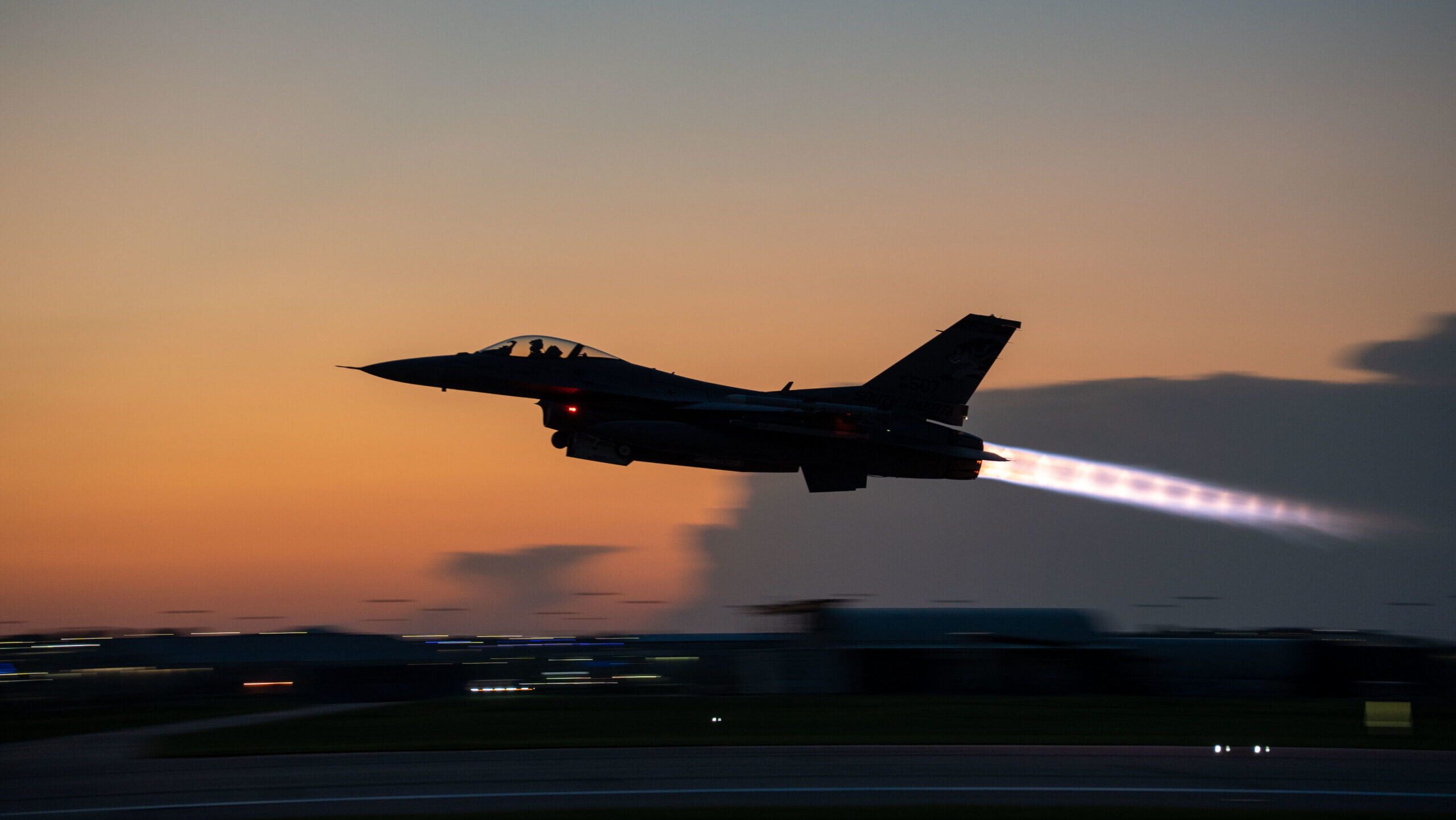
WASHINGTON — Lockheed Martin has claimed victory in a longstanding competition to sell fighter jets to Peru, though senior officials in Lima appear to be at odds with each other over the fate of the deal.
Lockheed “welcomes the Government of Peru’s announcement to purchase 12 new F-16 Block 70 aircraft to modernize the nation’s fighter fleet and strengthen its national defense capabilities,” the American aerospace giant said in a press release on Thursday.
Lockheed VP for integrated fighter group Mike Shoemaker was quoted as saying, “Peru’s choice of the F-16 underscores the aircraft’s unmatched operational performance and combat record, as well as its ability to meet the most pressing defense requirements.”
But in Lima that “choice” isn’t so clear amid public disputes and what appears to be something of a power struggle among senior officials that has included high-level resignations.
Peru has sought to upgrade its current fleet of Dassault Mirage 2000 and MiG-29 fighters for years, and several major international defense firms lined up with offerings, including Saab, Korea Aerospace Industries and Dassault, in addition to Lockheed.
RELATED: As Peru seeks new fighter jets, global firms jockey for position
In early March interim President José María Balcázar Zelada signed a decree designating the project a “military secret,” limiting public information about government negotiations. But one account of the machinations over the last several days comes from the US Embassy in Lima.
In a lengthy post on Wednesday, the embassy said that on April 14 “Lockheed Martin was informed in writing of its selection, with a technical signing scheduled for 7:00am and a ceremonial signing for 5:00pm on April 17.”
But then, the post says, Peru announced on national public radio that the signing had been postponed. It was around this time that Balcázar said publicly that he didn’t have the authority to make the deal. “For us to commit such a large sum of money to the incoming government would be a poor practice for a transitional government,” he said, referring to ongoing elections.
The move prompted backlash from US Ambassador to Peru Bernie Navarro, who suggested Lima was dealing with the US “in bad faith” and threatened to use “every available tool to protect and promote the prosperity and security of the United States and our region.”
On Wednesday, Balcázar appeared to double down, saying in a televised speech, “We do not have any intention [to sign the contract] besides using the State’s money adequately” with a focus on “the broad social gaps that we must address.”
The same day Peru’s defense and foreign ministers resigned, a move The Associated Press reported was directly tied to Balcázar’s position on the F-16 deal. The AP said Defense Minister Carlos Díaz wrote in a resignation letter that pausing the purchase “could compromise” Peru’s security.
Confusing matters further: Some version of the signing appeared by then to already have taken place, involving Peruvian MoD officials, according to the AP. The US Embassy’s account appears to line up, alleging the “technical signing between authorized parties took place on April 20, 2026, with full awareness from the highest levels of the Peruvian government.” And Peru’s Ministry of Economy on Wednesday formally announced a first payment of $462 million for the jets.
Still the embassy appeared to acknowledge the matter wasn’t fully settled, as it warned of consequences for further delays. “The same package will not be available in a couple months, or even a couple of weeks, due to increased supplier costs and interest from other countries given the dynamic context of the global world we all live in,” the post said.
A statement from Navarro later that day was less equivocal. He said that Peru “honored its commitment, a sign of seriousness as an economic and security partner.
“Today marks a milestone in our 200-year history,” he wrote online. “The F-16 Block 70, among the most technically advanced combat aircraft, will arrive in Peru.” The ambassador also told Peruvian media that the first aircraft are expected to arrive by 2029-2030.
Balcázar does not appear to have commented publicly about the dispute since his Wednesday speech. Lockheed did not respond to a request for additional comment on the status of the Peru deal on Thursday. New defense and foreign ministers have since been sworn in.
The Peruvian Air Force’s original request was for a fleet of 24 primary combat aircraft. Should the initial deal go through, it is unclear if Lockheed will also manufacture the other 12.
Meanwhile, the country held general elections on April 12, a run-off is scheduled for June 7 and the new president will be sworn in on July 28. The incoming elected-president will be Peru’s third president this year, and the 10th since 2016.
Observers are sure to be closely watching how the new leader feels about the future of the F-16 deal.
