

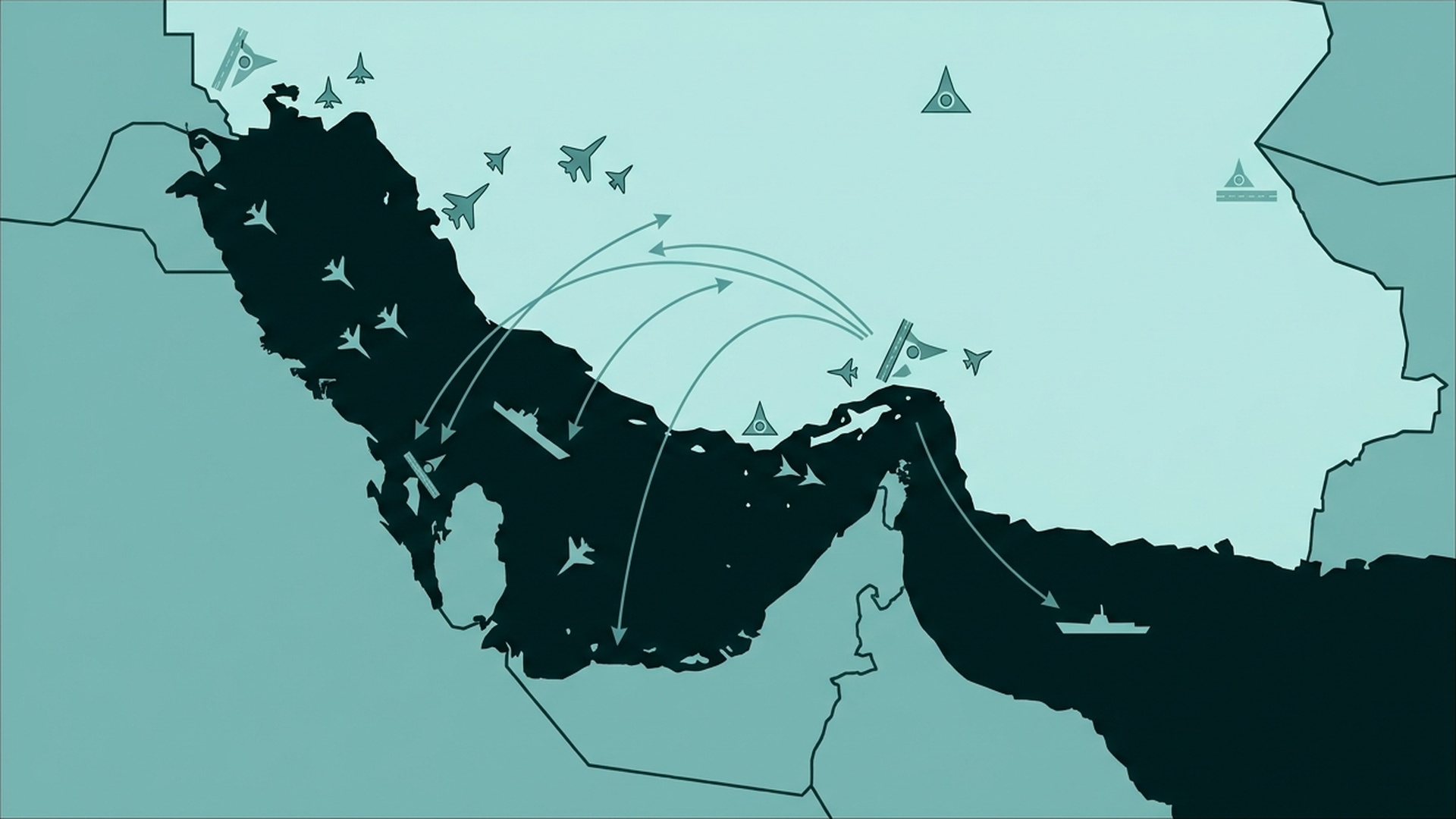
The United States and Israel launched coordinated airstrikes against Iran on 28 February 2026 – codenamed Operation Epic Fury (US) and Operation Roaring Lion (Israel) – targeting military installations, nuclear enrichment facilities, and key officials including Supreme Leader Ali Khamenei, who was assassinated in the opening hours.
Iran retaliated under Operation True Promise IV almost immediately, extending the war’s geographic footprint to seven countries within 48 hours – Bahrain, Jordan, Kuwait, Qatar, Saudi Arabia, the UAE, and Iraq.
The two-month campaign cost the United States approximately $25 billion, depleted critical munition stockpiles at rates that analysts assessed would take three to five years to rebuild, and produced what the International Energy Agency called the largest oil supply disruption in the history of the global oil market.
The consensus from CSIS, the ISW/AEI Critical Threats Project, the Council on Foreign Relations, and the Soufan Centre is that the US achieved significant tactical damage to Iran’s visible military infrastructure but could not reach underground infrastructure, eliminate the Strait of Hormuz threat, suppress proxy networks, drain reconstitution capacity, or produce the political outcome it sought.
Get the Latest Defence News & Analysis
Follow Iran and the wider Middle Eastern and South Asian security environment with news coverage and analysis that answers what’s happening and let’s you see what’s coming.
Operation True Promise IV: Iran’s Retaliatory Missile and Drone Campaign
Iran launched over 500 ballistic missiles and 2,000 drones by Day 4 of the war, according to Pentagon and CENTCOM reporting.
The pre-war Iranian ballistic missile arsenal stood at approximately 2,500 according to Israeli intelligence estimates. The ISW/AEI Critical Threats Project documented 95 Iranian strike waves under Operation True Promise IV by 4 April 2026.
Strikes hit all seven target countries in the opening 48 hours. The Fifth Fleet Headquarters in Bahrain sustained damage. Ali Al Salem and Camp Buehring in Kuwait were struck. Al Udeid Air Base in Qatar, Al Dhafra Air Base in the UAE, and Ain al-Asad Air Base in Iraq were all hit – with at least 64 US service members sustaining concussive injuries at Ain al-Asad alone.
One of the most consequential strikes destroyed the AN/TPY-2 THAAD radar at Muwaffaq Salti Air Base in Jordan – one of only nine such radars in the entire US global inventory, valued at $300 million. The Al Jazeera Centre for Studies described this as “blinding US eyes in the Middle East”.
The UAE reported 1,422 detected drones and 246 missiles between 28 February and 8 March, accounting for roughly 55% of all recorded strikes during that period.
By approximately 3 March, Iran’s ballistic missile launch rate fell roughly 90% and drone launch rates fell approximately 83%, according to CENTCOM Commander Admiral Brad Cooper. The Israel Defence Forces (IDF) claimed to have destroyed or rendered inoperable approximately 330 of Iran’s estimated 470 missile launchers.
However, Iran pivoted to a sustainable drone-based attrition model, stabilising daily strike rates at 190 to 392 drones per day. Iran claimed a tenfold increase in drone production capacity during the war – a claim that, if even partially accurate, suggests the attrition model could be sustained indefinitely.
Iranian Munitions Architecture: Fattah Missiles, Shahed Drones, and the F-5 Incident
Iran’s strike campaign drew on three layers of its munitions architecture – ballistic missiles for precision strikes against hardened targets, loitering munitions for sustained attrition, and cruise missiles for radar evasion.
The ballistic missile tier included the Fattah-1 and Fattah-2 – classified by the International Institute for Strategic Studies (IISS) as standard medium-range ballistic missiles (MRBMs) despite Iran’s claims of hypersonic terminal speeds. The Kheibar Shekan features a manoeuvrable re-entry vehicle (MaRV), while the Emad and Ghadr-110 are Shahab-3 derivatives. The Sejjil is Iran’s solid-fuel MRBM. These were used for high-value precision strikes against THAAD radars, blast shelters, and early warning systems.
The drone tier included the Shahed-136 – a piston-engine workhorse that formed the backbone of the attrition campaign – the Shahed-238 jet-powered variant with GPS, electro-optical, and anti-radiation guidance options, and the Hadid-110, a compact jet-powered design marking its first confirmed combat deployment.
In one of the war’s most remarkable tactical episodes, a manned Northrop F-5 Tiger II – a 1960s-era airframe – penetrated US and coalition air defences over Kuwait to bomb Camp Buehring during a concurrent saturation attack. The aircraft exploited a roughly 120-second detection-to-impact window by flying at very low altitude while air defences were engaged with incoming drones and missiles.
Damage to US Military Bases: 16 Sites Struck Across the Middle East
A CNN investigation published on 1 May 2026 confirmed that at least 16 American military sites – the majority of US positions in the Middle East – sustained damage during the war.
NBC News reported that Iran struck over 100 targets across 11 bases in seven countries. Multiple sites were rendered “all but uninhabitable” in the war’s early weeks according to US sources. The Pentagon’s initial public statements that damage was minimal were at considerable odds with satellite imagery and classified damage assessments.
Equipment destroyed across all sites totalled an estimated $2.3 to $2.8 billion, according to Al Jazeera citing Pentagon data. Total infrastructure repair costs exceeded $5 billion per AEI estimates. Fifth Fleet Headquarters repairs alone were assessed at approximately $200 million.
Airbus Defence and Space Pleiades Neo imagery confirmed strike damage at Al Dhafra Air Base in the UAE affecting fuel storage, hangars, barracks, and medical facilities. The AN/FPS-132 early warning radar at Qatar was reported damaged – a system valued at approximately $1.1 billion. Planet Labs satellite imagery from 1 March and 6 March 2026 confirmed building and radome destruction at the Fifth Fleet Headquarters in Bahrain.
The Stars and Stripes analysis concluded the war revealed fundamental vulnerabilities of the US hub-and-spoke basing architecture in the Middle East.
Patriot and THAAD Interceptor Depletion: The 114-to-1 Cost Asymmetry
The war exposed a structural vulnerability in the US and Gulf Cooperation Council (GCC) air defence architecture – the unsustainable cost ratio between Iranian offensive munitions and Western interceptors.
In the first four days alone, US Patriot batteries fired 943 interceptors – equivalent to 18 months of Lockheed Martin and Boeing factory production. GCC states collectively burned through approximately 86% of their combined pre-war Patriot-family inventory of roughly 2,800 rounds within five weeks, according to the Jewish Institute for National Security of America (JINSA).
THAAD batteries expended approximately 198 interceptors in the first 16 days – roughly 40% of the entire US global inventory of 534 rounds. Over the full campaign, the range was assessed at 40 to 80% of all THAAD interceptors expended.
The cost asymmetry is stark. A Shahed-136 drone costs between $20,000 and $50,000 to produce. A PAC-3 MSE interceptor costs $3.7 to $4 million – a ratio of 114-to-1 in Iran’s favour.
Defence analysts assessed three to five years would be required to rebuild interceptor stockpiles. CSIS titled its ceasefire assessment “Last Rounds?” – a reflection of how deeply the campaign drained strategic reserves that underpin Pacific deterrence against China.
The destruction of the AN/TPY-2 THAAD radar in Jordan – with additional sites in the UAE and Saudi Arabia damaged – was described by the Al Jazeera Centre for Studies as “blinding US eyes in the Middle East”. The destruction forced interception duties onto Patriot systems with already-depleted interceptors, compounding the crisis.
Operation Epic Fury: The US-Israeli Air Campaign Against Iran
The US-Israeli air campaign delivered approximately 900 strikes in the first 12 hours, exceeded 3,000 targets by Day 10, and sustained a tempo of 300 to 500 targets per day thereafter, according to CSIS’s campaign analysis.
The first 100 hours cost $3.7 billion according to CSIS. The total two-month campaign cost approximately $25 billion.
The campaign destroyed or disabled roughly 120 air defence systems – about one-third of Iran’s pre-war total, including Russian-supplied S-300s and indigenous Bavar-373 batteries. At least 29 ballistic missile launch sites and four key manufacturing facilities were damaged. The three main nuclear enrichment sites – Natanz, Fordow, and Isfahan – sustained what the Chairman of the Joint Chiefs of Staff (CJCS) described as “extremely severe damage.” The conventional Iranian Navy (Artesh) was largely destroyed, with nine warships sunk on Day 1 alone.
US losses included five fighters downed during the campaign – including an F-15E Strike Eagle on 3 April – and 16 MQ-9 Reaper drones lost. US Defence Secretary Pete Hegseth claimed “total air dominance” within two weeks.
However, a classified intelligence assessment found the nuclear strikes only set Iran’s programme back by less than six months rather than eliminating it. Approximately 50% of Iran’s missile launchers remained intact according to US intelligence in April 2026. The Islamic Revolutionary Guard Corps (IRGC) Navy retained roughly 50% of its pre-war assets. The regime survived Khamenei’s decapitation – succession protocols produced a more hard-line successor leadership drawn entirely from the IRGC.
The CFR assessed the odds of achieving all or even most campaign objectives as “remote”.
Iran’s Underground Missile Cities: Why US Bunker Busters Failed
Iran maintains approximately 30 underground missile bases constructed over decades in the Zagros and Alborz mountain ranges, as detailed in CNN’s investigation of Iran’s underground missile cities.
These facilities sit at depths of 400 to 1,500 feet into granite bedrock, connected by over 100 interconnected tunnel systems. They feature automated rail transport and compartmentalised blast-resistant doors. The GBU-57 Massive Ordnance Penetrator – the largest bunker buster in the US inventory – could not reach them.
Operation Epic Fury struck 77% of visible tunnel entrances. US intelligence subsequently admitted the campaign had overestimated damage by at least 50%. Iranian military engineers cleared bombed entrances and restored sites to full operation within hours using pre-positioned excavation equipment, as satellite imagery confirmed.
The facilities featured redundant multiple exits, decoy entrances designed to absorb strikes, and transporter-erector-launchers (TELs) that could emerge from tunnel exits, fire from pre-surveyed positions, and return underground.
The Times of Israel reported that US intelligence assessed Iran can recover underground launchers and fire thousands of missiles. The Soufan Centre concluded that Iran’s remaining capabilities position Tehran to fight a war of attrition and threaten the region after any ceasefire. US intelligence undercounted Iran’s missiles by more than 1,000.
In this vein, the underground missile city network represents perhaps the single most significant factor in determining the war’s strategic outcome – it ensured that no air campaign, regardless of scale or precision, could disarm Iran’s retaliatory capability.
The Strait of Hormuz Closure: Oil Disruption and Global Economic Fallout
Iran closed the Strait of Hormuz on 4 March 2026 using a combination of warnings, mine-laying, ship seizures, and IRGC Navy swarm boat activity.
By 10 March, 6.7 million barrels per day (bpd) had been removed from global markets. By 12 March, the figure exceeded 10 million bpd. Brent crude surged past $120 per barrel. The IEA confirmed this was the largest supply disruption in oil market history.
The Pentagon told Congress that clearing the Strait of mines could take six months, and only after the war ends. Mine clearance under fire with an intact IRGC Navy was assessed as too dangerous. Iran reportedly lost track of some of its own mines – a detail that underscores the indiscriminate nature of the denial strategy.
Iranian drones shut down a 922,000 bpd ADNOC refinery at the Ruwais Industrial Complex in Abu Dhabi. A Saudi Aramco processing plant with 550,000 bpd capacity was also halted by strikes.
The war extended beyond military targets into commercial and cloud infrastructure. Two Amazon Web Services (AWS) data centres in the UAE and one in Bahrain were struck – the first time a state deliberately targeted commercial cloud infrastructure in wartime, according to Fortune. The Fairmont The Palm hotel in Dubai, Jebel Ali port, and Kuwait International Airport were also hit.
Iraq lost approximately $3 billion per day in oil export revenue – 90% of its national budget. Capital Economics forecast a 10 to 15% GCC GDP decline if the conflict lasted beyond three months. Global GDP losses were estimated at $590 billion to $3.5 trillion.
Brookings, CSIS, and the Hudson Institute all concluded the Strait of Hormuz gambit exposed the limits of what air power can achieve against a mine-and-swarm naval denial strategy in confined waters.
Rare Earth Export Controls and the US Munitions Production Crisis
China’s Ministry of Commerce Announcement No. 61, effective 1 December 2025, imposed the strictest rare earth and permanent magnet export controls to date – restricting seven critical heavy rare earths: samarium, gadolinium, terbium, dysprosium, lutetium, scandium, and yttrium.
China controls approximately 90% of global rare earth refining capacity. The US has no operational mine-to-magnet supply chain. Export licences were largely denied to companies with any affiliation to foreign militaries.
The dependencies run deep across critical US munitions. Tomahawk cruise missile fin actuators require samarium-cobalt magnets for heat tolerance during cruise flight. Joint Direct Attack Munition (JDAM) guidance kits use rare earth permanent magnets. Each F-35 airframe contains approximately 920 pounds of rare earth materials. Patriot PAC-3 MSE interceptors use rare earth components for guidance and control.
The war burned through these weapons at extraordinary rates. Over 850 Tomahawks were fired. Approximately 80% of the Joint Air-to-Surface Standoff Missile-Extended Range (JASSM-ER) inventory was expended. The 40 to 80% THAAD depletion compounded the crisis.
A 1 January 2027 federal mandate prohibits Chinese-sourced rare earth magnets in any US military platform – a deadline that, given the absence of a domestic mine-to-magnet supply chain, the West Point Modern War Institute described as a “wake-up call” for US military capability. Chatham House assessed that the restrictions threaten Washington’s military primacy.
Thus, the rare earth crisis constrains US rearmament at precisely the moment Pacific deterrence requirements vis-à-vis China demand accelerated production. One can see how this dynamic – munitions depletion combined with supply chain dependency on a strategic competitor – represents a structural vulnerability rather than a temporary shortfall.
Post-Ceasefire Dynamics: Iran’s Reconstitution and the Nuclear Question
The Alma Research Centre described the post-ceasefire period as a race to rebuild Iran’s nuclear and missile array. The Hudson Institute titled its assessment “Tehran Reloads”.
Iran retains up to 70% of its pre-war ballistic missile arsenal. Underground production and storage facilities survived largely intact. Drone production capacity is reconstituting faster than Western intelligence can calibrate.
The nuclear question has shifted fundamentally. The fatwa prohibiting nuclear weapons died with Khamenei. The new IRGC-dominated leadership faces a strategic choice between maintaining conventional deterrence and pursuing nuclear weaponisation. The Arms Control Association assessed that the strikes may have strengthened the political case within Iran for weaponisation rather than weakened it – a strategic irony of the first order.
CSIS and the Atlantic Council both track CRINK acceleration in the post-ceasefire period. China, Russia, and North Korea each provide distinct capabilities Tehran cannot source domestically, and US secondary sanctions have thus far been unable to disrupt the network.
Multiple GCC states blocked US base access before the war started in late January 2026. The US reportedly stonewalled Gulf state interceptor replenishment requests during the conflict. Stars and Stripes and CSIS identified this as a fundamental exposure of the limitations of the US hub-and-spoke basing architecture in the Middle East.
CNN reported on 2 May 2026 that Iran said renewed conflict is possible after rejecting a US peace proposal.
Assessment
Small Wars Journal titled its post-war assessment “A Strategic Blunder in Five Dimensions” – a verdict shared in substance, if not always in language, by the major US and international security think tanks. Four factors are likely to drive the long-term postures of both the US and Iran:
- The first dimension is tactical. The US achieved air dominance and inflicted substantial visible damage. However, underground infrastructure survived, the Strait of Hormuz remained contested, and Iran’s drone-based attrition model proved sustainable.
- The second is strategic. Nuclear enrichment sites sustained severe damage, but the programme was assessed to recover within six months. The decapitation of Khamenei produced a more hard-line successor regime rather than political collapse.
- The third is economic. The $25 billion direct cost is dwarfed by the $590 billion to $3.5 trillion in estimated global GDP losses, the largest oil disruption in history, and the acceleration of de-dollarisation dynamics in the Gulf.
- The fouth is industrial. Munitions depletion, combined with rare earth dependency on China, has created a rearmament timeline that may not align with Pacific deterrence requirements. CSIS’s “Last Rounds?” framing captures the scale of this challenge.
Given that Iran retains 70% of its ballistic missiles, maintains functional underground production, and faces a weakened political restraint on nuclear weaponization, one can see how the war’s long-term strategic balance may favour Tehran’s reconstitution over Washington’s capacity to re-establish deterrence.
It will be interesting to observe whether the post-ceasefire period produces diplomatic accommodation or merely a pause before escalation. The structural factors – CRINK deepening, rare earth constraints, interceptor depletion, and Iran’s pace of reconstitution – suggest the latter is at least as likely as the former.
Quwa Pro
Market Intelligence on South Asia & Middle East
Get ahead of your buyers’ requirements by identifying emerging threats to their national security posture.
Featured & Trusted By
