

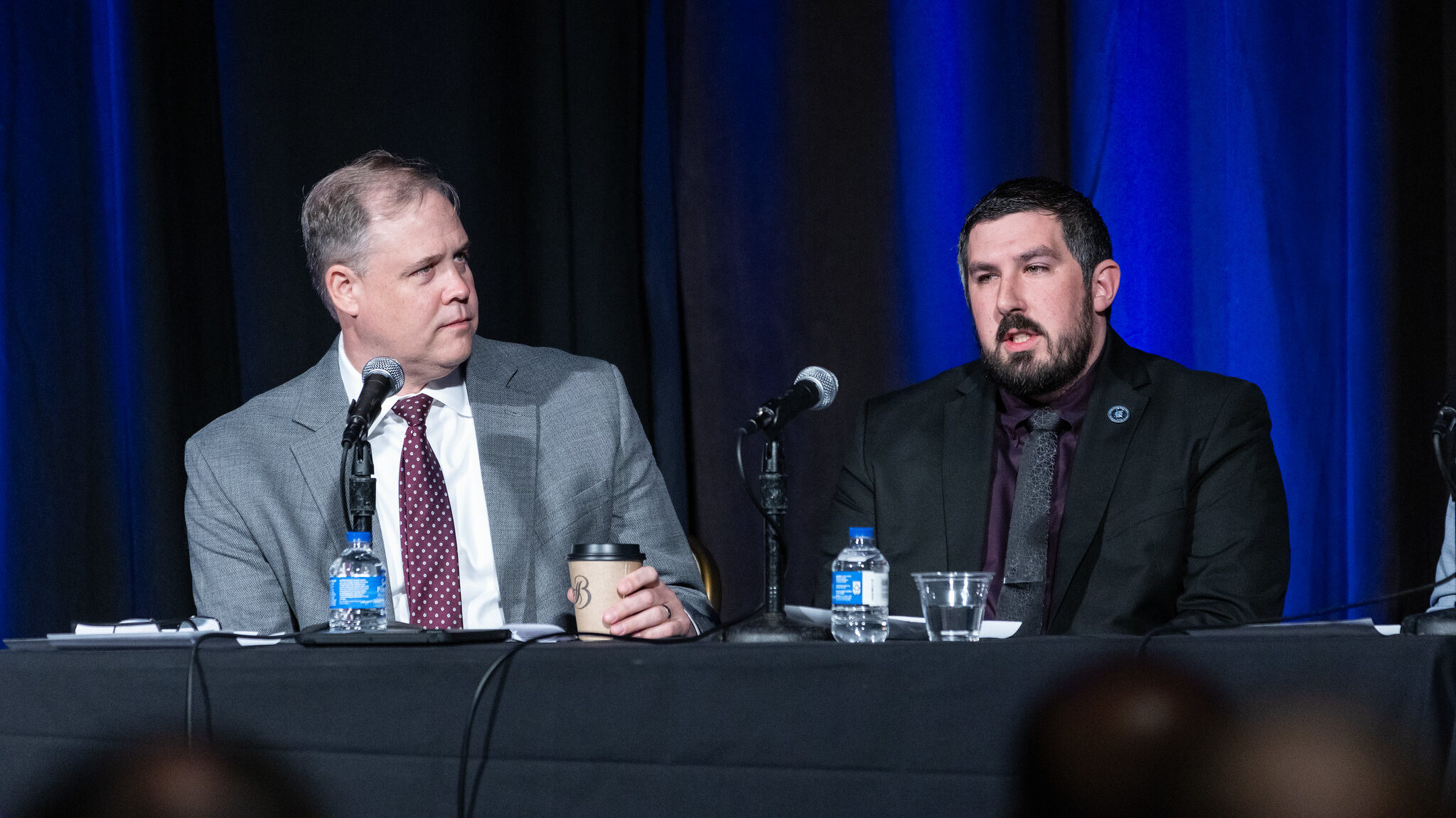
WASHINGTON ― Startup Quantum Space today announced the appointment of former NASA chief Jim Bridenstine to CEO as the company gears up to meet emerging US national security space needs for highly maneuverable and long-distance spacecraft.
Bridenstine, NASA’s 13th administrator serving from 2018 to 2021, is a former member of Congress and naval aviator. While at NASA, he launched the Artemis Program, aimed at returning American astronauts to the moon and establishing a sustained presence there and beyond. During his three-term tenure as a Republican congressman representing Oklahoma, he was a member of the House Armed Services Committee and supported the creation of the Space Force.
“Jim is poised to lead Quantum during this next phase of growth and as spending on space defense and exploration accelerates,” Kam Ghaffarian, Quantum Space co-founder and executive chairman, said in the announcement.
Since his departure from NASA, Bridenstine has worked as a managing partner of The Artemis Group consulting firm, and the appointment to Quantum Space marks the first time he has taken up an official corporate post, he told Breaking Defense.
“I was asked several times” to be a CEO, he said, but “never accepted until now.”
Bridenstine waxed enthusiastic about Quantum Space’s plans for its Ranger spacecraft that is being designed to support “sustained maneuver for dynamic space operations.”
In the face of increased adversary capabilities, he said, US satellites have “gotta be unpredictable” in their behavior ― stressing that the Ranger will have “a lot of thrust and fuel” in order to do that.
The medium-sized satellite (in the 400-700 kilogram weight class), will be able to carry a whopping 4,000 kilograms (8,818.49 pounds) of hydrazine fuel to orbit, Bridenstine explained, and will use that fuel for both chemical propulsion and electric propulsion.
Chemical propulsion enables high thrust for quick maneuvers; while electric propulsion offers high efficiency with extremely low thrust over long periods.
Typical satellites operating in geosynchronous Earth orbit some 36,000 kilometers in altitude end up with only about 1,000 kilograms of fuel once stationed that then is used to maintain their orbit, or sometimes make shifts in position. While the on-orbit fuel capacity for GSSAP birds has not been revealed by the Space Force, it is likely they can carry a bit more to enable them to move up close to inspect adversary satellites.
According to the company’s announcement, Ranger will be capable of operating across all orbits out to cislunar space, “with applications spanning persistent space domain awareness, counter-space operations, and missile defense, while also opening new possibilities for commercial operators in satellite life extension, on-orbit refueling, and space domain awareness services across geostationary and cislunar orbits.”
Bridenstine said he is particularly excited about the spacecraft’s potential to undertake cislunar operations for the Space Force, as the US and other countries move to undertake missions in the region and on the lunar surface, including resource extraction.
“We have to get better at cislunar space to stay ahead of adversaries,” he said.
The firm intends to launch its first Ranger “no earlier” than the first quarter of 2027, the announcement added.
Quantum Space, founded in 2022 and headquartered in Rockville, Md., already holds several contracts with DoD and the Space Force.
In April, it was tapped as one of 14 firms certified to compete for the service’s Andromeda program (formerly known as RG-XX), and will buy commercial birds to replace the service’s venerable Geosynchronous Space Situational Awareness Program (GSSAP) constellation of neighborhood watch satellites.
Also in April, Quantum Space was one of three companies to announced that it had won an award from the Defense Advanced Research Project Agency for a concept study under its Lunar Assay via Small Satellite Orbiter (LASSO) project to search for water on the moon via spacecraft in a very low lunar orbit.
The other two awardees, as first reported by Space News, are Benchmark Space Systems and Revolution Space.
