

“Red carpet welcome for them!” wrote an Instagram user in Malaysia.
Virtual cheers and applause emojis greeted Ocean Thunder’s arrival at the port of Pengerang on April 5. The oil tanker, carrying a million barrels of Basrah Heavy crude, was among the first vessels to exit the Strait of Hormuz after the Iran conflict erupted in late February.
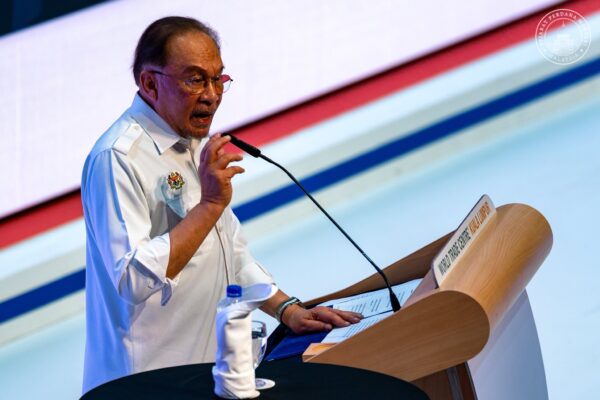
Ocean Thunder’s safe transit was a diplomatic win for Anwar Ibrahim, Malaysia’s prime minister. In a phone conversation with Iran’s President Masoud Pezeshkian on March 26, Anwar negotiated safe passage for seven ships. The tankers were chartered by a unit of Petronas, the state-owned energy company.
“If not for diplomatic efforts, I fear the Ocean Thunder would still be stuck in the Persian Gulf,” a maritime law expert at the Universiti Malaya in Kuala Lumpur told Free Malaysia Today.
Malaysia’s heavily subsidized domestic fuel market relies on a steady supply of inexpensive Iraqi crude for price stability. Nearly 70 percent of the country’s oil comes from the Persian Gulf region, and half the imports pass through the Strait of Hormuz. Malaysia is also a leading oil exporter in the 10-member ASEAN (Association of Southeast Asian Nations) bloc, but follows a “sell high, buy low” energy policy, shipping premium-quality offshore crude to Japan and Australia.
Maritime intelligence company Windward noted that the release of Ocean Thunder and other Petronas-linked tankers served a dual purpose, benefiting two of Iran’s longstanding trading partners, Iraq and Malaysia. “Transit permissions are selectively allocated based on political alignment and cargo type,” stated an intelligence briefing dated April 6.
A foreign policy guided by “economic pragmatism” underpins Malaysia’s energy ties with Iran following the imposition of U.S.-led sanctions in 2012. Apart from legal oil imports, the coastal waters around the Malay peninsula have served as a hub for the “dark fleet,” a network of private ships covertly transporting oil from Iran and other sanctioned countries to markets in Asia.
Malaysia’s links to the Islamic Republic extend beyond the oil trade. Both countries are leading advocates for the Palestinian cause in their regions. In a televised speech after his phone call with Iran’s president, Anwar reminded his audience about Gaza, saying: “Don’t forget the root of the problem.” Malaysia’s leverage, he explained, stems from its “non-hostile” status within the Islamic community. In a briefing, Anwar said his office served as a conduit for messages conveyed by the Gulf States to Iran during the conflict.
As the leader of an Islamic youth organization in the 1970s, the Malaysian Prime Minister was “profoundly influenced” by the Iranian revolution and led a student delegation to Tehran to meet Ayatollah Khomeini.
In 2023, as the incoming prime minister, he reinvigorated diplomatic ties with Iran, sending the foreign minister to Tehran after a seven-year hiatus. Later that year, Anwar met President Ebrahim Raisi on the sidelines of the United Nations General Assembly in New York. When the Shi’ite cleric was killed in a helicopter crash six months later, Anwar posted a condolence lamenting the “tragic” death. In April, he wrote, “I have lost a dear friend,” when former Iranian foreign minister Kamal Kharazi succumbed to his injuries following an air strike.
Malaysia’s foreign and domestic policies are not always aligned on Iran. The Sunni-majority country has historically viewed Iran’s Shia Islam with a degree of suspicion. In 1996, a religious committee in Kuala Lumpur issued a fatwa or decree branding the sect as “deviant.” While Shi’ites can practice their faith privately, they are banned from distributing religious literature and risk arrest for public celebrations of Shia holidays like Ashura, which commemorates the martyrdom of Prophet Muhammad’s grandson.
Despite the taboos, Kuala Lumpur is a popular destination for Iranian students and expatriates. Narges Soleimani, daughter of the slain commander of the Quds Force, reportedly lived in Malaysia. However, recent reports indicate that she is a member of the Tehran City Council. She was quoted by official news channels refuting claims by U.S. government officials that her cousins were “living lavishly” as permanent residents of the United States.
With the ongoing U.S. military operation in the Strait of Hormuz, Malaysia’s fuel situation remains precarious. Although Ocean Thunder made it through the blockade, other Pengerang-bound ships are stranded, and some vessels are reportedly damaged.
“Some people ask, if oil has come in from the Strait of Hormuz, why is it so expensive? My answer is because insurance prices have increased 150 percent and transportation has also increased due to risks,” the Prime Minister remarked at the inauguration of a new airport terminal last month.
Anwar warned that prolonged disruption could force Malaysia to buy fuel on the spot market, putting pressure on the subsidized price of RM 1.99 ($0.50) per liter.
