

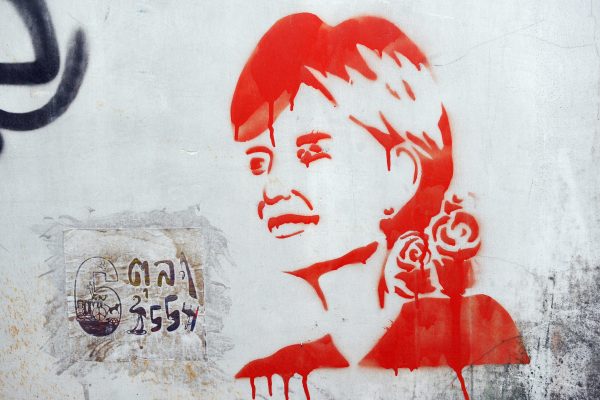
On April 30, on the occasion of Vesak Day, Myanmar’s military junta – now recast as a civilian government under President Min Aung Hlaing, the general who led the 2021 coup – announced a partial sentence reduction for ousted leader Aung San Suu Kyi and her transfer from prison to house arrest. Two weeks earlier, on New Year’s Day, ousted President Win Myint was released. These gestures followed a tightly controlled multi-phase election in December and January and a political reshuffle that installed Min Aung Hlaing as a “civilian” president after he shed his uniform.
To some observers, this sequence may suggest the first steps towards democratic reform. In reality, it is part of a well-worn script. Myanmar’s generals have long relied on cosmetic change to win international acceptance while retaining absolute power. This latest version of the charade is even less convincing than those that came before.
First and foremost, the 2021 coup and the imprisonment of deposed civilian leaders Suu Kyi and Win Myint were illegitimate and criminal acts. Since then, the country has endured sustained brutality. The military’s crackdown on dissent has killed nearly 93,000 civilians and displaced another 3.6 million. Villages have been bombed, civilians detained en masse, and entire communities subjected to scorched-earth campaigns. Against this backdrop, moving Suu Kyi from a prison cell to a guarded residence is no more than a public relations sleight-of-hand.
In reality, Suu Kyi remains isolated, unable to communicate freely with colleagues, family, or the outside world. More than 22,000 political prisoners remain behind bars. A single high-profile transfer from one form of detention to another cannot exculpate a system built on repression.
The regime’s political makeover is equally hollow. The current framework still rests on the military-drafted 2008 constitution, which guarantees the armed forces a quarter of parliamentary seats. The December 2025 election excluded the National League for Democracy, the country’s most popular political party, and cannot credibly be described as having been free or fair. Voting was restricted to around two-thirds of the country’s townships, and the independent observers reported extremely low turnout even where polls were held. Far from being a surrender of power, Min Aung Hlaing’s transition from army chief to president is a continuation of military rule by other means.
Myanmar has seen this before. The quasi-civilian transition engineered in 2010 created a brief opening, only for the military to reclaim full control a decade later. Today’s version is even more cynical: the same man who orchestrated the coup now presides over a rebranded regime, asking the world to accept the illusion of change.
None of this diminishes the human significance of Suu Kyi’s transfer. For an 80-year-old who has spent years in harsh detention, house arrest will no doubt come as a relief. For many in Myanmar, she remains a symbol of resilience and sacrifice, and their cautious hope and elation are understandable.
But hope must not be mistaken for progress. To ease pressure on the regime now would be to abandon those fighting for democracy and the right to be free. It would be a betrayal of those who have sacrificed their lives over the past five years in this Spring Revolution.
This struggle has already moved beyond any single figure. Since the coup, new alliances have emerged between pro-democracy activists and ethnic resistance groups, fostering a fragile but genuine movement towards a federal democratic future. This progress has occurred not because of the junta’s actions, but in defiance of them. Notably, it has taken shape largely in Suu Kyi’s absence – though many believe she would support such developments. The emergence of the Steering Council for the Emergence of a Federal Democratic Union (SCEF) in March 2026 reflects years of behind-the-scenes negotiations and represents a significant step toward overcoming longstanding ethnic and political divisions.
Meanwhile, the regime is investing heavily in reshaping its image abroad, hiring Western lobbying firms, funding media campaigns, and presenting itself as a legitimate government. Some may be tempted to accept this narrative in the name of pragmatic progress.
They should not.
Symbolic gestures – carefully staged elections, selective prisoner releases, and the adoption of civilian titles – do not constitute reform. Governments that claim to support democracy and human rights must continue to apply pressure, maintain sanctions, and engage with Myanmar’s legitimate democratic forces.
We have seen this script before. This is a test of whether the world has learned anything at all.
