

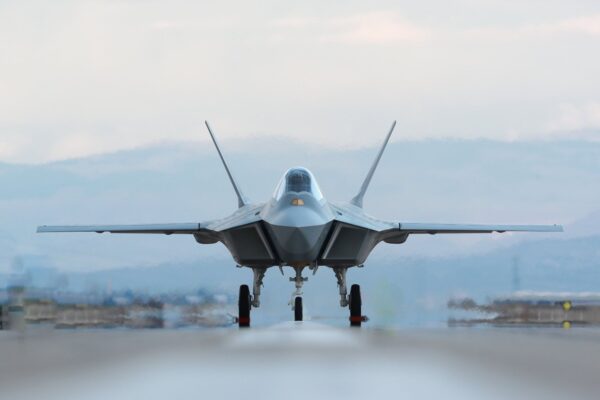
On May 6, Indonesia signed a framework contract with the Turkish company Baykar for the delivery of an initial 12 Bayraktar Kızılelma high-performance uncrewed combat aerial vehicles (UCAVs) and the establishment of production and maintenance facilities in Indonesia, during the SAHA 2026 defense exhibition in Istanbul, underscoring the growing Indonesia-Türkiye defense partnership.
Türkiye has become but one – albeit arguably the most important of late – source of defense equipment to help modernize the Indonesian military (Tentara Nasional Indonesia, TNI). Jakarta has recently signed four major contracts for military aircraft with Türkiye, involving no less than six different types of crewed and uncrewed combat aircraft. This cooperation dates to April 2011, when the two countries signed a memorandum of understanding on defense industrial collaboration.
The Indonesia-Türkiye defense industrial collaboration has emerged as perhaps Jakarta’s most strategic move to date. The recent agreements are just a part of a much broader defense materiel cooperation with Türkiye, which covers land, sea and air capabilities. This includes the I-class guided-missile frigates, Atmaca antiship missiles, Khan (Bora-1) short-range ballistic missiles, Trisula-O (Hisar-O) medium-range and Trisula-U (Hisar-U) long-range air-defense systems, and Harimau (Kaplan MT) medium tanks. Future plans also include cooperation on submarines. To underline the importance that Indonesia places on the bilateral defense ties, the country has become the first foreign customer for many of these systems.
In recent years, Jakarta has aggressively diversified its sources of defense materiel, moving beyond traditional Western suppliers amid concerns over weapons and spares embargoes, and political constraints related to technology access and operational use.
Besides the close affinity with Türkiye – both nations are rapidly growing Muslim-majority middle powers searching for strategic autonomy and defense self-reliance – Indonesia has sought military aircraft from no fewer than 10 countries over the last decade, including Italy, Austria, France, Türkiye, the United States, China, South Korea, Europe (Airbus), Brazil, and Russia. In addition, Jakarta has considered further combat aircraft, including second-hand Mirage 2000-5s from Qatar and Eurofighter Typhoons from Austria, while negotiating for the JF-17 with Pakistan.
Jakarta’s procurement decisions have often been haphazard and done with little foresight or consideration over the long-term financing, sustainment, and training for a wide variety of different platforms of various origin, let alone questions of interoperability, maintenance, and logistics. The clear over-diversification has already caused significant wastage of resources in separate logistics and support infrastructures, interoperability challenges, multiple training pipelines, and a lack of synergy, which has created silos of capability rather than a single, integrated air force.
Jakarta is also applying a stringent set of requirements for technology transfer in order to gain greater operational and technological ownership of acquired platforms, enable integration of local content, and expand its local defense industry. However, gaining access to sensitive, often intellectual property rights-protected systems has proven difficult as many OEMs are unwilling to share proprietary or sensitive information with foreign customers.
Türkiye is a different story, as seen in its recent cooperation with Indonesia over the development and manufacture of uncrewed systems. According to Republikorp, the two nations’ partnership involves the construction of an entire ecosystem for development of next-generation UCAVs in Indonesia. Through technology transfer, co-production, and the establishment of a local industrial ecosystem, Indonesia has become a leading operator of uncrewed systems in Southeast Asia.
The Indonesian Air Force (TNI-AU) already operates a range of U.S., Chinese, and Turkish-made surveillance unmanned aircraft systems to monitor the country’s massive maritime space, critical maritime chokepoints, and remote parts of the archipelago.
Between 2024 and 2026, Indonesia signed up for four different Baykar UCAV models: the battle-tested medium-altitude, long-endurance Bayraktar TB-2, its carrier-borne brethren, the TB-3, the twin-engined high-altitude, long-endurance Akıncı, and the high-performance Kızılelma fighter-like UCAV. Additionally, Indonesia has received Turkish Aerospace Industries (TAI)’s uncrewed Anka-S in 2023.
Critically, as part of these agreements, Indonesia’s PT Republik Aero Digintara or Republikorp, a private defense holding company and a strategic partner to Indonesia’s defense industrial base, signed a joint venture with Baykar for co-production and delivery of 60 TB-3 and nine Akıncı UCAVs to the TNI-AU. This follows a similar agreement between TAI and the Indonesian state-owned enterprise PTDI signed in 2023 for 12 Anka-S UASs, half of which were to be assembled locally. The most recent contract signed with Baykar for the acquisition of the Kızılelma extends the earlier agreement with technology transfer, joint research and development, training, establishment of local MRO facilities, and an option for local production of up to 48 Kızılelmas locally.
In addition to uncrewed aircraft, Indonesia has sought crewed combat aircraft from around the world. Jakarta signed a deal with France’s Dassault for the delivery of 42 Rafale F4 multirole fighters in 2022, the first three of which were delivered in January. This was followed by a memorandum of understanding for the acquisition of 24 Boeing F-15ID Eagle II jet fighters from the United States in 2023. The latter deal, however, was cancelled by Boeing after Jakarta made no move to finalize the acquisition. Since then, Jakarta has expressed interest in Chinese J-10C fighters amid their successful showing during the 2025 India-Pakistan air war.
Most consequentially, Indonesia has joined two future combat aircraft development programs: South Korea’s KF-21 Boramae (2016) and Türkiye’s Kaan (2025). In June 2025, Indonesia and Türkiye signed an implementation contract involving 48 TAI Kaan fighters on the sidelines of the International Defense Industry Fair in Istanbul on July 26, 2025. The $10 billion deal makes Indonesia the type’s first international customer. Still a relatively young program but with an aggressive development phase, the Kaan conducted its inaugural flight only in February 2024, entered a “serial production phase” in 2026, and is expected to join the Turkish and Indonesian air forces in 2028.
Indonesia’s entry into the Kaan program is not just an investment in the country’s next-generation airpower but also an opportunity to contribute to the type’s development. Furthermore, according to Indonesia’s Ministry of Defense, Türkiye will support Indonesia with technology transfers, component assembly, and the establishment of local MRO capability to support the program domestically.
For Türkiye, the Kaan program is not just a fighter replacement but should be understood as the “most strategic defense project” representing the country’s vision for complete defense independence.
The Kaan’s development roadmap will integrate a nationally produced Turkish Engine Industries TF35000 high-power turbofan engine (transition to the domestic engine is planned in 2036), an Aselsan Murad-600A Gallium Nitride-based (GaN) active electronically scanned array (AESA) radar, a distributed aperture system, electro-optical targeting systems, AI-driven sensor fusion algorithms, an Aselsan electronic warfare suite, and weapons from Roketsan, which aim to maximize the aircraft’s indigenous content. Importantly, non-reliance on U.S.-sourced engines and other key components makes the aircraft almost International Traffic in Arms Regulations-free, which greatly increases the type’s export potential.
For Indonesia, the Kaan can be viewed as a hedge toward the TNI-AU’s future airpower alongside the Korean Aerospace Industries (KAI) KF-21 Boramae, given that it has been denied access to the U.S. state-of-the-art F-35 Lightning II.
Therefore, the Kaan and Boramae programs offer Indonesia benefits that cannot be matched by their Western competitors: substantial technology transfers, development of support infrastructure, and industrial participation in Indonesia’s growing domestic defense industrial base. Indonesia will contribute to the two programs by manufacturing components and parts for both aircraft and eventually assembling them for the TNI-AU in Indonesia, with hopes of eventually developing a local variant.
However, the risks of managing two complex fighter programs of this scale may prove beyond Indonesia’s capacity. So far, the most complex aircraft project managed by the local industry (in this case PTDI) is the production of the indigenously designed N219 and the Spanish CASA CN-235-200 light transport aircraft. Indonesia will likely need a lot of direct assistance from TAI and KAI in program management, training and engineering, manufacturing, quality control, systems integration, and logistics.
If properly executed, however, Indonesia’s domestic industry stands a chance to climb the industrial ladder and help TNI-AU jump into the forward ranks of the region’s air forces, at least in terms of technology.
Alternatively, the programs could fall victim to mismanagement, political indecision, unreliable financing, and hence stymie TNI-AU’s future development.
With consistent defense spending at 1 percent of GDP, with $4.2 billion allocated for procurement in 2025, Indonesia could struggle to finance multiple major acquisition programs simultaneously. This has resulted in Jakarta relying on foreign loans to finance its most ambitious projects.
For example, Indonesia’s experience with the KF-21 program may be instructive. The government has struggled to pay its contractual 20 percent share ($1.2 billion) of the fighter program development cost, and there has been alleged data theft amid the perceived lack of technology transfer. This led to an uncomfortable renegotiation of Indonesia’s program share (now at around 7.5 percent), with Seoul and KAI shouldering the unpaid development costs. In addition, Indonesia ran into trouble in funding the F-15ID acquisition project, which was subsequently cancelled by Boeing.
Ultimately, the Boramae and the Kaan remain untested and are at early stages of their development. Therefore, investing in unproven aircraft, which are years away from entering initial service with TNI-AU, carries considerable risks.
Nevertheless, the Indonesia-Türkiye defense cooperation may yet prove to be Jakarta’s most strategic long-term move, with the promise to help to modernize the TNI-AU with next-generation crewed and uncrewed combat aircraft. If successful, this would reduce its dependence on Western platforms and technology, while increasing self-reliance and providing Indonesia’s local defense industry access to both the latest defense technology and opportunities for growth.
