

The demand for improved sensing for anti-submarine warfare (ASW) is expanding across the Indo-Pacific and other contested maritime environments. Breaking Defense talked about how sonobuoys are pacing the threat with Donnelly Bohan, president and CEO of Sparton and senior vice president of Maritime Systems at Elbit America.
Breaking Defense: What’s the threat environment driving the need for sonobuoys today?
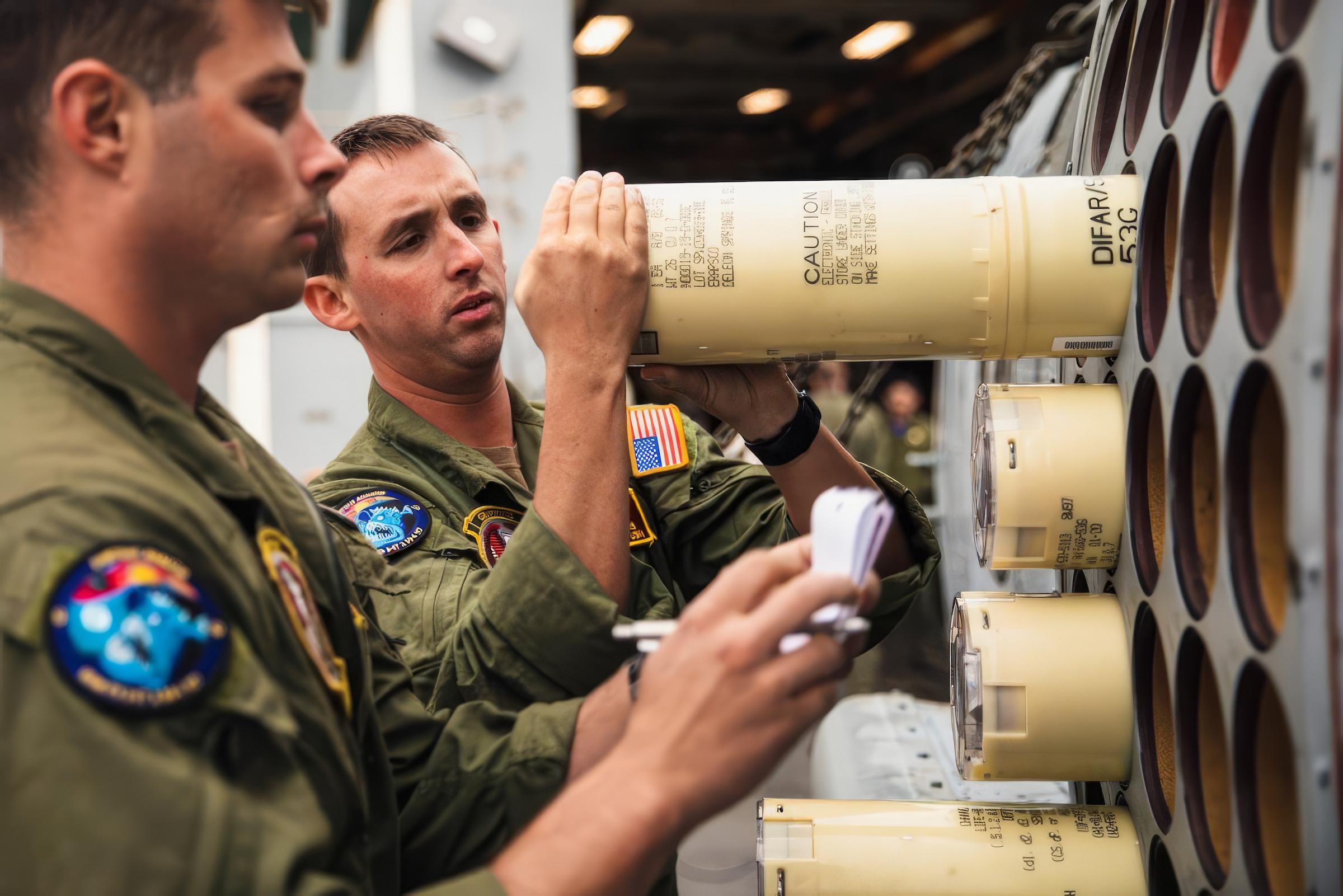
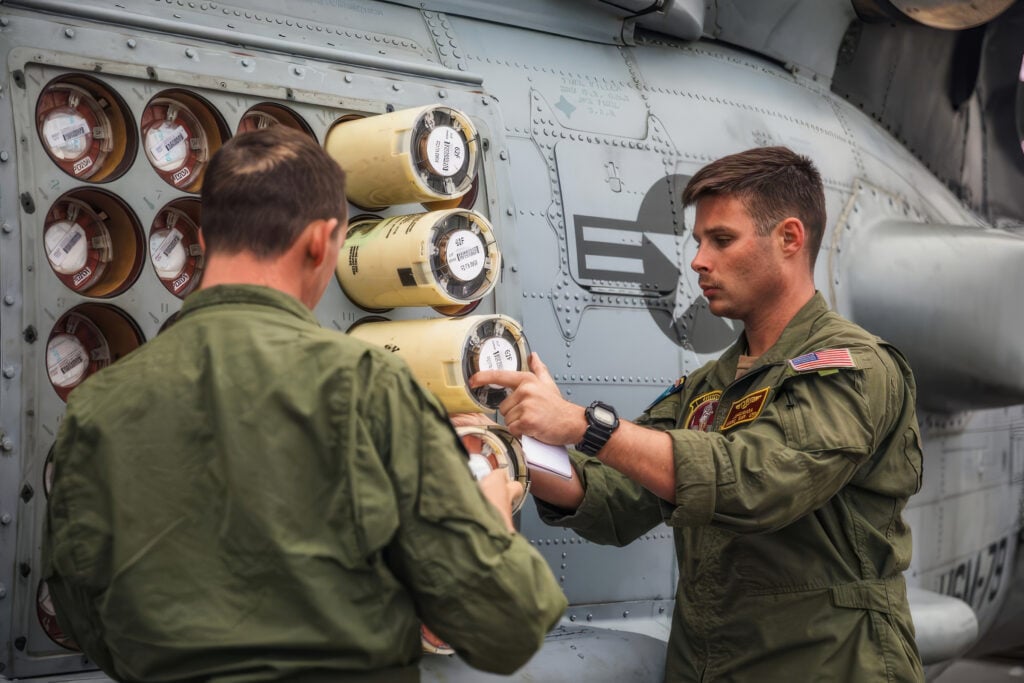
Bohan: When the Navy believes there may be a submarine nearby, they deploy sonobuoys. A sonobuoy may look like a simple tube when it’s released from a P-8 aircraft, but it represents about 30 pounds of innovation – delivering precision sensing.
We’re proud to be part of the submarine-hunter community. The big focus over the last 20 years is how much quieter China and Russia’s submarines have gotten. For decades, the US Navy held a clear undersea advantage, but as adversaries’ submarines become quieter, they’re harder to detect. This is changing the character of maritime competition around the globe, especially across the Indo-Pacific. As a result, we’ve seen a recommitment to maritime dominance as the services realize the future fight will likely be decided on, above, or below the water. Our job at Sparton is to make sure we’re prepared to deliver the sonobuoys and advanced maritime sensors to ensure maritime dominance now and for that future fight.
Tell us about sonobuoy technology and how it works?
Sparton has spent decades perfecting the science of sensing in the maritime domain. We develop, test, and manufacture both active sonobuoys – which transmit sound energy into the water – and passive sonobuoys that listen with incredible sensitivity. There are several sonobuoy variants that can be used depending on the mission goal.
Sonobuoys are about four feet high and six inches wide, but they’re packed with sophisticated systems and sensors. They look like a simple PVC pipe, but that’s what the system travels in. The actual buoy inside the PVC pipe is made of metal. At a high level there’s a power source in there and some type of listening device normally made out of Piezotech ceramics. There potentially could be different payloads and electronic systems, too.
Then there’s deployment. Generally, there’s a parachute in there that slows the sonobuoy down upon entry into the water and then there’s also a float. Think of the float as the sonobuoy’s life jacket. The system’s going to drop below the water’s surface, but ultimately it will need to rise to the surface again, so it can transmit and communicate with whatever assets are in the area.
A key piece to the sonobuoy’s design is its ability to withstand the equivalent of about 100Gs when it hits the water. The sonobuoy is almost like a missile when it hits water, but then it needs to do a mission once it hits. Every component inside that buoy is crafted to perform reliably under the most demanding conditions.
Our engineering teams put a lot of time, energy and innovation into packaging some interesting sensors and payloads inside the buoys. Traditional sonobuoys have older technology in them. We’re bringing newer capabilities into the buoys and working with our Navy customer to more quickly qualify the upgraded buoys and get them out to the fleet.
What makes the next generation of sonobuoys different from legacy systems?
The next generation of sonobuoys is all about speed, digital transformation, and multi-mission flexibility. We’re integrating digital radios, so the Navy can update buoy software rapidly, which was impossible with analog systems. We’re expanding communications across more channels, allowing sonobuoys to talk to any asset in the battlespace. This improves distributed sensing, forms more robust networks, and pushes data across greater distances.
On the materials side, Sparton works closely with our supply chain and the Navy to continuously qualify new materials that enhance performance and reduce costs. This partnership is essential: We bring our manufacturing and engineering expertise, and the Navy supplies the mission priorities. Together, we’re fielding capabilities faster and smarter for anti-submarine warfare and undersea warfare.
You’ve developed an open-systems approach to sonobuoys called Open Buoy. What does this do for the Navy?
Open Buoy was born from a simple realization: The Navy and our industry partners needed a way to introduce new sensors more quickly without reinventing or recertifying an entire buoy every time. So, we designed an open, modular architecture.
Think of it like Lego bricks. If the top and bottom sections of the buoy are already Navy-qualified, then any payload that fits the size, weight and power constraints of the central bay can be integrated faster. Like Lego bricks, each piece can be snapped together for what the mission requires.
Instead of multiple bespoke buoy designs, we qualify the common architecture once, dramatically reducing costs and compressing the qualification timeline from years to months. Speed to fleet is critical, and Open Buoy is one of the most important ways we can deliver it
Open Buoy can help speed qualification and lets you put capability into the buoys other than sonar. Explain.
These next-gen sonobuoys are tied to the core Navy customer at PMA-264 (NAVAIR’s Air Anti-Submarine Warfare Systems Program Office), but we also have a lot of customers coming to us with a different sensor, a different widget – that’s not sonar related – with the idea of putting it into a buoy. They need help with the packaging. Some of Sparton’s secret sauce is our expertise packaging sensors into a form factor that fits in a buoy.
As I mentioned, we have a payload bay with a size, weight, and power that is identified. If we stay within that framework, we could qualify a new, modified buoy much more quickly, because the top and the bottom have already been qualified. If that payload stays within the right margins, it will speed up what’s currently a two-year process into a qualification that takes months.
Think of other emerging needs like electronic warfare or intelligence, surveillance and reconnaissance, environmental sensing, and more. With Open Buoy, these payloads can be deployed from an aircraft, surface vessel or unmanned system, but each buoy would be a sensor in a larger mesh network and an adaptable maritime sensor platform.
How are you using automation to scale production to meet increased ASW demand?
We’re innovative in our products, but also in how we build them. Sparton integrates automation, machine learning, and smart manufacturing only where it improves quality, safety, and throughput. We follow the Navy’s guidance: automate the dull, dirty, and dangerous tasks so our workforce can focus on the complex, high-precision subassemblies that require human expertise. The results have been significant. Tasks that once took an individual more than a minute can now be done in parallel – 42 units at a time – in just three minutes. That translates to lower cost, higher consistency, and greater production resilience.
Final thoughts?
Sparton’s delivered more than 6 million sonobuoys worldwide! Our employees are extremely loyal – some spending 30 and 40 years with us – all to support the warfighter.
Sparton’s identity is tied to sonobuoys – that is our key product – but we’re moving beyond buoys. We’re expanding into maritime payload delivery systems, unmanned undersea capabilities and other technologies that align with the Navy’s future roadmaps. We can make this pivot because we have a 125-year history of innovation, a dedicated and talented workforce and deep partnerships across the industry. We’re ready to create and deliver the next generation of maritime solutions that will outpace threats and ensure the U.S. Navy maintains superiority.
