

TAMPA, Fla. — US special operations helicopters must be significantly upgraded to successfully handle future stealth operations “quieter” and using fewer aircraft, Program Executive Officer for Rotary Wing Steve Smith said Thursday.
“We all saw the events in January, and incredible capability demonstrated, but it took immense numbers of aircraft and layered effects,” Smith said at the SOF Week expo here, referring to Operation Absolute Resolve in which the US captured Nicolas Maduro in Venezuela. “We’ve got to be able to do that quieter with fewer aircraft, so we need holistic systems that are on the aircraft that can generate those layered effects.”
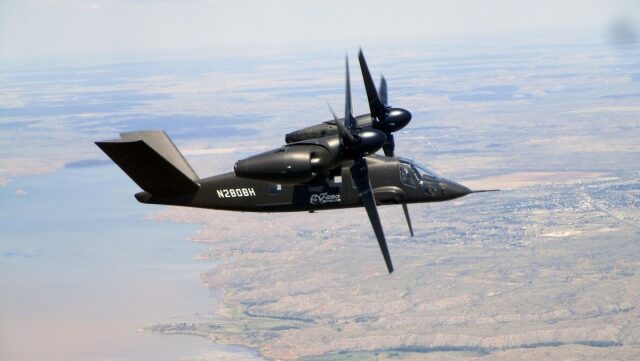
Special Operations Command’s fleet of MH-60Ms and MH-47Gs — operated by the 160th Nightstalkers Special Operations Aviation Regiment (SOAR) — could benefit from technology injections coming from the MV-75 Cheyenne platform due to enter service with SOF in the mid-2030s, he noted.
“To date, we have done a lot of early risk reduction activities for the SOF-peculiar integration. The Army is bringing a very capable airplane, and we’re going to put very capable special mission equipment on board, so that the air crews and operators can get into the places that they need to get into,” he noted.
“The Army looked at the work we did, and they said, ‘Hey, this is good. We want this on all of them,’” Smith continued. “They accepted those into the baseline, so every MV-75 is going to have those structural requirements, which is good news for everybody. A lot of modularity, a lot of room for growth now.”
However, currently SOF is focused on MV-75’s digital integration, with much of the special operations mission equipment not designed to fit into a digital backbone or time-sensitive networks, Smith said.
Smith explained how PEO Rotary Wing is working on that with Lockheed Martin Systems Integration-Owego. “How do we get the information on, how do we get information off those pieces of equipment? So far we’ve been very successful with the pieces that we’re putting in there.”
Smith also confirmed plans to begin integration of the Silent Knight terrain avoidance radar on MV-75 later in the year, and said efforts will be supported by the Lockheed systems integration lab to “continue to move forward with that without getting in the Army’s way at all.
“As we look at bringing that system into our fleet, we’ll be bringing that entire digital ecosystem,” he said. “We believe that we can take some of the systems off that aircraft and proliferate that across the enduring fleet, so you may very well see that digital backbone that’s on that MV-75 that could be on a [MH-]60 or a [MH-]47.”
Smith suggested this ongoing MV-75 integration work could also lead to a common cockpit, not only for SOF but also the wider US Army.
“This is truly getting to something that we’ve been after for a long time, which is a common cockpit … and that’s truly something that’s special, because now I pay for integration once. So that’s super important to us as we go forward into the future,” he said.
Smith further hinted that the MH-47 could see a Block III variant similar to the MV-75 with a more modular platform.
“We have to figure out how do we get more out of the system, and we’d have to talk to the Army about what makes sense. But enabling that aircraft to go further into more environments and enable modular push of equipment in there,” he said, including aerial refueling flexibility, which would allow an aircraft to forward deploy and then be reconfigured to do another mission profile.
“But I want to be clear. There’s no funding that’s been appropriated for that,” he concluded.
Separately, Smith disclosed the PEO is set to begin modelling to integrate launched effects on board helicopter fleets in 2027, which will be “speed, range, payload-specific for 160th [SOAR] penetration missions.”
“We have to deal with the full-up stack of integrated air defense. We’ve got to deal with the full range of enemy threats, where the Army might not have to.”
