

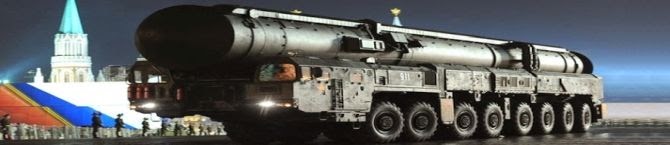
Global nuclear weapons spending surged to a record $119 billion in 2025, with the United States accounting for more than half of the total, while China led the pace of arsenal expansion, according to a report by AFP.
SIPRI and ICAN warn that the dismantling of retired warheads is slowing, meaning stockpiles are likely to grow again, intensifying risks amid geopolitical competition.
Worldwide expenditure on nuclear weapons reached unprecedented levels last year, with the nine nuclear-armed states jointly spending nearly $119 billion, marking a 19 per cent increase compared to 2024.
This dramatic rise reflects a rush to modernise arsenals and deploy more warheads onto delivery systems. The International Campaign to Abolish Nuclear Weapons (ICAN) described the situation as the onset of a new nuclear arms race, while the Stockholm International Peace Research Institute (SIPRI) voiced alarm at the growing risks.
ICAN’s director of programs, Susi Snyder, expressed deep concern, noting that the combination of accelerated spending and the potential role of artificial intelligence in nuclear command and control could heighten the risk of use.
She admitted to being “terrified” by the trajectory of developments. SIPRI’s findings reinforced this anxiety, highlighting that although the overall number of nuclear warheads has declined to 12,187 at the start of 2026, the number available for potential use has risen to 9,745. Of these, 4,012 are deployed with operational forces, with between 2,100 and 2,200 kept on high alert.
The United States and Russia together hold around 83 per cent of the world’s nuclear arms, each maintaining more than 5,000 warheads. Both countries are pursuing extensive modernisation programmes, including new delivery systems and upgraded warheads.
China, however, is expanding its arsenal faster than any other nation, now estimated at around 620 warheads, with projections suggesting it could rival US and Russian intercontinental ballistic missile numbers by 2030. SIPRI director Karim Haggag emphasised that intensifying geopolitical competition is driving China to increase its reliance on nuclear weapons.
ICAN’s report revealed that Washington spent $69.2 billion on nuclear weapons in 2025, an increase of $12.4 billion from the previous year, more than all other nuclear powers combined. China followed with $13.5 billion, Britain with $12.6 billion, and Russia with $9.5 billion. Over the past five years, the nine nuclear-armed states have collectively spent more than $470 billion on their arsenals.
Britain, France and the United States have already outlined plans to maintain and develop nuclear systems well into the next century, with the US Sentinel intercontinental ballistic missiles expected to remain operational past 2100 and plutonium pit production ensuring warhead viability through 2120. US nuclear arms spending between 2025 and 2034 alone is projected to approach $1 trillion.
The humanitarian implications of such vast expenditure are stark. Researchers noted that a single day of nuclear weapons spending in 2025 could have provided food security to more than two million people. Instead, nuclear-armed states continue to invest in arsenals that cannot be used without committing war crimes, underscoring what Snyder described as a “total disconnect from reality.”
The SIPRI Yearbook 2026 also highlighted India’s nuclear expansion, with its arsenal rising to 190 warheads by early 2026, widening its lead over Pakistan. India remains the world’s fifth-largest military spender and second-largest arms importer, with expenditure reaching $92.1 billion in 2025.
Operation Sindoor in May 2025 marked an unusually severe crisis with Pakistan, involving strikes on nuclear-related bases and the integration of cyber operations into active conflict for the first time. Pakistan’s arsenal remains stable at 170 warheads but continues to accumulate fissile material, suggesting future growth.
Globally, the nine nuclear powers are increasingly relying on nuclear weapons as instruments of national power, reversing decades of disarmament efforts. With the pace of dismantlement slowing and new deployments accelerating, experts warn that nuclear stockpiles are likely to grow again, raising the risks of miscalculation and escalation in an already volatile strategic environment.
Agencies
