

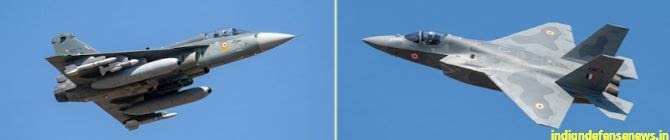
Pakistan has accelerated its fighter jet modernisation with the JF‑17 Thunder fleet nearing 200 aircraft, while India’s TEJAS MK1A continues to face delays and the AMCA program risks slipping behind regional rivals.
Unless India speeds up production and integration, Pakistan’s pace—backed by Chinese collaboration—could erode India’s technological edge.
Pakistan’s JF‑17 Thunder program has achieved significant momentum. The Pakistan Aeronautical Complex at Kamra is producing between sixteen and twenty‑five aircraft annually, ensuring steady induction into the Pakistan Air Force.
The fleet now numbers around two hundred aircraft, replacing older legacy fighters and forming the backbone of Pakistan’s modernisation drive. The Block-III variant incorporates advanced features such as AESA radar, electronic warfare systems, sensor fusion, and long‑range beyond‑visual‑range missiles.
This makes the JF‑17 a credible multirole platform, especially when combined with China’s support and the prospect of future access to the FC‑31 stealth fighter.
India’s TEJAS MK1A program, by contrast, is struggling with persistent delays. Hindustan Aeronautics Limited has faced supply chain bottlenecks, particularly with engine deliveries from GE Aerospace. Out of ninety‑nine engines ordered, only six have been delivered, forcing HAL to invoke contractual penalties.
The ₹48,000 crore contract for eighty‑three MK-1A aircraft was originally scheduled for deliveries beginning in 2024–25, but timelines have slipped by more than two years. Airframes are ready, yet full integration and operational clearance remain pending. This has raised concerns about the Indian Air Force’s ability to maintain squadron strength in the near term.
The Advanced Medium Combat Aircraft project is India’s long‑term answer to fifth‑generation airpower. Designed as a twin‑engine stealth fighter with internal weapons bays, advanced sensors, and AI‑enabled systems, the AMCA is expected to enter service by 2034–35. However, the program faces structural challenges.
Unlike China’s vertically integrated approach to the J‑20, India is attempting to build AMCA across multiple bureaucracies, with design authority under the Aeronautical Development Agency, R&D under DRDO, and production shifted to private industry for the first time.
The MK-1 variant will rely on foreign engines, while the MK-2 aims for a co‑developed indigenous solution. This fragmented process risks slowing progress at a time when Pakistan is aligning itself with Chinese fifth‑generation pathways.
The export market further highlights the divergence. Pakistan’s JF‑17 has secured multiple contracts abroad due to affordability, delivery speed, and sanction resilience.
India’s TEJAS, despite its technical promise, has struggled to convert interest into firm orders because of production delays and credibility concerns. For many air forces seeking immediate capability, the JF‑17 offers a deployable solution, while the TEJAS still asks for patience.
India’s challenge is therefore twofold. First, it must accelerate TEJAS MK-1A deliveries to stabilise squadron strength and reassure export customers. Second, it must ensure the AMCA program avoids the pitfalls of bureaucratic fragmentation and lowest‑bidder procurement logic.
Without decisive acceleration, India risks ceding both regional and global ground to Pakistan’s faster, alliance‑driven approach.
Agencies
