

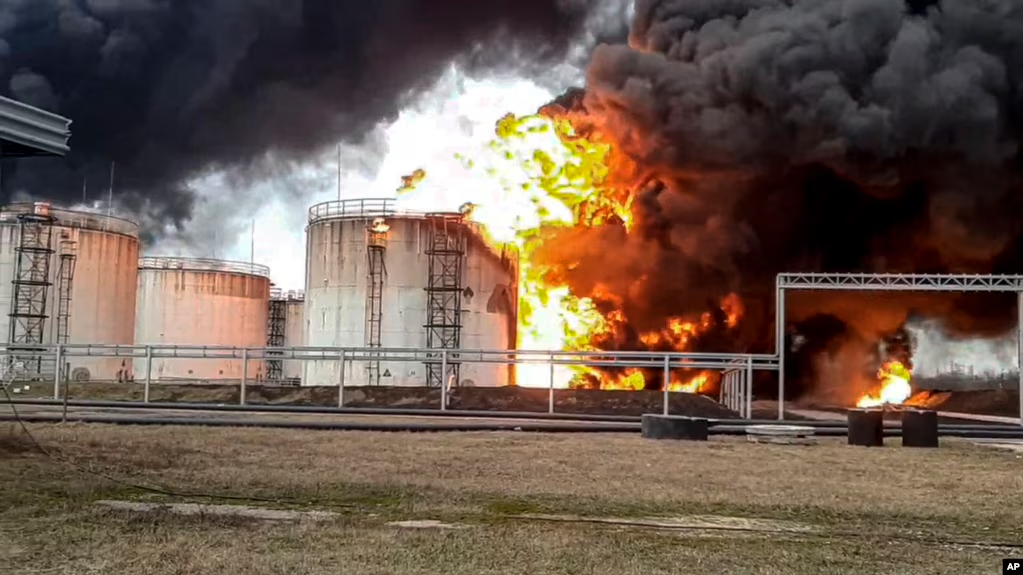
Russian fuel shortages are becoming increasingly visible across parts of the country after months of Ukrainian drone attacks on oil refineries and energy infrastructure, disrupting supplies and prompting emergency measures by the Kremlin.
Long queues have been reported at filling stations in parts of southern Russia, Crimea and Siberia, while regional authorities have introduced restrictions on fuel sales in some areas.
Repeated strikes on refining facilities have reduced production capacity and placed growing pressure on domestic fuel supplies.
President Vladimir Putin acknowledged the impact of the attacks during a government meeting on fuel supplies.
He told officials, “You are well aware that problems for drivers and for businesses persist. Unfortunately, there are still queues at gas stations too.” He added that Russia had to “reduce to a minimum the impact of terrorist attacks on our civilian targets and infrastructure.” Putin also acknowledged that Ukrainian drone strikes on oil installations had contributed to fuel shortages and said a government task force had been established to ensure supplies across the country.

The shortages follow an intensified Ukrainian campaign against Russia’s energy sector.
Ukrainian drone strikes have increasingly focused on refineries, oil depots, pipelines, storage sites and export terminals in an effort to disrupt fuel production and reduce revenue from energy exports.
Between January and May this year, reports state that Ukrainian attacks struck 16 Russian refineries, double the number targeted during the same period a year earlier.
Around 700,000 barrels a day of refining capacity were taken offline, while industry sources recorded more than 40 shutdowns of major refining units linked to drone attacks or their aftermath.
Among the most significant attacks was the strike on the Moscow oil refinery, which industry sources told reports state that is unlikely to resume production for months after repeated drone strikes forced operations to stop.
The refinery processed 11.6 million tonnes of crude oil last year and supplied a substantial proportion of fuel used in the Russian capital.
The NORSI refinery, one of Russia’s largest petrol producers, suspended operations following a drone attack.
Other facilities targeted this year include refineries in Krasnodar, Yaroslavl and Tatarstan, together with the Orenburg gas processing plant, oil pumping stations, export terminals and fuel storage depots.
Ukrainian President Volodymyr Zelenskyy said after the latest strikes, “We continue our operations that weaken Russia’s ability to wage this war.”
Speaking separately about Ukraine’s proposal to limit long range strikes, Putin rejected the suggestion.
He said, “It is clear why this proposal is being made, because our counter strikes deep into Ukrainian territory are much stronger, have greater impact and are, frankly, more destructive.”
“Given their catastrophic shortage of personnel, the Ukrainian Armed Forces apparently believe this could be their salvation. But saving the Kyiv regime is not part of our plans.”
The shortages come as Russia faces broader economic pressures linked to the war. Reports state that gasoline production in late June was about 25 per cent lower than the daily average recorded a year earlier after repeated refinery shutdowns.
Russia has also held discussions with Kazakhstan over importing petrol, an unusual step for one of the world’s largest exporters of oil and refined fuels.
The International Monetary Fund has forecast slower economic growth in Russia after several years of expansion driven largely by wartime spending. The Central Bank of Russia has kept interest rates high in an effort to curb inflation, while reports state that labour shortages and rising military expenditure continue to place pressure on the economy.
Russian authorities have already introduced emergency measures aimed at protecting domestic fuel supplies. The Kremlin is considering a temporary diesel export ban, relaxing fuel quality standards, importing petrol and delaying refinery maintenance to keep more fuel available for the domestic market.
Motorists in several regions have reported longer waiting times and difficulties obtaining fuel.
In Russian controlled Crimea, authorities have restricted fuel sales, shortened public transport operating hours and reduced business opening times as supplies remain under pressure.
While the Kremlin insists the shortages are manageable, reports state that repairs at several damaged refineries are expected to take months, meaning further disruption remains possible if Ukrainian attacks on Russia’s energy infrastructure continue.
