

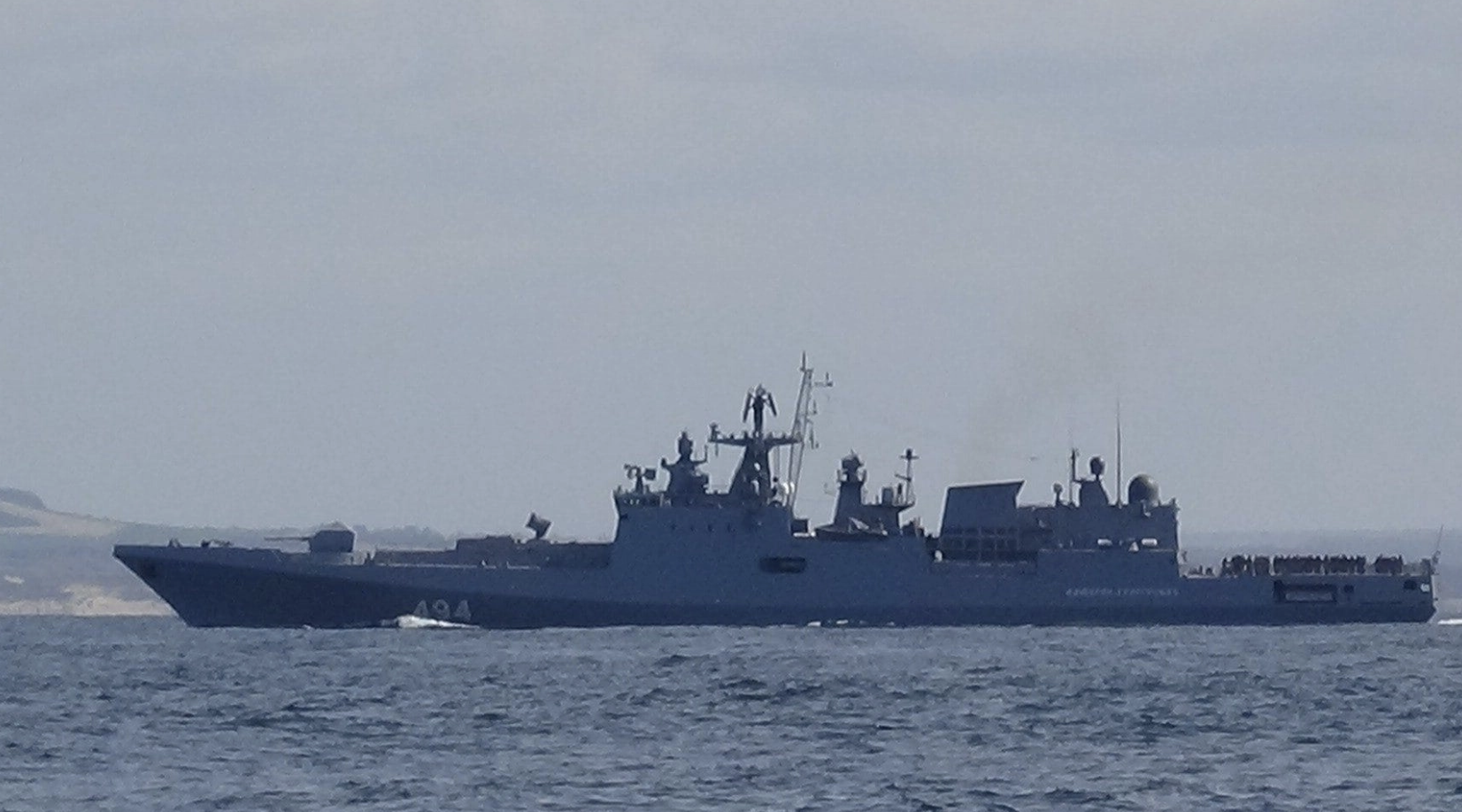
The British Prime Minister has condemned as “reckless and deeply concerning” the firing of warning shots by a Russian warship near a British yacht in the English Channel, as Moscow insisted its crew had acted only to prevent a collision.
Sir Keir Starmer said the incident, involving the Russian frigate Admiral Grigorovich and the British-flagged yacht Bright Future, “shouldn’t have happened” and warned that it came against a backdrop of escalating Russian aggression towards Britain and its allies.
Speaking from the G7 summit in France, Starmer said: “It is reckless, and the couple on the yacht must be terrified. I think everybody will feel for them, as I do.”
The confrontation took place shortly before midday on Tuesday, about 20 nautical miles south of the Isle of Wight and outside UK territorial waters. The 40ft yacht was sailing in foggy conditions when it came close to the Russian warship, which British defence sources believe was drifting rather than manoeuvring under power.
The Ministry of Defence said the Russian vessel had tried to contact the yacht before opening fire, but stressed that the shots were not aimed directly at it.
An MoD spokesman said: “Following attempts to contact a British vessel in the Channel, the Grigorovich fired warning shots. These were not aimed at the vessel and were an attempt to prevent a possible collision.”
Moscow confirmed that the Admiral Grigorovich had opened fire, but blamed the yacht for the incident. The Russian Defence Ministry said the yacht had been “following a dangerous course” and had ignored repeated attempts to make contact.
In a statement, the ministry said: “After the distance had closed to 150 metres, the frigate’s commander decided to fire warning shots across the vessel’s bow using small arms.”
It added that the yacht then changed course and moved away. Russian officials also insisted the crew had acted lawfully, saying the ship’s crew “acted in strict accordance” with international navigation rules.
Russian accounts said the frigate had attempted radio contact, used sound signals and fired flares before the shots were discharged. British officials said the yacht was not hit and there were no injuries or damage.
The Bright Future was later checked by Royal Navy personnel after HMS Mersey, which had already been monitoring the Russian frigate, remained close to the scene. Another Royal Navy vessel, HMS Tyne, is understood to have provided support.
The couple on board continued their voyage towards France. They later disputed parts of the Russian account, insisting they were not on a collision course and saying they had not seen flares or received radio warnings before the shots were fired.
Starmer said the episode reflected a “more volatile and dangerous world” and linked it to the wider pattern of Russian behaviour. He said Britain was dealing with Moscow-linked threats “every single day”.
“We know that both Russia and Iran are responsible for proxy attacks in the United Kingdom and across Europe, and we have to be alert to that,” he said.
The incident came two days after British commandos intercepted the sanctioned Russian-linked tanker Smyrtos in the Channel in an operation targeting Moscow’s shadow fleet. However, the MoD said there was no evidence that the warning shots were connected to that seizure and described the Channel confrontation as an isolated incident.
The Admiral Grigorovich has been monitored by the Royal Navy during previous passages near British waters, including when escorting Russia-linked vessels through the Channel earlier this year.
Although ministers avoided overstating the confrontation, defence sources said the use of warning shots so close to a civilian vessel was highly unusual and underlined the risks of Russian military activity close to UK waters.
Meanwhile, former Defence Secretary John Healey has lashed out at Sir Keir Starmer and Rachel Reeves in a withering resignation speech, accusing the Prime Minister of allowing the Treasury to determine Britain’s defence policy on the basis of cost-saving measures.
Addressing the Commons for the first time since his shock resignation last Thursday, Mr Healey said the Government had failed to outline a path to reaching three per cent of GDP on defence and warned that “our adversaries do not follow timetables set by the Treasury”.
He said the UK’s defence spending plan falls “well short of what is required” and called on the Government to make “bolder priorities” and “harder choices” to ensure Britain is protected in an increasingly dangerous world.
Mr Healey’s comments came hours after one of Sir Keir Starmer’s most senior military chiefs warned Britain’s armed forces would have to “dial back” overseas deployments and training exercises if the Prime Minister did not provide additional funding for defence.
Sir Rich Knighton echoed Mr Healey’s concerns to peers on the International Relations and Defence Committee on Tuesday, warning: “The thing that I’m most concerned about is the level of day-to-day activity funding, the resource departmental expenditure limit, because that funds operational activity and drives exercises and training.
“Those are the things that make sure the men and women of our armed forces are as ready as they can be with the equipment that they have got today, and without changes to the settlement, as John Healey set out, those areas will come under pressure.”
