

BELFAST — Outgoing UK Prime Minister Keir Starmer has announced that British defense spending will reach close to £80 billion ($105 billion) annually by 2029.
Ahead of the release of Britain’s long-awaited Defence Investment Plan, due today, Starmer told local media that the lucrative figure will be met before the end of the decade. He failed, however, to disclose a timeline for meeting NATO’s 5 percent spending target.
Following a disagreement over additional spending that had spilled over into the public in recent weeks between Starmer, the UK Treasury and the MoD, the British leader also revealed that a package covering an extra £15 billion to support the DIP, has been approved. The figure is someway short of the MoD’s reported push to secure a total of £28 billion however.
“From spending 2.3 percent of GDP on defense in 2024, we are raising it to 2.7 percent, putting us on a trajectory to reach 3 percent in the next parliament [from 2029], which must be the number one priority of the next spending review,” he explained during a speech on Tuesday at the drone company Malloy Aeronautics’ facility in Berkshire, England.
“I’ve committed to spend 5 percent of GDP on our wider security, covering things like energy security and critical infrastructure, as well as defense. The defense investment plan published today takes us to 4.2 percent under that commitment.”
Starmer said this new funding pledge is a “huge historic shift for our nation,” but it arrives weeks after former UK defense secretary John Healey resigned, owing to the fact that the DIP, in his view, would not “give our Forces the resources they need.”
Despite not laying out a plan for when the country will meet the 5 percent alliance demand, NATO Secretary General Mark Rutte welcomed the DIP on X. “This is a good step towards reaching the 3.5% of GDP on defence agreed in The Hague last year,” he said.
Funded by spending of £298 billion over the next four years, the DIP outlines British equipment priorities and cuts over the next decade. It includes £5 billion to finance a “drone transformation,” featuring a shift away from large naval ships to a “hybrid” fleet and a new collaborative combat aircraft program for the Royal Air Force.
In addition to those key details shared by the MoD on Monday, Starmer said today that Britain’s nuclear deterrent is to be renewed through investment of £64 billion. Those funds are due to cover both nuclear-armed Dreadnought ships, conventionally armed SSN-Aukus vessels and a “sovereign” warhead.
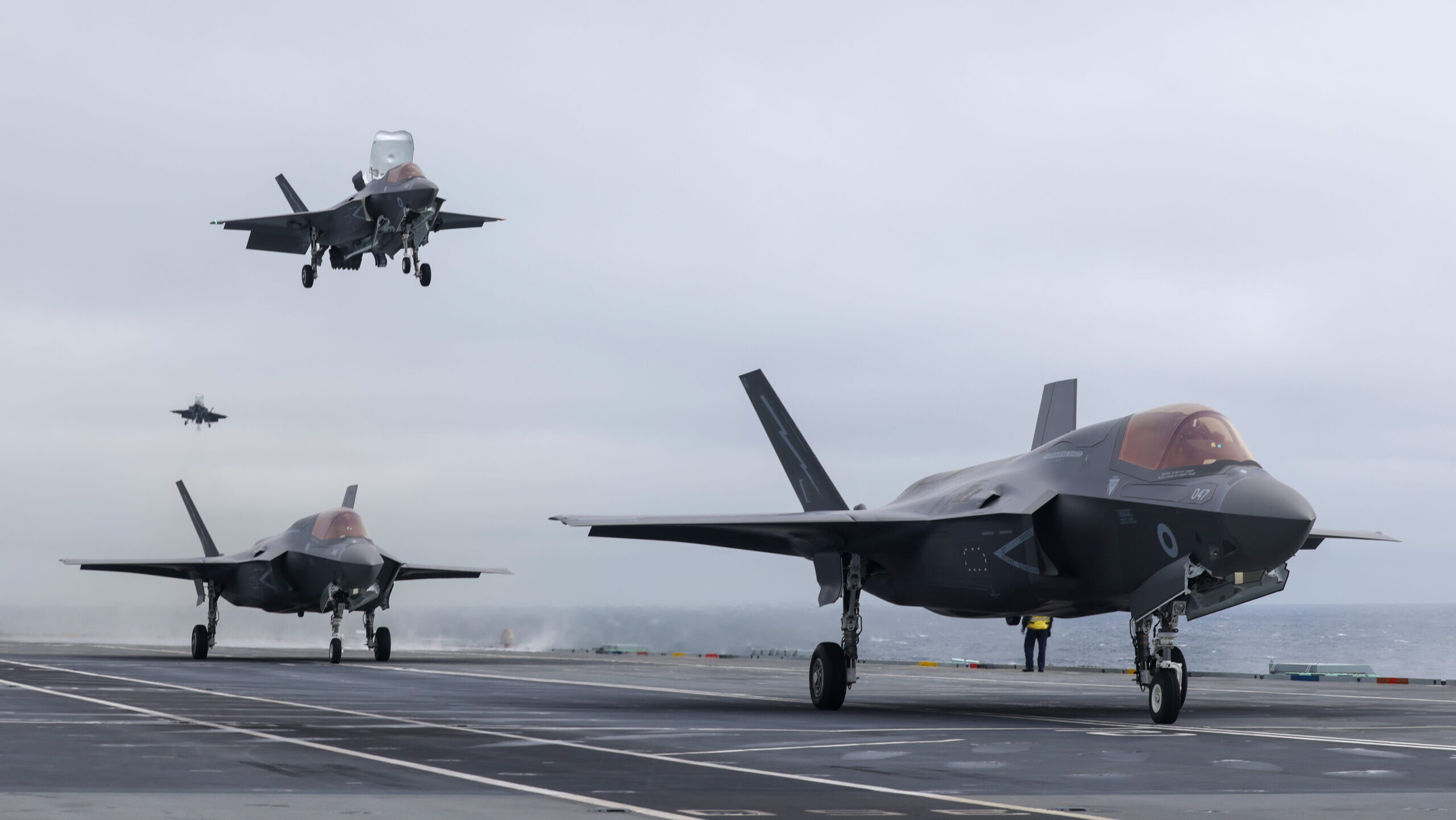
Courtesy of a £8.6 billion investment, the UK is also “renewing” a commitment to build sixth generation fighter jets, under the Global Combat Air Programme (GCAP), in collaboration with Italy and Japan, according to the British leader. He also revealed that Britain is set to acquire a fleet of 12 Lockheed Martin-produced F-35A dual-capable, fifth generation fighter jets, as recommended in the 2025 Strategic Defence Review.
A £50 billion UK defense export facility will be established, made possible, said Starmer, by the “largest expansion of UK export finance support” in 100 years.
When asked whether the new spending plan would be sufficient to deter Russian aggression and to provide the UK with necessary capabilities to fight a potential war against Moscow by 2030, Starmer was optimistic.
“Yes, I can, and that is because of the increase in defense spending that we put in place last year … which was the single biggest sustained increase since the 1980s and the fact that this defense investment plan builds on that, and it is not just the amount of money, it’s also the capabilities,” he replied, pointing to how lessons learned in Ukraine and Iran have shaped British thinking.
Critics of the Prime Minister’s move to increase spending by £15 billion include Richard Barrons, co-author of the Strategic Defence Review. He told BBC radio before the release of the DIP today that, “there will be a decent transformative element to it, but … more has to be done sooner, and that requires more money than is currently on the table.”
