

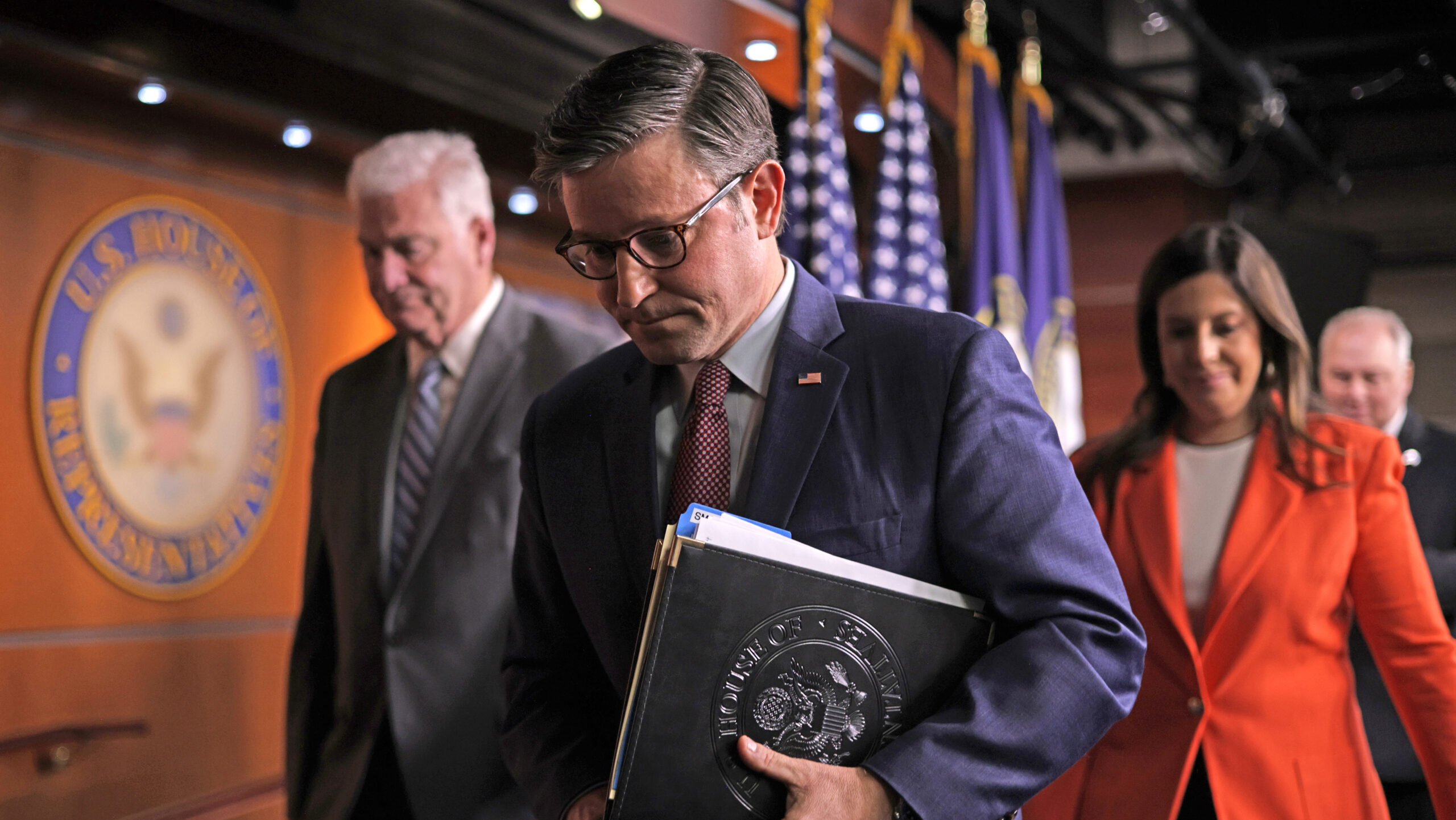
WASHINGTON — A gambit by House GOP leaders to tie the annual National Defense Authorization Act to a controversial voter restriction bill turned into a political quagmire this afternoon when 14 Republicans voted with Democrats to block the measure from being brought to the floor.
Lawmakers voted 198-224 against a procedural measure — known as a “rule”— that would have allowed debate to begin on the fiscal 2027 NDAA, but which would have combined the defense bill with the SAVE America Act after passage and before being sent to the Senate.
The failed vote essentially stalls movement on the House’s version of the FY27 NDAA, which authorizes $1.15 trillion in base budget funding for the Defense Department and includes provisions that would formally change its name to the War Department.
House Speaker Mike Johnson initially told reporters after the vote that House members would remain in Washington through Thursday as GOP leaders worked to get the votes to advance the rule, according to The Hill. However, GOP leaders backtracked later this afternoon and announced that members would leave for the Independence Day holiday tonight, leaving the timeline for NDAA passage unclear.
Among those who voted against the measure was Rep. Anna Paulina Luna, R-Fla. Luna, who had initially pushed for combining the NDAA and SAVE Act, said she was now opposed to it because it would make the SAVE Act vulnerable to being stripped out by the Senate. The SAVE Act, which would make significant changes to voting in federal elections like requiring documentary proof of U.S. citizenship to register, has been championed by President Donald Trump as his signature election bill.
“If we do it as an amendment, the way that I proposed it, the Senate would need 60 votes to pass the legislation without SAVE America attached,” she said on a post on X. “Meaning it would be harder for them to TAKE it out.”
Typically, both the House and Senate pass separate versions of the defense authorization bills. Then a collection of House and Senate Armed Services Committee leaders and members merge the bills into a single piece of legislation through the conference process, during which conferees can strip out provisions before the final bill is voted through by the House and Senate.
In a speech on the House floor ahead of the vote, Massachusetts Rep. Jim McGovern, the top Democrat on the House Rules Committee, called the Republican plan a “shell game” that would ultimately be doomed to failure, even if the NDAA-SAVE Act mashup managed to pass in the House.
“It’s the Wizard of Oz behind the curtain, pretending to do magic, and here’s the truth: The SAVE Act will not become law, even if this rule manages to pass,” he said. “The Senate will not pass an NDAA with the SAVE Act included. They have already said that, and [Senate Majority] Leader [John] Thune, five days ago, already filed cloture on the Senate’s own version of the NDAA without the SAVE Act.”
While it’s rare for the NDAA — a typically bipartisan measure — to be stalled by a failed rule, it’s not unheard of, even in recent history. In 2023, hardline conservatives in the House repeatedly tanked a rule that would have allowed the defense spending bill to come to the floor, a situation that ultimately paved the way for the removal of then Speaker Kevin McCarthy.
