

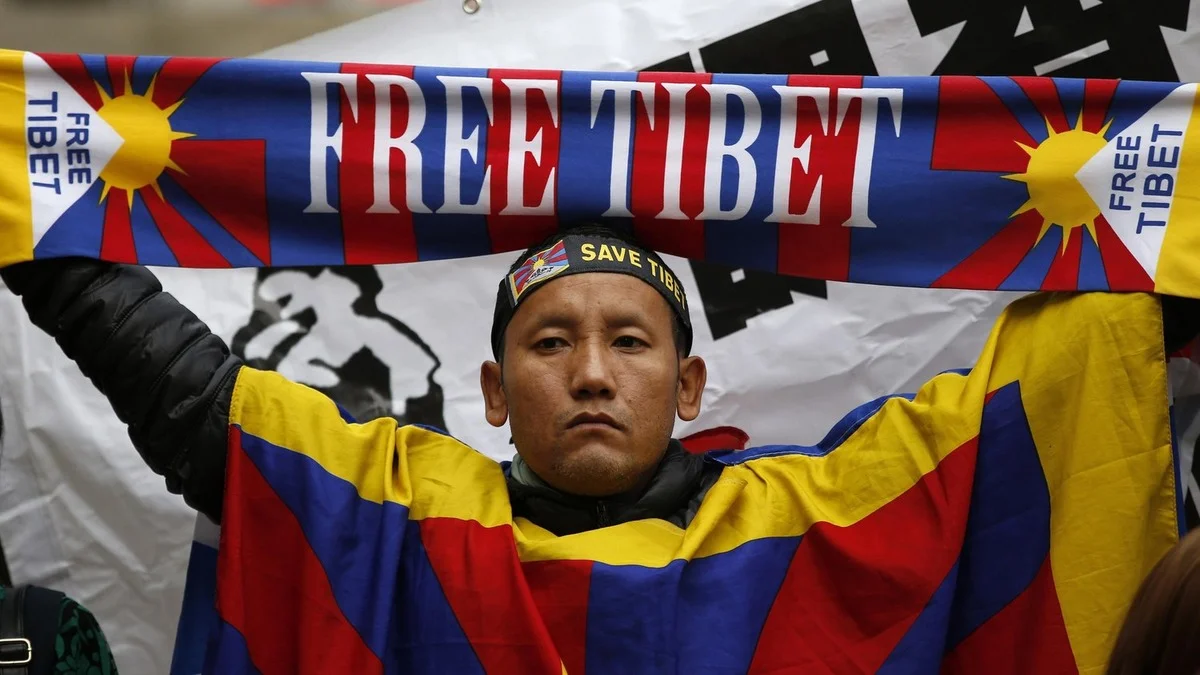
Every year on 6 July, the world observes World Tibet Day to honour the resilience of the Tibetan people and highlight their ongoing freedom struggle. First observed in 1997 in Chicago, the idea was conceptualised by historian Richard Rosenkranz and the Dalai Lama’s younger brother, Tendzin Choegyal. The day coincides with the birthday of the 14th Dalai Lama, who is regarded as the symbol of the Tibetan cause. World Tibet Day is more than a symbolic observance. It reminds the world that Tibet remains an unresolved political issue. Since its annexation, Tibet has undergone profound political, cultural, and demographic distortions. Tibetans and independent observers argue that Chinese occupation has stripped Tibet of its cultural identity, religious freedom and civil liberties. Beyond the human rights debate, Tibet has also emerged as a strategic centre of Asian geopolitics, making its future increasingly crucial for maintaining stability and balance of power in Asia.
TIBET: A CIVILISATION UNDER SEIGE
More than seven decades after China occupied Tibet, the region remains at the centre of one of the world’s most enduring human rights violations. While Beijing maintains that its policies have modernised Tibet through infrastructure development, many international human rights organisations argue that these hollow claims are just a veil to cover sweeping restrictions on civil liberties, religious freedom, and cultural expression. Most vulnerable are the Tibetan Buddhist monks and nuns, who have long served as the custodians of Tibet’s spiritual and cultural heritage. Monasteries that once functioned as centres of learning and community life are now subjected to state-sanctioned desecration and restrictions. Religious institutions are required to display loyalty to the CCP, while monks and nuns are subjected to political education campaigns and stifling surveillance. Authorities have also tightened control over religious gatherings, monastic admissions, and the recognition of senior Buddhist figures, limiting the independence of Tibetan religious institutions.
BUDDHIST STATUES DESECRATED DURING CULTURAL REVOLUTION IN CHINA
The Chinese state has also built one of the world’s most sophisticated surveillance systems across Tibet. Facial recognition cameras, digital monitoring, police checkpoints, and extensive security networks have significantly curtailed freedom of movement and expression. Human rights organisations have documented cases of arbitrary detention, restrictions on peaceful dissent, and prolonged imprisonment of Tibetans accused of expressing political or religious views considered unacceptable by the state. Another sensitive issue is the policy of separating Tibetan children from their families through state-run boarding schools. According to international rights groups and UN experts, children spend most of the year in these institutions, where Mandarin is the primary language of instruction and the curriculum places greater emphasis on Chinese national identity. Such policies are systematically designed to erase Tibetan identity by curtailing the transmission of Tibetan language, religion, and cultural traditions from one generation to the next.

Today, the Tibetan struggle is no longer just about political autonomy. It is increasingly about safeguarding a unique cultural and religious identity that many fear could gradually disappear under sustained political control, demographic change, and assimilation policies. For many Tibetans, the greatest concern is not only the loss of political freedom but also the possibility that future generations may inherit the land without the language, traditions, and spiritual heritage that have defined Tibet for centuries.
THE WEAPONISATION OF THE TIBETAN PLATEAU
Historically, Tibet was viewed primarily as a remote and inhospitable plateau, known more for its monasteries and rugged mountains than for military strategy. Today, that perception has changed dramatically. Tibet has emerged as one of the most strategically important regions in Asia. Often called the “Roof of the World,” the Tibetan Plateau occupies a commanding geographical position overlooking South Asia, Central Asia, and East Asia. Over the past two decades, China has invested heavily in transforming Tibet into a military and logistical hub. Extensive networks of highways, high-altitude railways, modern airports, tunnels, bridges, and dual-use infrastructure now enable the rapid movement of troops, equipment, and supplies across the plateau. The expansion of the Qinghai–Tibet Railway, together with new railway projects extending toward Tibet’s borders, has significantly strengthened China’s ability to sustain rapid military deployments in high-altitude regions. New airfields, heliports, and logistics facilities have further enhanced operational flexibility.
QINGHAI-TIBET RAILWAY MAP

For India, these developments have transformed Tibet into the principal staging ground for Chinese military operations along the Line of Actual Control. The military infrastructure built across Tibet allows China to mobilise forces far more rapidly than in previous decades. Every recent major border crisis—from Doklam in 2017 to eastern Ladakh in 2020—has underscored how rapidly Chinese forces can mobilise from the Tibetan Plateau. Tibet is also becoming a strategic centre for China’s border village programme. In recent years, Beijing has constructed numerous model villages close to disputed frontiers. While officially presented as rural development initiatives, analysts argue that these settlements reinforce China’s territorial claims, improve logistical access, and provide support for military operations in sensitive border areas.

Another dimension of Tibet’s strategic importance lies in its water resources. Often called Asia’s Water Tower, the Tibetan Plateau is the source of many of the continent’s major rivers, including the Indus, Brahmaputra, Mekong, Yangtze, and Yellow rivers. China’s growing network of dams and hydropower projects on these rivers has raised concerns about long-term water security and environmental sustainability. For these reasons, Tibet is no longer merely a geographical frontier. It has become a strategic platform from which China can project military, technological, and logistical power across the Himalayas. As competition between India and China intensifies, the Tibetan Plateau is likely to remain at the heart of Asia’s evolving security landscape, making it one of the most consequential regions in the continent’s geopolitical future.
THE CASE THE WORLD FORGOT: WHY TIBET MUST BE FREE
For centuries, Tibet served as a natural buffer between the great civilizations of India and China. Its vast mountains and distinct political identity limited direct military confrontation between the two Asian powers while allowing trade, pilgrimage, and cultural exchanges to flourish across the Himalayas. That strategic buffer disappeared after China occupied Tibet in the 1950s, bringing the Chinese military directly to India’s northern frontier and fundamentally altering Asia’s geopolitical landscape. From the perspective of those who advocate for Tibetan independence, restoring Tibet as a sovereign state would help reduce long-term strategic tensions in the region. An independent Tibet would once again separate two nuclear-armed powers, lowering the risk of frequent military standoffs along the Himalayas and creating greater strategic depth for regional stability. Supporters argue that the recurring border crises between India and China are, in part, a consequence of the disappearance of Tibet as an independent buffer.
An independent Tibet could also focus on preserving its unique civilizational heritage. Tibetan Buddhism, monasteries, language, and centuries-old traditions have shaped the cultural identity of the Himalayan region. Many advocates contend that only genuine self-rule would allow Tibetans to safeguard this heritage without external political interference and ensure that future generations inherit their language, faith, and customs. A sovereign Tibet could also serve as a bridge rather than a battleground. Instead of functioning as a heavily militarized frontier, it could become a zone of cooperation connecting South Asia, Central Asia, and East Asia through trade, environmental collaboration, tourism, and cultural exchange. Such a transformation could help replace strategic competition with greater regional engagement.
TIBET BEING A NATURAL BUFFER BETWEEN INDIA AND CHINA

At the same time, it is important to recognize that this is a contested vision. The People’s Republic of China maintains that Tibet is an inseparable part of its sovereign territory and firmly rejects any proposal for Tibetan independence. Consequently, the question of Tibet’s future remains one of Asia’s most sensitive geopolitical issues. For advocates of Tibetan self-determination, however, the argument extends beyond politics. They contend that an independent Tibet would not only restore the Tibetan people’s right to determine their own future but also contribute to a more balanced security architecture, protect a unique civilization, and reduce one of the principal sources of strategic friction in the Himalayas. Whether that vision is achievable remains uncertain, but it continues to shape international debate over Tibet’s future and Asia’s long-term stability.
CONCLUSION
World Tibet Day serves as a reminder that Tibet is not only a question of history but also one of contemporary geopolitics, human rights, and regional security. The Tibetan Plateau today sits at the intersection of strategic rivalry, environmental sustainability, and cultural survival. As China continues to expand its military and technological footprint across Tibet, the plateau’s significance for India’s national security and Asia’s geopolitical balance will only increase. At the same time, concerns over cultural preservation, religious freedom, and human rights continue to shape international discourse on Tibet. Whether viewed through the lens of strategic competition, humanitarian values, or regional stability, Tibet remains central to the future of Asia. A peaceful, prosperous, and culturally vibrant Tibet—achieved through dialogue and respect for the rights and aspirations of its people—would not only benefit Tibetans but also contribute to a more stable and cooperative Asian order.
