

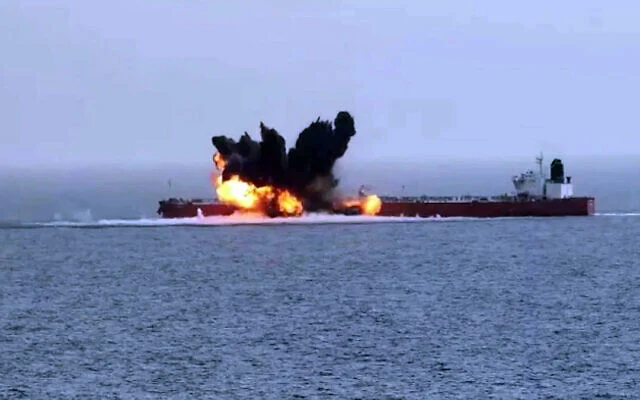
Iran has asked the Yemeni Houthi terrorist group to prepare to disrupt shipping through the Bab el-Mandeb Strait if the United States strikes Iranian power infrastructure, according to three sources familiar with the matter.
Two senior Iranian sources and a regional source told Reuters that Iran’s leadership discussed the move before informing the Houthis. They said the group had recently been told to prepare.
The development follows US President Donald Trump’s warning that Washington could target Iran’s power infrastructure. The sources did not say whether Tehran’s message was conveyed before or after those remarks.
Iran’s Foreign Ministry and a Houthi spokesperson have not responded to Reuters’ requests for comment.
A source close to the Houthis said the group had completed preparations to target shipping. Missiles and drones had been positioned near the Bab el-Mandeb Strait, which connects the Red Sea and the Gulf of Aden, and the group was awaiting orders before launching any operation.
The source added that members of Iran’s Islamic Revolutionary Guard Corps (IRGC) already in Yemen would oversee the decision on when to begin operations.
The Bab el-Mandeb Strait is one of the world’s most important maritime chokepoints. Any disruption would come on top of Iran’s closure of the Strait of Hormuz, placing pressure on the Middle East’s two principal maritime energy export routes.
According to Reuters, roughly seven per cent of global energy supplies now transit the Red Sea after Gulf oil exports were diverted from the Strait of Hormuz via Saudi Arabia’s east-west pipeline.
The request comes as Washington continues its military campaign against Iranian targets. US Central Command (CENTCOM) said American forces had struck Iranian command centres, air defence sites, missile and drone capabilities, and coastal surveillance facilities. It said the strikes were intended to reduce Iran’s ability to threaten commercial shipping in the Strait of Hormuz.
Trump has also warned that the United States could expand its military campaign to include Iranian power plants and bridges unless Tehran returns to negotiations.
The Houthis resumed attacks against Saudi Arabia earlier this week, firing missiles after accusing Riyadh of striking an airport under their control. The exchange ended a four-year truce and raised concerns that the conflict could widen.
Two regional sources familiar with Saudi thinking told Reuters that Riyadh was taking the threats from Iran and the Houthis seriously. They said Saudi officials believed the Houthis were coordinating closely with Tehran over developments in the Red Sea.
One regional source said Iran’s leadership believed threatening shipping through the Red Sea would increase economic pressure on the United States and its allies while putting Saudi oil exports and global trade at greater risk.
The source said: “Anybody with a firing rifle can interrupt the shipping. You don’t have to have sophisticated missiles to interrupt the shipping.”
