

Many Southeast Asian countries have stepped up military modernization efforts in recent years. This is a function of sharpening geopolitical tensions and increased risk, especially for countries like Indonesia and the Philippines that are embroiled in territorial disputes with China. The erosion of the U.S. security umbrella, and unpredictable American policy more generally, is incentivizing regional governments to increase defense spending.
There is a greater sense of urgency to acquire warships, aircraft, and missile systems than there was a decade ago. This has been an ongoing process, but several key developments in recent months are worth mentioning, as they underscore how defense modernization in Southeast Asia is not just a matter of buying the most effective equipment at the best price but is also influenced by wider geopolitical forces.
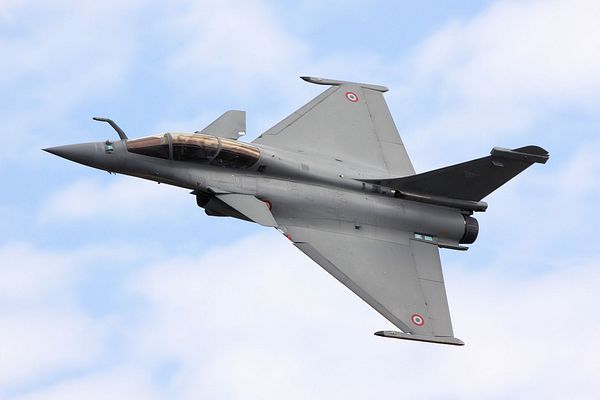
Indonesia has been one of the bigger defense modernizers in the region. The Indonesian Air Force took delivery of its first three Rafale fighter jets earlier this year, part of an $8.1 billion order of 42 jets from the French firm Dassault. The Ministry of Defense also announced in June that they would be purchasing an as-yet undisclosed number of KF-21 Boramae fighter jets from South Korea in the near future.
Indonesia and South Korea have been jointly developing the KF-21 for several years. But there have been tensions and disagreements about the cost sharing arrangement, with Indonesia expressing skepticism that it was receiving sufficient technology and knowledge transfer in exchange for its participation. Payments were delayed and, in the end, Indonesia will simply be a customer rather than a co-producer of the KF-21.
On the naval front, Indonesian state-owned shipyard PT PAL launched the first of its domestically produced Merah Putih frigates in December 2025, and the second unit is under construction now and expected to be launched later this year. The ships are being built under license from the U.K.’s Babcock based on the Arrowhead 140 design.
PT PAL will also shortly begin production of a pair of Scorpene Evolved attack submarines, which it is co-producing with France’s Naval Group. This is a complex project that will take several years to complete, but moving from the preparatory to production phase marks an important milestone. In addition to domestically produced ships, Indonesia made several big deals with Italy recently, including purchasing a pair of Thaon di Revel-class frigates and the controversial acquisition of a retired Italian aircraft carrier.
In addition to supplying the Indonesian Navy, PT PAL is assisting the Philippines to shore up its strategic sealift capabilities. Two Tarlac-class landing platform docks were delivered to the Philippine Navy about ten years ago, and PT PAL is now working to deliver an additional two units, the first of which was officially launched in June.
The Philippines is also leaning pretty heavily on South Korea as a supplier of advanced air and naval combat platforms. Along with Indonesia, the Philippines is reportedly close to becoming one of the first customers of South Korea’s KF-21 fighter jet. Meanwhile South Korea’s Hyundai Heavy Industries continues production on a number of advanced warships for the Philippine Navy.
South Korea is also in the running, along with several international firms, for a $530 million contract to provide the Thai Royal Navy with a new 4,000 ton frigate. This project follows on the heels of Thailand’s complicated procurement of an S26T submarine from China. The submarine, expected to be completed in 2028, was delayed when Germany refused to export the engines that were originally part of the specifications. After delays, the project is moving forward with Chinese-made engines.
In Malaysia, the long-delayed Littoral Combat Ship program continues to lumber forward with three of the planned five ships already in the water. However, the program, which created severe financial problems for a state-owned naval shipyard, hit another snag this year when Norway, citing tightened export controls on sensitive defense technologies, revoked Malaysia’s export license for a key missile system. Unsurprisingly, the Malaysian government is not happy with the decision.
One final and interesting development in the region is the popularity of BrahMos supersonic cruise missiles. Vietnam, the Philippines and Indonesia have all now signed deals to buy the Indian-made missiles. This shows the extent to which defense procurement is no longer just about European, American or East Asian firms, as middle powers like India and Turkey are becoming increasingly important players in the region’s military modernization plans.
This bird’s eye view of recent developments highlights two things. First, defense modernization in the region is gathering steam and will almost certainly accelerate in the future. With an unreliable U.S. and an increasingly aggressive China heightening risk and uncertainty, countries that can afford to do so are seeking to equip themselves with more and better armaments.
The second is that defense modernization and geopolitics cannot be separated. ASEAN countries don’t just want the best equipment they can get at the best price. Defense modernization and procurement function as a form of diplomatic outreach and signaling, as a means of acquiring domestic production capabilities, and as a tool for hedging against risk and uncertainty.
Indonesia has shopped around aggressively (many would say too aggressively) cutting deals or talking to defense firms in France, Italy, Turkey, the U.K., the U.S., India, South Korea, and China in an attempt to leverage geopolitical competition into better deals and more domestic production when it buys major combat systems. The Philippines has taken a slightly different approach, leaning more heavily on a narrower set of countries and partners with which it shares certain interests, like Indonesia and South Korea.
Thailand and Malaysia have both been caught up in the wider geopolitical churn, as the denial of export licenses for key pieces of equipment (among other reasons) set naval modernization efforts back considerably. While it is hard to say exactly how all of these threads will develop going forward, it seems clear that global risk and uncertainty will continue increasing in the near term, meaning these trends are likely to intensify in the years ahead as well.
