

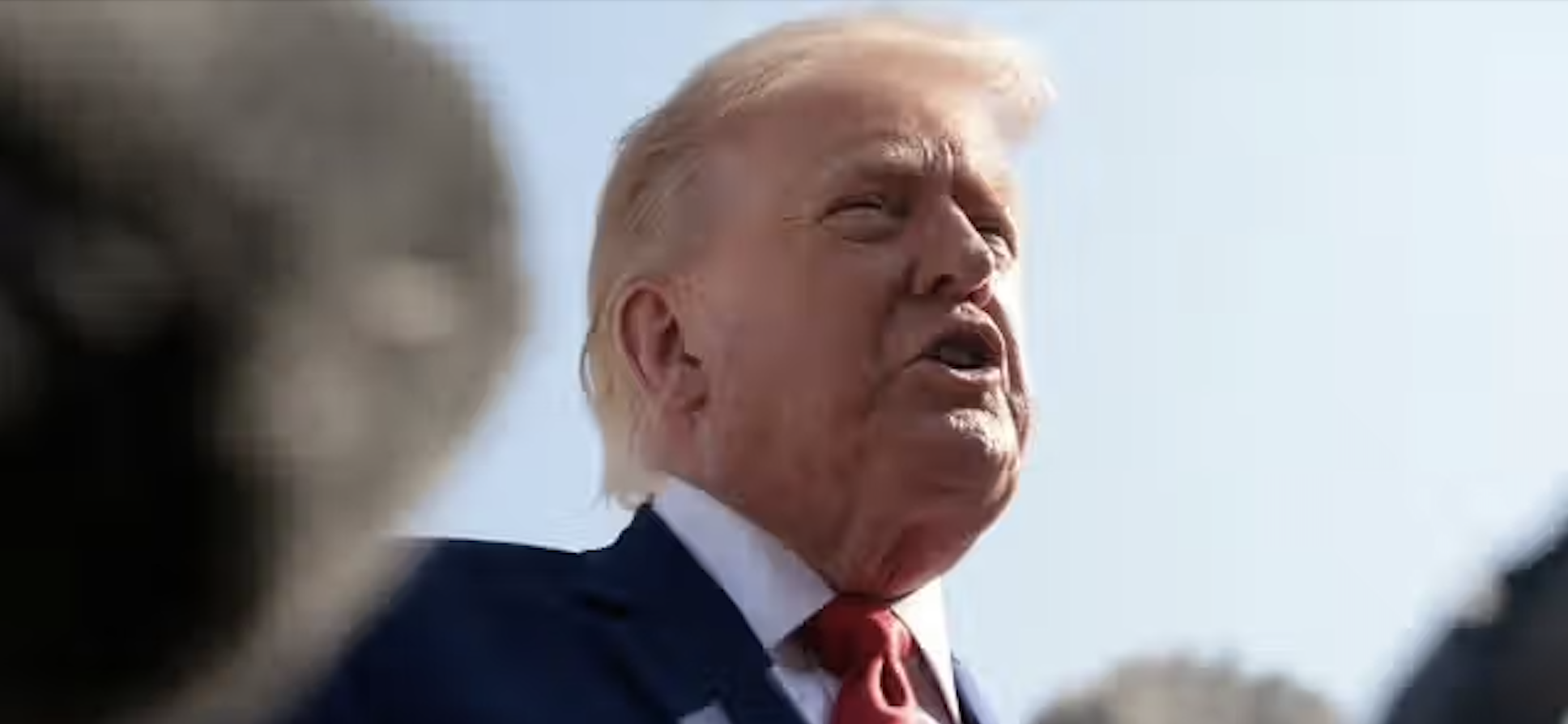
US President Donald Trump has threatened to bomb Iranian bridges and power plants if Tehran continues attacking commercial shipping in the Strait of Hormuz, as tensions spread beyond the Gulf after Yemen’s Houthi movement warned it could target Saudi shipping through the Bab al-Mandeb Strait.
Writing on Truth Social, Trump said the United States would retaliate against any future Iranian attack on vessels transiting the Strait of Hormuz.
“From this point forward, any time the Islamic Republic of Iran shoots at a ship in the Strait of Hormuz — whether it be by missile, rocket, drone or any other device or weapon — the United States will bomb and destroy ONE BRIDGE OR POWER PLANT, including those located next to, or in, the capital city of Tehran.”
The warning came as the US military said it had completed an 11th consecutive night of strikes against Iranian targets, including aircraft hangars and drone storage facilities.
Iran’s Health Ministry said US strikes over the past month had killed 53 people, including six women and three children, and wounded nearly 600 others. The figures however do not distinguish between civilians and combatants.
Four US servicemembers have been killed during the same period.
Iran’s Islamic Revolutionary Guard Corps said its retaliatory attacks on US targets would continue.
The security situation also intensified after Yemen’s Houthis announced what it described as a “maritime embargo” on Saudi Arabia, raising concerns over shipping through the Bab al-Mandeb Strait, the strategic waterway linking the Red Sea and the Gulf of Aden that carries a significant share of Saudi oil exports and global trade.
Several tankers carrying Saudi crude were reported to have altered course following the announcement, diverting away from the Bab al-Mandeb and back towards the Suez Canal.
The Houthis said the measures were a response to what they described as a Saudi blockade of Yemen.
Saudi Arabia rejected the allegation, accusing the Houthis of making false claims and saying the kingdom had continued to support Yemen through humanitarian assistance, development projects and economic aid.
A spokesman for the Saudi-led coalition said claims that Saudi Arabia was blockading Yemeni ports and airports amounted to “disinformation”.
The United Arab Emirates also criticised the Houthis. Anwar Gargash, diplomatic adviser to the UAE President, said Iran-backed armed groups were facing growing political pressure despite remaining militarily active.
“Yet their greatest challenge lies not in their military losses, but in the growing public support for a unified state and the rejection of illegitimate and illegal arms outside state control.”
The United Nations urged all sides to avoid further escalation.
“We call for immediate de-escalation. We urge all parties to address their differences through dialogue and diplomacy,” a spokesman for Secretary-General António Guterres said.
The latest developments have heightened concerns over security across the Middle East’s two most strategically important maritime chokepoints. While the Strait of Hormuz remains the world’s most important oil transit route, the Bab al-Mandeb is a critical gateway linking the Red Sea with the Indian Ocean. Any disruption to either waterway could further affect global energy markets and international shipping.
