

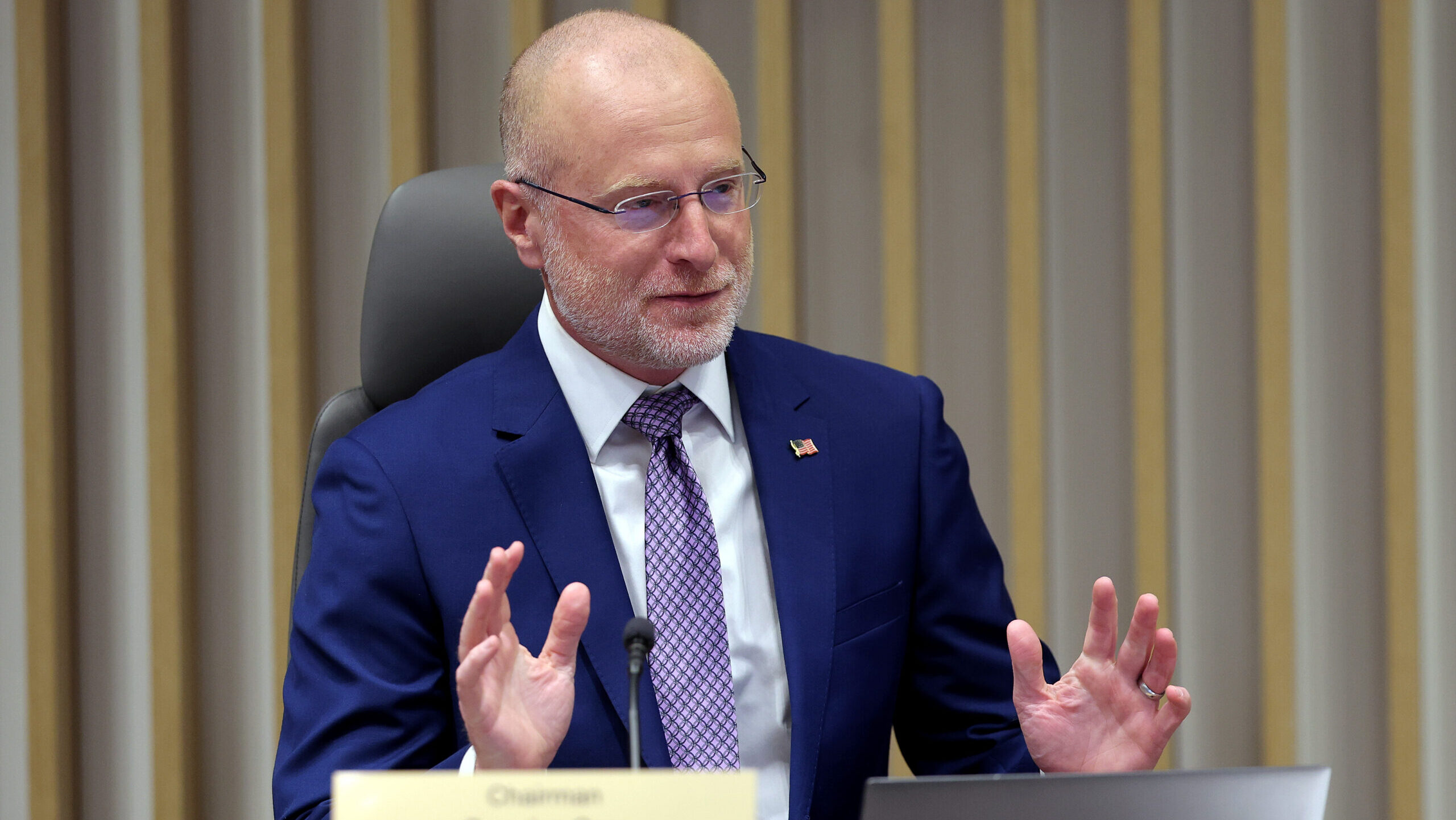
WASHINGTON ― The Federal Communications Commission (FCC) today approved a sweeping overhaul of its licensing process for spectrum usage by satellites — a move that will cut red tape for operators across the military, civil and commercial sectors, as well as ease the path to orbit for new types of missions.
The reforms have been widely lauded by the space industry. While the FCC does not license satellites owned by the Defense Department, operators providing commercial services to the US military and national security agencies must obtain a commission license.
“The Commercial Space Federation (CSF) applauds the Federal Communications Commission for today’s adoption of the ‘Space Modernization for the 21st Century Report and Order.’ By streamlining its satellite and earth station licensing process and reducing regulatory burdens on industry, the Commission is taking a critical step in allowing for continued American innovation and space superiority,” CSF said in a statement provided to Breaking Defense today.
In a statement issued by the Space Industry Association (SIA), association President Tom Stroup said: “SIA is pleased to see the Federal Communications Commission and Chairman Brendan Carr moving forward with their efforts to modernize their satellite licensing rules.”
According to today’s FCC announcement, the “groundbreaking” licensing reform “eliminates a large swathe of unnecessary licensing and operating rules,” and, among other changes, replaces the traditional licensing process with a “licensing assembly line” under which “applications are modularized and processed more efficiently.” It also establishes a streamlined application process that “provides more predictability for companies, and gives the FCC new tools to promote today’s space innovators.”
In addition, the changes set up criteria for licenses that are presumed up front to be acceptable. According to the FCC announcement, the new ruling: “Establishes bright-line criteria as to when an application serves the public interest, while providing clarity on the exceptional circumstances that warrant more considered review.”
While most of the changes follow the FCC’s motto of “delete, delete, delete” when it comes to rules and regulations, the licensing reform package also adds at least one new requirement, which compels satellite operators to share space situational awareness data in order to promote space safety.
In announcing the planned vote on the reforms, FCC Chairman Brendan Carr said on July 1: “At the outset of the Trump Administration, the FCC committed to boosting America’s space economy. Delivering on that priority is key because our country now sits at the dawn of a new era of space innovation and dominance.”
