

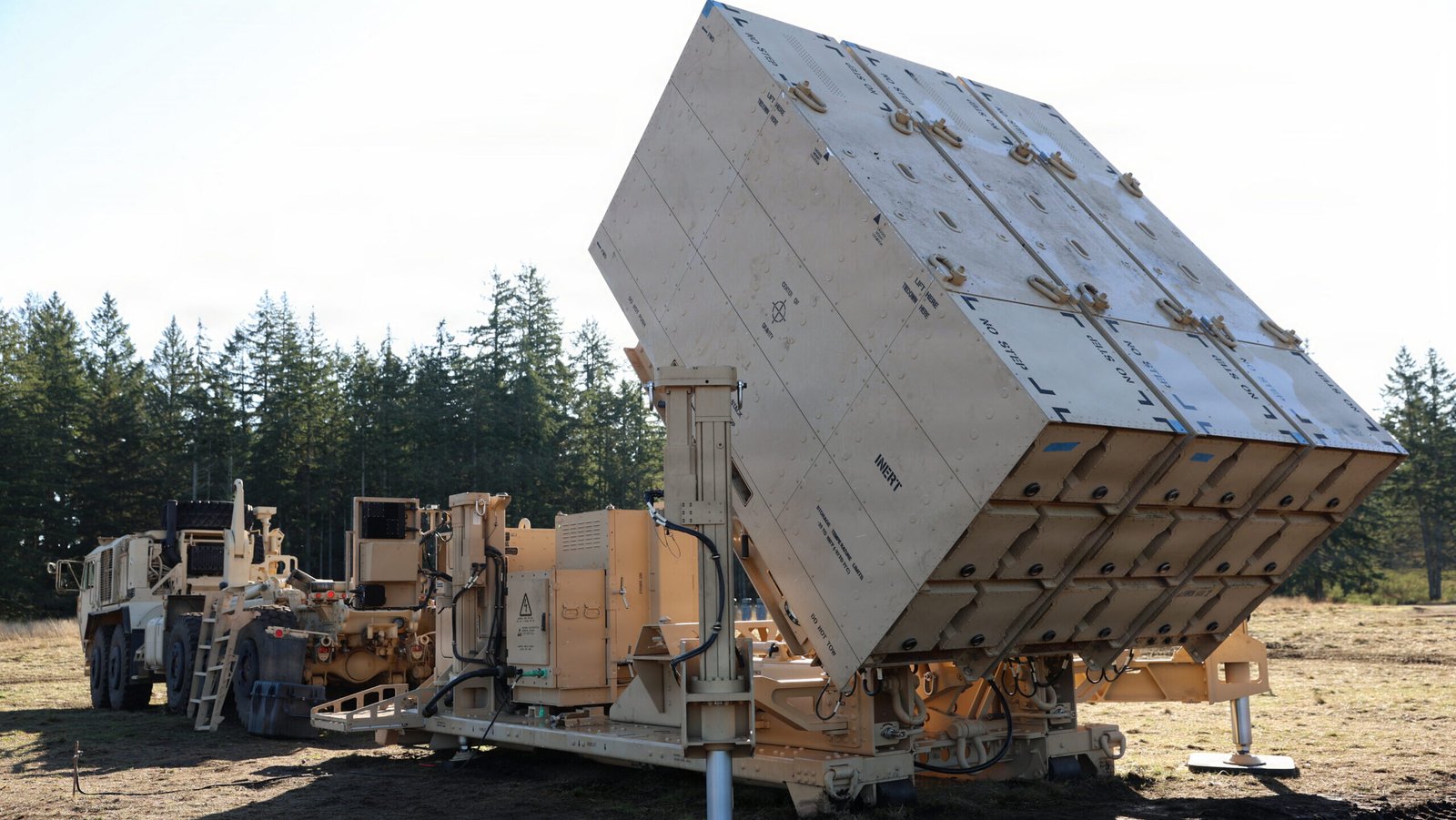
WASHINGTON — After tapping two teams to continue development for a second interceptor for its Indirect Fire Protection Capability (IFPC) Increment 2 launcher, the Army is creating a way for other vendors to keep competing, according to a three-star general.
Lt. Gen. Frank Lozano the Portfolio Acquisition Executive for Fires described the effort as an “off-shoot opportunity” that the service will pursue even as it works with competition winners Lockheed Martin and a team-up from Boeing and Anduril. The opportunity would allow for another competition planned for the fourth quarter of 2027.
“We wanted to turn up the heat on that program,” Lozano told an audience Tuesday at the annual Association of the US Army conference. “I want to run an in parallel, what I call an in-strike competition.”
“We basically just said, ‘Hey, if there’s any other company who didn’t make the first cut … but oh by the way, [if] you continue to invest in its second interceptor capability, we’d love for you to come out to the range,’” he later added. “We’ll give you range time. We’ll present targets and will allow you to recompete with an opportunity to get back into the program fold.”
The service is using the same set up for the for next generation short-range interceptor program, allowing other companies to compete against Lockheed and Raytheon who are under contracts with the Army and competing for a production deal.
The move comes as the Pentagon looks for ways to ramp up critical munition production and refill its stockpiles. In recent months the department has inked a series of framework agreements designed to pave the path of multi-year contracts.
A Question Of Budgets
When it comes to Army programs, acquisition czar Brent Ingraham told the same audience that the service will need to see where the 2027 defense budget lands and make sure these munition deals are a funding priority.
The challenge for the Army and other services is, in part, centered on the administration’s decision to place a large swath of the munition buy inside a reconciliation request instead of the base budget. Lawmakers are not yet moving forward with that reconciliation request and defense officials may reshuffle the base budget request.
“Depending on where a budget lands, what a top line looks like, whether there’s a reconciliation or not … all those things will drive us to figure out how we ensure that we continue to give the right demand signal to industry” on critical munitions, Ingraham said.
Despite the rash of framework agreements, he acknowledged, “I can’t expect industry to sort of invest like we’ve been asking them to invest on a wish list or a dream.”
Should the CR run for a full year, the Army may need to “reprioritize” funds to make sure the dollars are there to support the multi-year buys, he said.
