

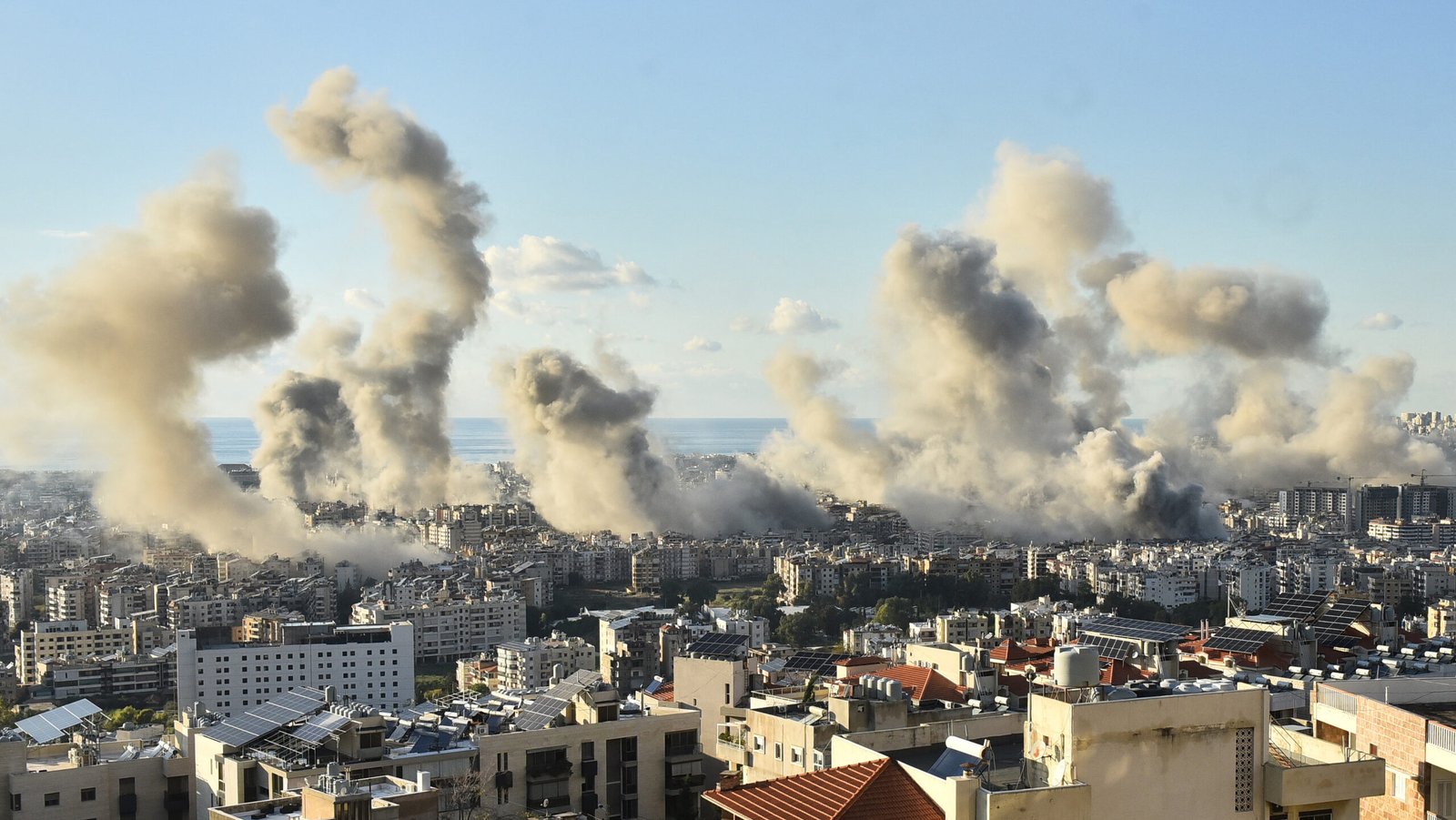
JERSUALEM — The Israel Defense Forces struck 100,000 targets over three years of war on multiple fronts, the Israeli military said in a release of data marking the third anniversary of the Oct. 7, 2023 terrorist attacks.
The IDF does not define what a “target” means in this context, but the size of the figure, which includes strikes in Lebanon, Syria, Yemen and Iran, shows the breadth of conflict Israel has waged since the Hamas terrorist attacks upended the region. The data release also included information on new units formed during the war and the changes in IDF reserve forces, as Israel has had to adapt its military structures on the fly.
Unsurprisingly, the majority of strikes were in Gaza, where the IDF claims it has struck 65,000 targets, with around 30,000 of these in just the first three months of the conflict — a pace that shows in the widespread destruction of buildings and displacement of the population that was evident quickly after the war began.
Outside Gaza, the IDF said Israel also struck 28,000 targets in Lebanon and Syria, as well as 4,500 in Iran and 80 in Yemen. The Iran targets were struck during a 12-day conflict in June 2025, as well as an exchange of fire on Feb. 28, 2026. Syria, for its part, has become more outspoken in recent weeks about what it says are Israeli violations within Syrian territory near the Golan.
The IDF has also increased its tempo of operations in the West Bank. It says it has confiscated 3,800 weapons and arrested “45,000 wanted individuals.”
The IDF believes it has eliminated four Hamas military branch heads, as well as 17 Hamas brigade commanders, 60 battalion commanders and 300 company commanders. This means most of Hamas’ five brigades and 24 battalions have seen their commanders eliminated several times in the war.
A total of 970 Israeli soldiers and service personnel have fallen in the war. This is in addition to more than 800 civilians killed on Oct. 7. Overall Palestinian casualty figures were not included in the new dataset, but Israel has reportedly accepted assertions by Gaza’s health ministry that over 70,000 have been killed. The ministry does not distinguish between civilians and militants.
Additionally, the new figures show that Israel’s missile defenses were sorely tested over the last three years: The IDF said that approximately 31,540 projectiles were launched at Israel from multiple fronts, including approximately 10,200 from Gaza, 20,000 from Lebanon, 1,200 from Iran, 50 from Syria, and 90 from Yemen. While the IDF does not release interception rates, during the recent conflict with Iran local reports put the success rate at 92 percent.
The new data are the latest in several data sets that the IDF released throughout the war. The IDF’s first data set was released after three months of conflict, but a link to its appears to have been taken down. The Israeli Air Force said that by February 2024 it had struck 31,000 targets, and the IDF released data sets for six months of war in April 2024 and nine months of conflict in July 2024. However, since then the military appeared to stop releasing this type of data until this week’s milestone.
Breaking Defense’s team has been on the ground during the conflicts. Read some of their personal reflections here:
Modernizing The Military
The data release also emphasized how the war has caused major changes within the Israeli military.
One lesson is that the IDF needs more ground forces to confront threats on multiple fronts, a reversal of a decade in which Israel had been reducing the ground forces and focusing more on technological innovation and small units.
The IDF notes that it created several new brigades and divisions, including a new Mountain Brigade on the northern border and a new division to coordinate defense of the Jordan Valley. The IDF also expanded its armored corps with new regular service tank companies. In addition, the IDF said it “has worked to expand its personnel pool and establish new frameworks in accordance with operational needs that have emerged during combat.” This includes new unspecified units within the intelligence and air defense sectors.
A second lesson is the need to manage the reserve forces in a long conflict. When the Oct. 7 war began, the IDF called up hundreds of thousands of reservists, many of whom spent most of the next year with their units. One IDF Division, the 162nd, spent 500 days in combat. The long war led to fatigue and challenges within the ranks, including a major strain on the reserve system that sustains Israel’s operations.
The latest military data says that “since the beginning of the war, the size of the reserve forces has increased by approximately 36%. … The scale of reserve mobilization remains unprecedented, with combat reservists serving an average of 80–100 days annually, significantly exceeding the originally planned average of 55 days due to evolving operational requirements.”
The Israeli military has also sought to implement reforms across its various branches due to the lessons of three years of conflict.
The IDF Intelligence Directorate has prioritized early warning of attacks, according to the release. Although the changes are discussed generally by the IDF, they relate to intelligence collection as well as new warning operations rooms and new training for analysts. The IDF also put in place new oversight and a new data division within the directorate that will integrate artificial intelligence and advanced computing.
The regional commands have also changed. Southern Command, which was in charge of the Gaza border during the Oct. 7 disaster, has strengthened defenses along the border. It has also led the war’s strikes on Hamas commanders. In Northern Command, which has dealt with the war on Hezbollah and also has led the advance into a buffer zone in Syria, the IDF says it has created 10 new military posts in Syria. Local civilian-led armed security squads have tripled in size.
Reforms have also affected the air force and navy. The IDF says the air force now has four times the number of forces on alert, a direct lessons learned from Oct. 7, when the air force had only a small number of helicopters and assets ready to respond. The navy has also increased its coastal defenses and integrated patrol vessels with the ground forces.
Overall, the reforms emphasize forward defense, faster response times, and operational changes in the field, along with bolstering defenses and new technologies. The military also stresses the need to be prepared for “multi-arena” responses, clearly tailored to the kind of multi-front war Israel has faced.
