

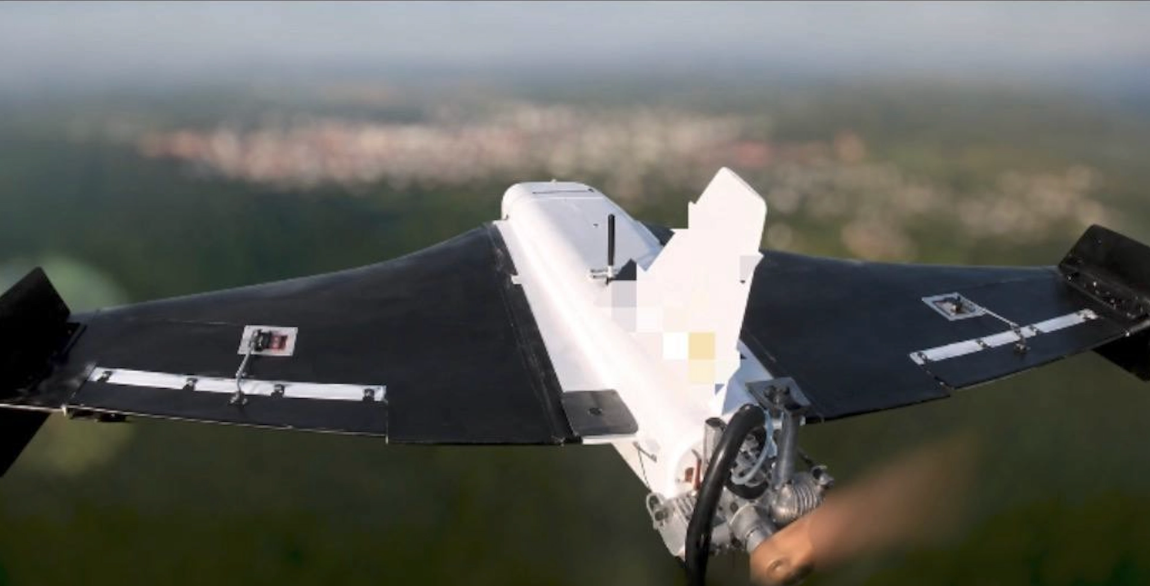
A Chinese technology company has allegedly offered to supply Russia with nearly £2.2 million worth of communications equipment designed to extend the operational range of its attack drones.
The disclosure comes as Moscow expands its drone warfare capabilities, with a major new launch facility near Ukraine nearing completion that experts estimate could launch 100 or more jet-powered attack drones daily.
Mike Monnik, founder of the private intelligence company DroneSec, told Reuters: “The speed of construction … demonstrates the ease with which Russia can bring now-established offensive capabilities to bear rapidly.”
Shenzhen Xingkai Technology offered to provide 500 communications modems to a Russian drone factory despite being informed that the equipment was intended for military use, according to an investigation by The Insider and Nordsint.
According to The Insider, an undercover investigator posing as a Russian military supplier contacted Xingkai Technology through its official WeChat account to enquire about purchasing equipment for the Alabuga special economic zone in Tatarstan, a major Russian drone production centre.
The Chinese manufacturer quoted 19.5 million yuan, approximately £2.2 million, for 500 mesh modems, which allow drones to communicate over extended distances.
A company representative identified as Jack Jiang, whom The Insider identified as the company’s director and owner, confirmed that Xingkai Technology manufactured the equipment and supplied photographs, video footage and technical documentation.
The investigation found that the company continued discussing the proposed sale after being explicitly informed that the equipment was intended for military production.
In an earlier investigation by The Insider and Nordsint, Xingkai Technology also acknowledged having “many clients in Russia” when approached by investigators posing as prospective buyers of equipment for military drones.
The company provided payment options through accounts at DBS Bank, Ping An Bank and China Merchants Bank. It remains unclear whether the proposed shipment of 500 modems went ahead.
The Insider also examined a Xingkai Technology modem recovered from a Russian Gerbera drone in Ukraine, identifying it as the XK F-359 model.
Investigators compared the recovered modem with technical documentation and photographs supplied by the Chinese manufacturer and found that they matched.
Ukraine’s military intelligence agency (HUR) had previously reported finding Xingkai Technology modems in Russian Gerbera drones in 2024.
Mesh modems allow drones to relay signals between one another, enabling Russian forces to maintain communications with aircraft operating beyond the direct range of ground controllers.
According to The Insider, the XK F-359 can maintain communications over distances of 100 to 300 kilometres when there are no obstructions, allowing drones to receive updated commands during flight.
The technology also enables drones to act as airborne relay points, transmitting information between other aircraft and operators on the ground.
The Insider estimates that Xingkai Technology accounts for approximately half of the market for high-performance mesh modems used in Russia’s Geran and Gerbera drones.
The investigation also identified an American-made AMD programmable chip reportedly used in the equipment.
AMD told The Insider: “Xingkai Technology is not an AMD customer or authorised partner, and AMD has not sold products to the company.
AMD complies with all applicable U.S. export control and sanctions laws and strictly prohibits the export or reexport of AMD products to Russia in violation of those requirements.”
The Insider also examined Russian customs records showing that Xingkai Technology products had previously entered Russia under descriptions including antennas and remote-control equipment.
The investigation identified Atlant-Engineering and LT Global Forwarding as recipients of the Chinese manufacturer’s products.
The reported offer of Chinese communications equipment comes as Russia accelerates the expansion of its drone infrastructure, potentially increasing both the reach and volume of attacks against Ukraine.
Satellite imagery examined by Reuters shows Russia has nearly completed a major drone launch facility near Millerovo air base in the Rostov region after just six weeks of construction.
Monnik assessed that the facility could become operational within weeks, describing the timeframe as “probably a matter of weeks before (it is) fully operational, if not earlier.”
Rob Jordan, programme director at the Royal United Services Institute (RUSI), told Reuters: “This level of construction in this short a time is impressive.”
He added: “This shows the relative faith Russia is putting in its deep strike capability – possibly to the detriment of its conventional land forces.”
Images from Planet Labs and Airbus show the site expanding from an empty field on August 31 into a complex covering approximately 0.9 square kilometres by October 14.
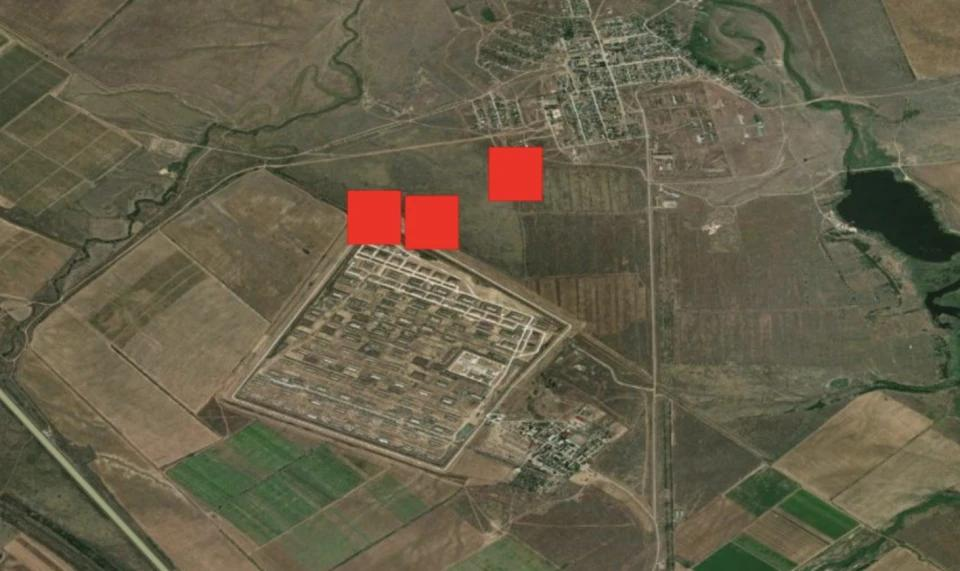
The installation contains eight launch platforms on its western side, with rails installed on two and construction continuing on others.
DroneSec assessed that the facility could accommodate Russia’s newer Geran-4 and Geran-5 jet-powered attack drones, which can reach speeds of up to 600 kilometres per hour, making them harder for Ukrainian interceptor drones to engage.
Monnik estimated that the base could launch 100 or more jet-powered drones within 24 hours, depending on operational requirements and weapons availability.
The facility is located approximately 3.5 kilometres from Millerovo air base, home to Russia’s 31st Guards Fighter Aviation Regiment.
DroneSec assessed that the installation could benefit from the air defence systems protecting the military airfield, potentially complicating Ukrainian strikes.
Monnik also warned: “This ability to rapidly field an ability to launch large-scale attacks using UAS (unmanned aerial systems) poses a strategic vulnerability for NATO countries.”
According to Ukrainian military data examined by Reuters, Russia increased its deployment of jet-powered attack drones roughly sixfold during a three-month period this summer.

The expansion comes as Ukraine prepares for further Russian drone and missile attacks during the winter, with the increasing speed of jet-powered weapons presenting new challenges for Ukrainian air defences.
