

The US military is asking more of its unmanned systems, all of which are constrained by the energy capacity of today’s batteries. The demand for increasingly capable and power-hungry drones means the battery’s capability determines range, endurance, payload, and time on station.
Breaking Defense spoke with Sion Power CTO Job Rijssenbeek about advances in high-capacity battery chemistry, where lithium-metal technology may be applicable, and why batteries and unmanned platforms increasingly need to be co-designed as a single system.
Breaking Defense: As unmanned systems take on more demanding missions, is energy becoming a limiting factor in what they can do?
Rijssenbeek: Absolutely. Brig. Gen. Troy Denomy, program acquisition executive for maneuver, summed up energy challenges at GVSETS (Ground Vehicle Systems Engineering & Technology Symposium) this past summer when he said, ‘Every formation we have today is underpowered.’ The insatiable demand for energy will only increase.
For airborne platforms, every pound matters. More weight requires more energy to lift, which requires more batteries, which add more weight. This quickly becomes a vicious circle. If you can put more energy into the same battery weight, you meaningfully change that math. Greater energy density batteries become enablers of greater range, endurance, and mission capability. They put more missions within reach.
What has changed in battery technology to make improvements in power, weight, and performance possible?
Lithium-ion technology has been extraordinarily successful, and will remain the right choice for many applications, but it is reaching its entitlement performance. There are several advanced battery chemistries coming onto the market, but there isn’t one chemistry that’s best for every mission. The different chemistries and ways of putting those together deliver different combinations of energy, power, cycle life, safety, and cost.
For applications where weight and endurance are especially important, lithium-metal anode batteries are compelling because replacing the graphite anode with lithium metal reduces weight and volume, and increases energy density. Those gains significantly enhance mission capability.
Sion Power has been at the forefront of lithium-metal battery innovation for more than 25 years. Over the last 15 years, we’ve developed robust IP around high-energy density batteries for electric vehicles. In the process, we developed lithium anode production technology, electrolyte formulations, cell designs, and packaging that makes this promising chemistry practical and applicable for aerospace and defense applications.
Today we’re producing large-format lithium-metal cells in Tucson, Arizona that offer double the energy density of conventional lithium-ion batteries, at the cell and pack level, which is transformational for drones and the missions they can fulfill.
What does higher energy density mean in practical terms for defense customers?
More energy at the same or lower weight translates into extended mission duration or additional payload. You can fly longer, reach farther, and do more.
Our maximum energy, one-way attack Licerion Strike cell is designed to deliver up to 500 Wh/kg at the cell level, compared with roughly 250 Wh/kg for today’s standard lithium-ion drone batteries. This means roughly twice the flight time, which translates to greater reach, significantly greater time on station, and enhanced effectiveness. Drones are being asked to carry increasingly greater electronic payloads (like communications, jamming, autonomous guidance, etc.), which consume hundreds of watts of continuous power. Higher-energy batteries allow operators to incorporate more of these capabilities without sacrificing endurance.
Defense systems must operate safely and reliably in harsh environments. How do lithium-metal cells perform under abuse conditions and temperature extremes?
Higher energy density is a benefit only if the cell can operate reliably under the conditions the mission requires. Any time more energy goes into a smaller package, safety always has to be front of mind. I’m proud to say that safety has always been our top priority at Sion Power. We design for safety rigorously, from the materials to the battery pack.
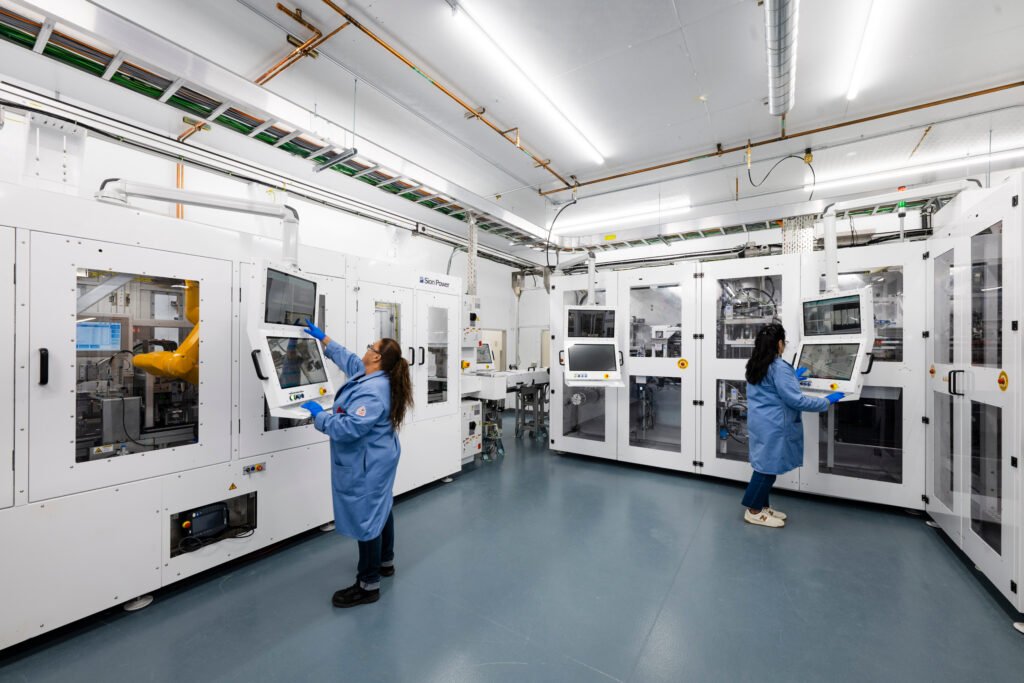
At our Tucson facility, we have approximately 2,000 test channels and a 5,300-square-foot safety and abuse lab dedicated to rigorous performance and safety testing – from exposure to extreme temperatures and vibration, to nail penetration, and forced discharge.
We understand that our batteries need to perform reliably in diverse environments and conditions, and we are constantly expanding the capabilities on that front. (defense customers will be using our batteries in non-hostile environments as well)
What happens when you take lithium-metal batteries out of the lab and put them onto an actual drone?
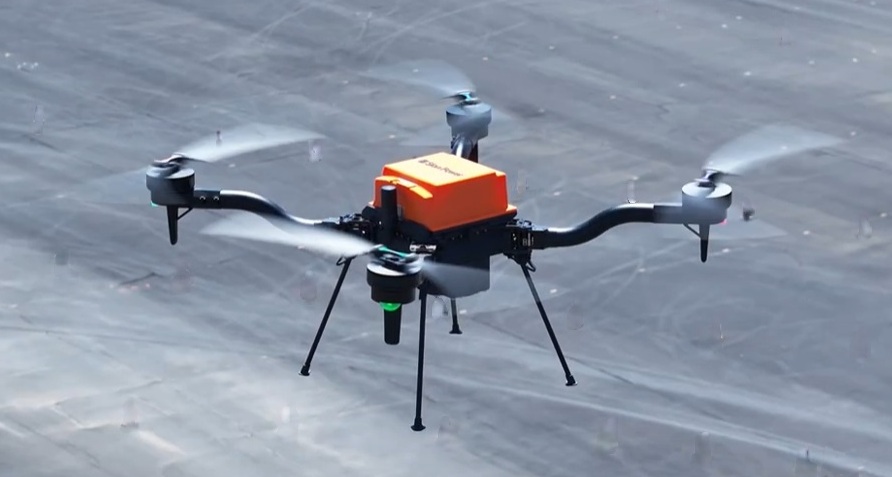
We asked ourselves the same question earlier this year, as we shifted our application focus to drones. To find out, we fitted one of our Licerion Strike demonstration packs onto a commercially available Freefly Astro Max drone, replacing the drone’s two conventional lithium-ion batteries. Our pack increased onboard energy by over 50 percent and reduced the pack weight by nearly 30 percent, all while using the same mechanical footprint.
More importantly, the drone flew nearly twice as long when equipped with our battery, increasing from 33 minutes to 60 minutes.
Twice the flight time means reaching targets twice as far away and putting the pilot further out of harm’s way. Twice the flight time also means more time to be productive at the target. For example, if the target area is 15 minutes away, a 33-minute aircraft has only about three minutes on station before it must return. That’s not a lot of time to be effective. However, at 60 minutes of endurance, that enables 30 minutes on station. Imagine what more you can do in 30 minutes that you cannot do in 3 minutes. That’s the kind of difference operators care about.
Can lithium-metal technology be manufactured at defense-relevant scale and cost?
Absolutely. We’re shipping cells today from Tucson and are ramping 10–20 MWh of pilot-line capacity. We have plans for expanding to 100–200 MWh and more as demand increases. While we replace graphite with a lithium metal anode, all the other battery components are commensurate with already commercialized lithium-ion batteries. We already tap those supply chains to minimize our cell costs. As our manufacturing scale increases, our cost position will improve further.
Which drones would benefit most from lithium-metal, and where else could higher energy density change the performance equation?
Our lithium-metal solutions are ideal for heavier Group 1 and Group 2 drones where the range and payload benefits are significant. Group 3 drones tend to be powered by internal combustion engines today but will benefit from greater electrification and noise reduction that high-energy batteries will enable. Beyond drones, we anticipate our cells will be able to support robotics, automotive, and space applications in the future. If weight and energy are constraints, our batteries will help.
Is lithium-metal technology primarily suited to one-way applications, or can the technology also support rechargeable systems?
Lithium-metal batteries are absolutely rechargeable. Our work for automotive was foundational to demonstrating this.
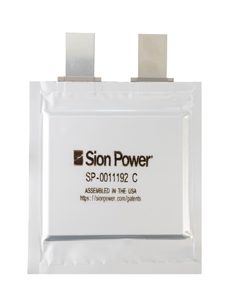
We developed large-format 400 Wh/kg Licerion pouch cells that achieve 800 charge-discharge cycles, are fast-charge capable, and were validated by leading global OEMs. While our Licerion Strike product is aimed at maximum energy density, we’ve applied those learnings to Licerion Echo, our rechargeable solution, which is designed to deliver high energy density with over 150 cycles. Rechargeability increases flexibility, supports reuse, and reduces replacement demand.
China dominates the global supply chain for battery-grade materials. How can battery technologies reduce that dependency?
China’s supply chain dominance was established over decades and that will not be undone overnight. There isn’t a single chemistry that eliminates every supply-chain vulnerability.
One advantage of lithium-metal batteries is that the anode doesn’t require graphite, which removes one key dependence from the bill of materials.
I’m proud to say that Sion Power’s batteries are 100 percent manufactured in the United States. We already have a low dependence on China-made materials, and we are systematically qualifying alternative material sources to strengthen our supply chain resilience and comply with US defense sourcing requirements.
What needs to change in how batteries and unmanned systems are designed to unlock the next leap in capability?
I don’t think drone dominance will be based on one particular chemistry; rather, it’s about using the right chemistry for the mission.
For drones where endurance and weight are critical, lithium-metal represents a significant step forward in energy density. But the bigger change will come when batteries and unmanned systems are increasingly co-designed. That will enable greater optimization of range, payload, power, cycle life, and cost at the system level. The real acceleration comes when we stop optimizing the drone and the battery separately and start optimizing the entire system as one. That kind of approach turns improvements into capabilities that will help forces achieve overmatch.
