

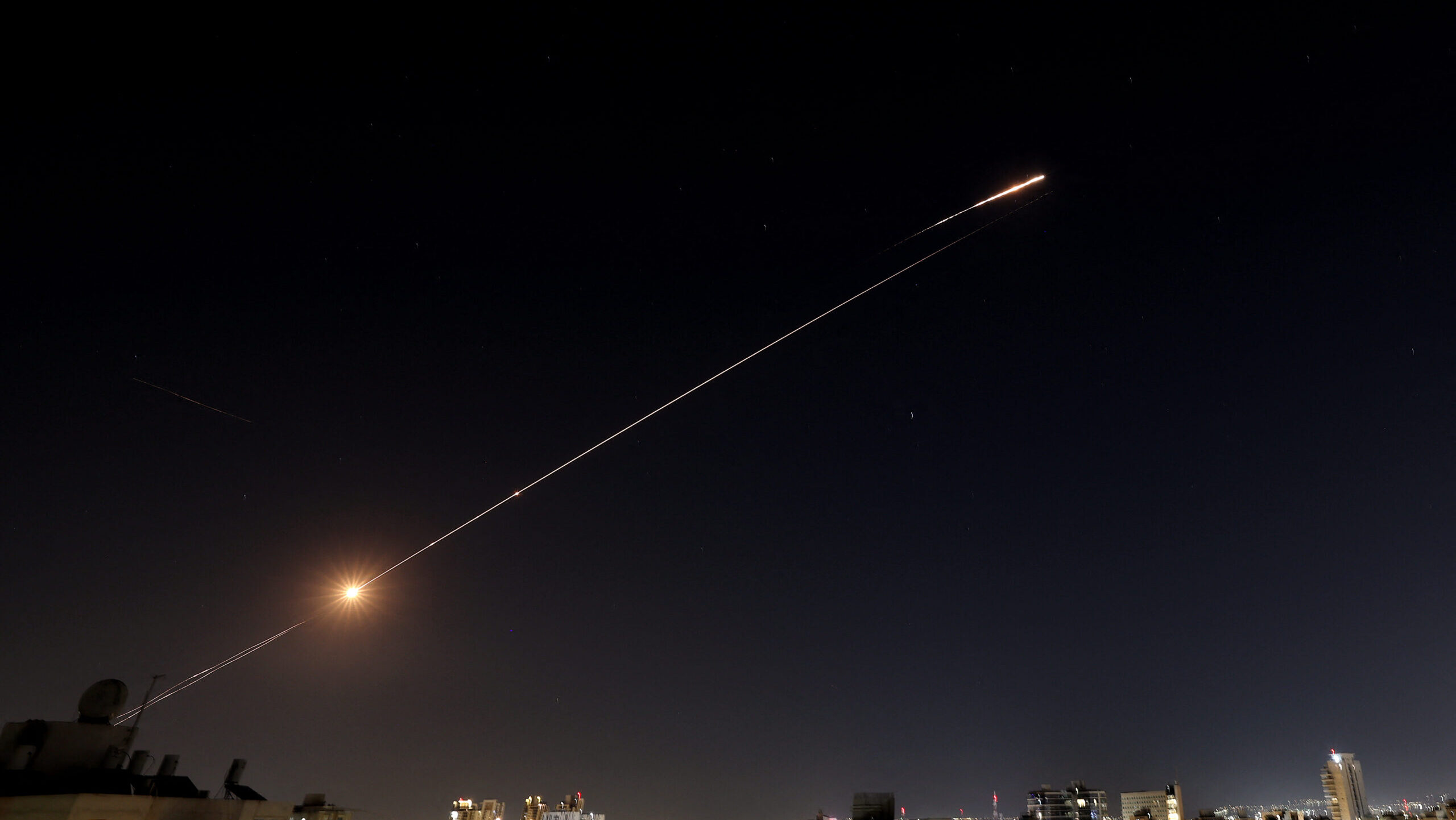
IZMIR, Turkey — In the aftermath of Iran’s drone and missile attacks on its neighbors Turkish firms are receiving increased interest from Gulf states in their short-range air defenses and counter-drone technologies, officials from two companies told Breaking Defense.
Murat Kurtulus, deputy general manager of missile production giant Roketsan, said that his company received requests from Gulf states to procure two systems in particular, the firm’s Cirit missiles and Alka directed energy weapon system.
“Yes, we have some requests from the governments after recent developments,” Kurtulus said. He noted that both Cirit, unveiled at the Saha defense expo in May, and Alka are relatively new products, with Alka in particular “very effective” for protecting critical infrastructure like the kind of facilities that have been targeted by Iranian systems.
Cirit is a light-weight, laser guided counter-UAS missile, with a 5 km (3 mile) range, which the company says is a cost-effective alternative to traditional air defense systems. The missile can be launched from mobile land-based vehicles. Alka is a directed energy weapon system that uses electromagnetic and laser technology at a very close range.
Ersin Kandur, regional manager for the Middle East and Africa for state-owned MKE (MAKİNE ve KİMYA ENDÜSTRİSİ), also told Breaking Defense his firm has seen “increasing demand” from the Gulf states for air defense systems, calling out the Tolga short-range platform in particular.
Since the beginning of the conflict, the demand for our product [has] increased very much,” Kandur said, to the point there is “five times more” interest than before the conflict.
Tolga is a layered short-range air defense system that has both an electronic-warfare “soft” kill option, and a 35MM cannon and laser-guided interceptors for a hard kill option. Kandur said the conflict showed that “the close range air defense system is very important to protect critical infrastructure, like military bases, air bases, naval bases, and also oil production sites, for example. Our system is specifically designed against drones, small, medium, [and] micro drones.”
Both interviews were conducted on the sidelines of Turkey’s annual Efes 2026 military drill. Breaking Defense accepted travel and accommodation from a combination of the Turkish Ministry of Defense and Turkish defense firms Havelsan, Aselsan, Roketsan, MKE and Asfat to cover the exercise.
One aspect that can help secure a sale in the lucrative Gulf market is technology transfer to help localize defense production, something both Turkish executives expressed comfort with.
“It’s the new reality, since every country’s threat analysis [are] increasing, the tensions are increasing globally, so the supply chains are affected on the negative side,” Kurtulus said.
The Roketsan official added that his company is “very open to make such collaborations with the other countries. As a company we are very welcome to develop such infrastructures.”
Kandur echoed that thinking, saying “We have a huge experience in establishing production lines, both for ourselves and for our customers abroad. So we are aware that in the region localization is a hot topic right now. A lot of countries are trying to gain the production experience of defense materials.”
He added that the firm is ready to open production lines in Gulf states and that the Intellectual Property (IP) resulting from technology transfer will belong to the exporting country and not to MKE.
“When we offer the transfer of technology, we are actually delivering turnkey facilities. This means we are providing the production machinery and equipment, technical manufacturing data packages, training, and technical assistance. When we finish our job, our customers are able to produce the product by themselves,” he said.
MKE, whose roots go back to the Ottoman Empire in the 15th century and which traditionally manufactures munitions, explosives and guns, is increasing its platform offerings to include air defense systems, and is planning to expand its export base especially after it received $1.5 billion investment at Saha expo.
