

WASHINGTON — The Air Force now expects prototyping for highly advanced fighter jet engines will not be complete until 2031, delaying the marquee propulsion effort again by more than a year.
In a statement to Breaking Defense, an Air Force spokesperson said the new timeline for the Next Generation Adaptive Propulsion (NGAP) program “reflects expanded test and evaluation of NGAP prototypes and allows investigation of test findings.”
The 2031 completion date is disclosed in the service’s fiscal 2027 budget documents, and follows roughly two years of delays revealed last year. Collectively, NGAP is now facing a three-year delay compared to earlier projections.
Both GE Aerospace and RTX subsidiary Pratt & Whitney are competing under the NGAP program, where the two firms are expected to fabricate full-up engine prototypes. Earlier this month, the two firms said they cleared a milestone known as assembly readiness review for their respective NGAP offerings dubbed the XA102 for GE and the XA103 for Pratt.
“GE Aerospace continues to execute the NGAP program in close partnership with the Air Force and in alignment with their allocated funding and test timeline,” a company spokesperson said in a statement to Breaking Defense. “We look forward to continuing this close partnership and developing this adaptive engine technology to deliver the capability to the warfighter.”
RELATED: GE pushes for faster fielding of Army’s ITEP, Air Force’s NGAP engines
A spokesperson for Pratt’s parent firm RTX said that the company “remains fully committed to the Next Generation Adaptive Propulsion (NGAP) program and continues to make progress, executing the program successfully with the funding provided by the government customer. We recently completed a fully digital assembly readiness review for our XA103 engine, marking a key milestone as we transition from digital design to producing physical hardware for testing.” The company referred further questions to the Air Force.
The Air Force is requesting nearly $514 million for the NGAP program in FY27, which budget documents show would rise to roughly $906 million in FY28. Last year, the service raised the total award ceiling for each vendor to $3.5 billion. Officials have said they expect to eventually downselect one NGAP contender to carry forward.
The “adaptive” engine technologies underpinning the NGAP program can change the characteristics of a jet engine in flight to enable features like more fuel efficient cruising or increased thrust, Air Force officials have said, potentially heralding a leap in military propulsion. The NGAP effort draws from work previously conducted under the Air Force’s Adaptive Engine Transition Program, which constructed a new, prototype engine for the F-35, but was ultimately passed over as an option to power the stealth fighter.
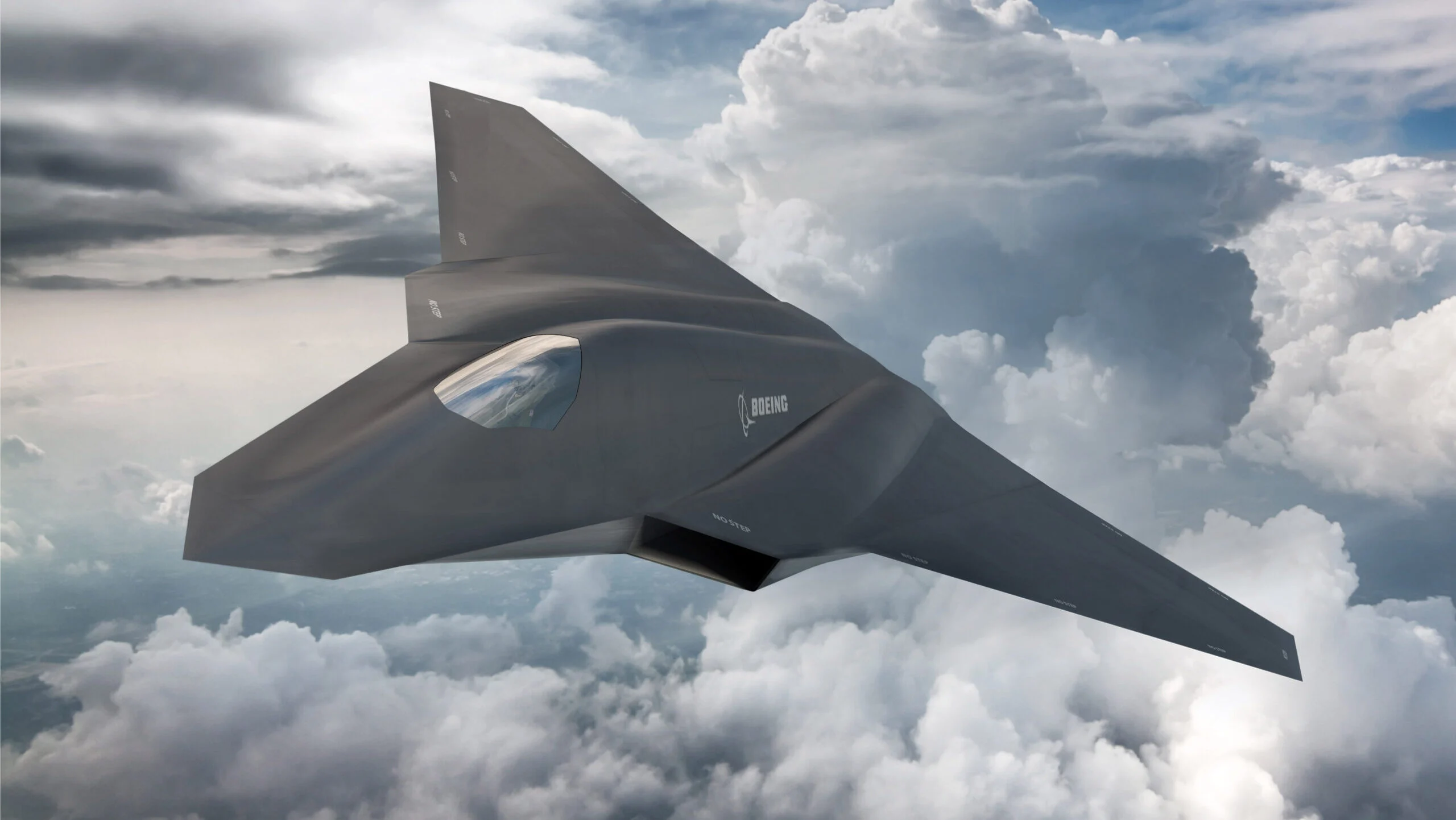
The Air Force has previously said NGAP is designed to be platform agnostic, meaning the engine architecture could serve various propulsion needs, but the program was also envisioned to provide a powerplant for the Air Force’s Next Generation Air Dominance fighter now known as the F-47. Considering the aggressive timeline the Pentagon is pushing to fly the F-47 before the end of President Donald Trump’s term, a next-gen engine is likely out of reach for the fighter in the near future.
