

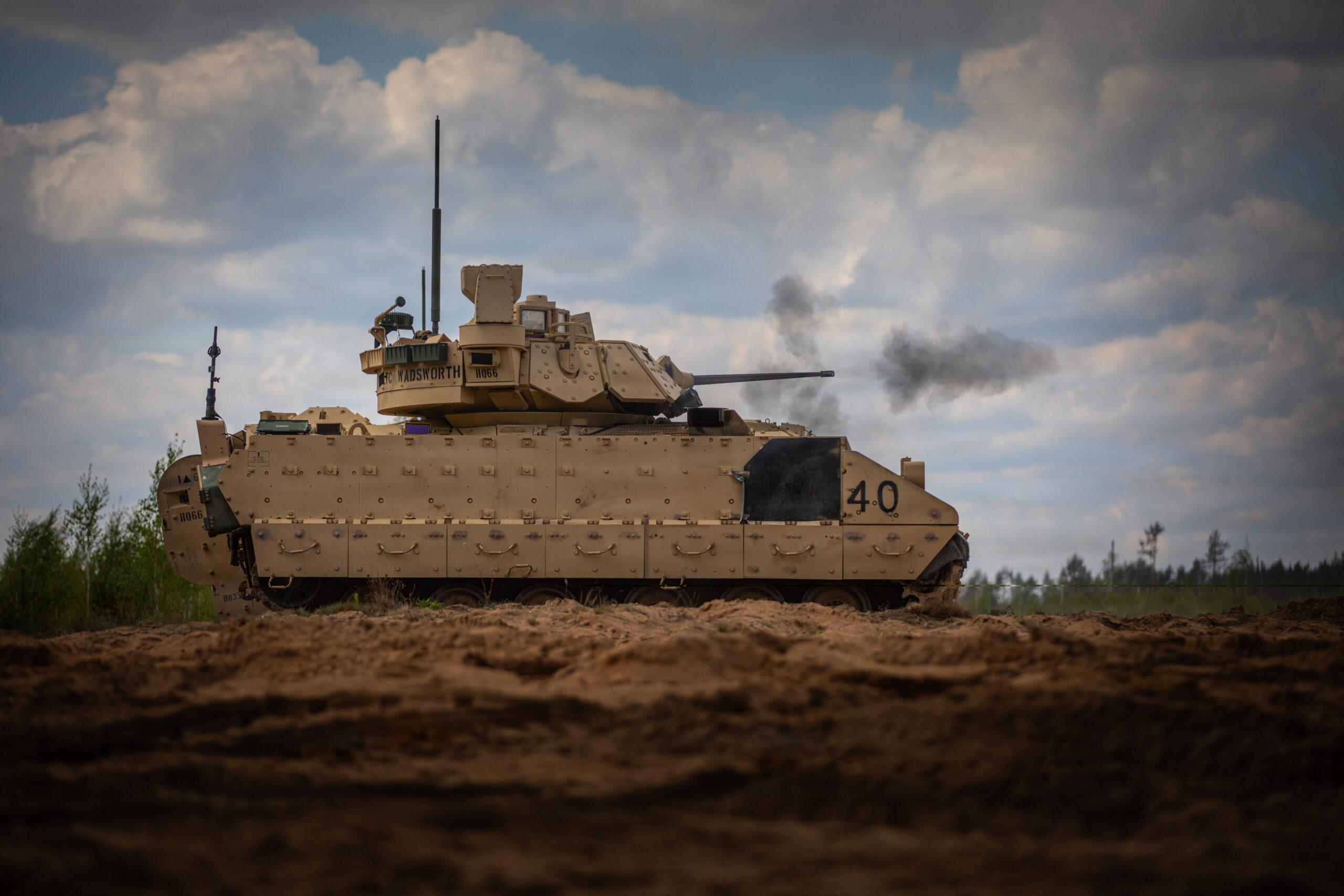
WASHINGTON — BAE Systems was awarded the Army’s Soft Kill Active Protection System (APS) program of record, aimed at equipping the service’s ground vehicles with electronic warfare capabilities suited to defeat threats ranging from missiles to drones, the company announced.
The soft-kill system — a system that deploys non-kinetic effects — uses BAE’s Rapid Optical Observation and Kill (ROOK) program, which takes down threats by “confusing” or jamming missile systems or drones before they can reach the vehicles, the company said in a release Wednesday.
“Modern ground warfare demands a layered defense, and soft-kill technologies are a critical, complementary component,” Dave Gillespie, director of Optics and Countermeasure Solutions at BAE, said in the release.
BAE has been developing its soft kill APS technology for several years. In 2019, the company won the Army’s Soft Kill Rodeo competition — which sought out APS solutions with the most “potential,” according to the Army — with its TERRA RAVEN soft-kill system, a company spokesperson said. Later that year, the Army suggested the winning system be integrated into a Bradley Fighting Vehicle.
ROOK is a “spiral development of the TERRA RAVEN” system, the spokesperson told Breaking Defense, adding that the first phase of the contract is valued at $20 million.
The contract will support “further development” of the TERRA RAVEN system in addition to the company’s Stormcrow defense system, which uses lasers to defeat various airborne threats. Such systems, as stated in BAE’s release, offer “cost-effective, sustainable defense with an infinite magazine depth, continuously disrupting enemy systems.”
When asked what kind of ground vehicles would be outfitted with the ROOK system, BAE deferred to the Army. The Army did not respond to the query by press time.
The announcement of BAE’s APS award comes as the Defense Department has requested a sizable uptick in funding for counter-drone capabilities in its fiscal 2027 budget. The request, valued at almost $1 billion, comes as the world continues to see inexpensive, small first-person-view drones taking out muti-million-dollar tanks on the modern battlefield, such as in the Ukraine-Russia war.
Simultaneously, the Army and the Defense Department writ large have expanded their search for non-kinetic counter-drone capabilities as they seek to minimize the risk of collateral damage caused by large kinetic weapons on civilians and infrastructure.
