

China attempted at least six turbofan engine programs before achieving partial success with the WS‑10 in the 1990s, four of which were outright failures. The journey from reverse‑engineered Soviet and British designs to a fully indigenous fourth‑generation engine took decades, immense funding, and persistent setbacks.
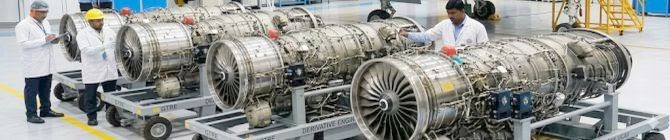
By contrast, India’s Kaveri program, despite limited resources, has achieved remarkable milestones in aero‑engine development.
China began its aero‑engine journey in the 1950s with licensed Soviet turbojets such as the WP‑5, WP‑6, and later the WP‑7 and WP‑8. These were essentially copies of Soviet designs, powering aircraft like the J‑5 and J‑6.
The WP‑13 Kunlun turbojet was another derivative, but none of these engines represented a breakthrough in indigenous turbofan technology. By the mid‑1970s, China sought to develop turbofan engines independently, but metallurgy, single‑crystal turbine blade technology, and precision machining posed insurmountable challenges at the time.
In the 1970s, China imported Rolls‑Royce Spey engines, which informed the WS‑9 Qinling turbofan. This was a licensed copy and did not achieve the performance required for modern fighters.
Several indigenous attempts followed, but four of them failed completely, unable to meet thrust, reliability, or lifespan requirements. These failures underscored the difficulty of mastering high‑temperature alloys, coatings, and combustion stability.
Work on the WS‑10 Taihang began in the 1990s, drawing heavily on reverse‑engineering of the Russian AL‑31F. Early WS‑10 variants entered limited service around 2006 but suffered reliability issues, forcing China to continue importing Russian engines for frontline fighters.
By 2010, after extensive redesigns, the WS‑10 achieved a thrust‑to‑weight ratio of 7.5, roughly comparable to Russian engines of the time. This marked the first partial success in China’s turbofan journey.
Further iterations of the WS‑10 improved performance, eventually crossing a thrust‑to‑weight ratio of 8.5. This milestone gave China confidence to replace Russian AL‑31Fs in aircraft such as the J‑10 and J‑11.
The WS‑10B and WS‑10C variants incorporated thrust‑vectoring and enhanced durability, aligning with fourth‑generation fighter requirements. This success was hard‑won, taking nearly four decades of sustained investment and industrial mobilisation.
Parallel to WS‑10, China launched the WS‑15 program in the late 1990s for the J‑20 stealth fighter. The WS‑15 aims to deliver thrust exceeding 180 kN with supercruise capability, but scaling production has proven difficult. Even today, Chinese engines often have lifespans one‑quarter that of Western counterparts, reflecting persistent gaps in materials science and manufacturing precision.
The contrast with India’s Kaveri program is striking. India began serious work in the 1980s, with far smaller budgets and limited industrial infrastructure. Despite these constraints, the Gas Turbine Research Establishment has achieved flight‑worthy certification of the dry Kaveri engine and is advancing the Kaveri 2.0 with thrust levels approaching global benchmarks.
The program has also fostered private‑sector partnerships and indigenous testing facilities, laying the foundation for future self‑reliance.
China’s experience demonstrates that jet engine development is one of the most complex engineering challenges, requiring decades of sustained effort and billions in investment. India’s progress, achieved with comparatively modest funding, highlights the remarkable resilience and ingenuity of its aerospace sector.
The Kaveri program, though often criticised for delays, represents a significant achievement in the global context of aero‑engine development.
IDN (With Agency Inputs)
