

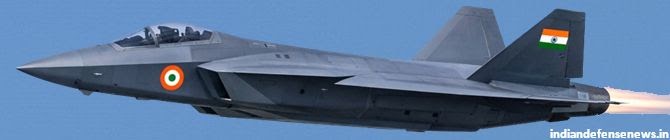
Defence Minister Rajnath Singh and Andhra Pradesh Chief Minister N. Chandrababu Naidu today laid the foundation stone for the ₹15,803 crore Advanced Medium Combat Aircraft (AMCA) infrastructure project in Puttaparthi, Sri Sathya Sai district.
This landmark initiative will generate around 7,500 jobs and firmly position Andhra Pradesh as a hub for indigenous defence and aerospace manufacturing.
The ceremony was described as a historic chapter in India’s defence history, with Rajnath Singh emphasising that the project marks the beginning of a new era for both Andhra Pradesh and the nation’s defence ecosystem.
He underlined that the current global security environment demands India strengthen its domestic defence capabilities rather than depend heavily on foreign suppliers, asserting that self-reliance is the key to powerful defence.
The AMCA program, spearheaded by the Aeronautical Development Agency under the Defence Research and Development Organisation, aims to deliver India’s first indigenous fifth-generation stealth fighter aircraft.
The infrastructure project will include an aircraft integration and advanced flight-testing centre, a highly specialised facility possessed by only a handful of countries worldwide. Spread across nearly 650 acres in Puttaparthi, this centre will accelerate aircraft integration, testing, validation, and certification, thereby expediting the AMCA’s development timeline.
Chief Minister Chandrababu Naidu highlighted Andhra Pradesh’s ambition to become the “defence shield of the country” by attracting next-generation defence and aerospace investments. He linked the AMCA initiative to the broader Atmanirbhar Bharat vision, stressing that the project demonstrates India’s growing technological capability in indigenous combat aircraft manufacturing. He also referenced Operation Sindoor as an example of India’s increasing self-reliance in defence technology.
Alongside the AMCA facility, Singh and Naidu also inaugurated several other defence manufacturing initiatives. These included the foundation stone for a Naval Systems Manufacturing Facility of Bharat Dynamics Limited at T Sirasapalli village in Anakapalli district, designed to meet the growing requirements of advanced underwater weapon systems and naval combat systems.
Grounding ceremonies were also held for a Defence Energetics Facility of Agneyastra Energetics Limited and an Ammunition and Electric Fuses Plant of HFCL Limited at Madakasira in Sri Sathya Sai district. These projects collectively reinforce Andhra Pradesh’s role in India’s strategic defence ecosystem.
A major highlight was the launch of a dedicated Drone City project in Kurnool, where eight drone companies are expected to establish operations. Rajnath Singh described drone technology as a game changer in modern warfare, noting its growing importance not only in defence but also in agriculture and the economy. The Drone City initiative is expected to transform Kurnool into a hub for drone innovation and manufacturing.
Following the foundation ceremonies, the leaders toured a defence exhibition showcasing indigenous systems including missiles, hand grenades, advanced firearms, drone technologies, and a fighter jet prototype. This exhibition underscored India’s expanding defence capabilities and the emphasis on high-end indigenous production.
Officials confirmed that the AMCA project will generate approximately 7,500 jobs, creating opportunities for local youth and fostering ancillary industries in advanced materials, avionics, and robotics.
Rajnath Singh noted that local academic institutions such as engineering colleges and ITIs will become integral to the initiative, ensuring that supply chains are strengthened and small-scale industries flourish.
The total outlay for the AMCA program is estimated at ₹15,803 crore, with the Core Integration and Flight Testing Centre alone costing around ₹2,000 crore.
Strategically, the AMCA is designed to compete with advanced stealth fighters such as the US F-35, China’s J-20, and Russia’s Su-57, thereby enhancing India’s airpower in the Indo-Pacific.
This project represents a decisive step in India’s aerospace self-reliance, combining public and private sector expertise. It is expected to transform Andhra Pradesh into a major hub for defence innovation, while simultaneously strengthening India’s national security and technological edge.
Agencies
