

In his October 2026 interview with Quwa, the Pakistan Navy (PN) Chief of Naval Staff (CNS), Admiral Naveed Ashraf, set out a vision for an interconnected Naval Air Arm built on manned-unmanned teaming (MUM-T), artificial intelligence (AI), sensor fusion, and a mesh network.
When assessing against existing mesh network concepts overseas, one will see that the PN already has much of the foundation in place, at least from a hardware or platform perspective. It operates long-range maritime patrol aircraft (LRMPAs), multi-mission naval helicopters, an indigenous tactical data-link (TDL) called Link Green, and a growing portfolio of both sea platform- and shore-based long-range missiles. Finally, the PN has a well-developed vision for operating drones.
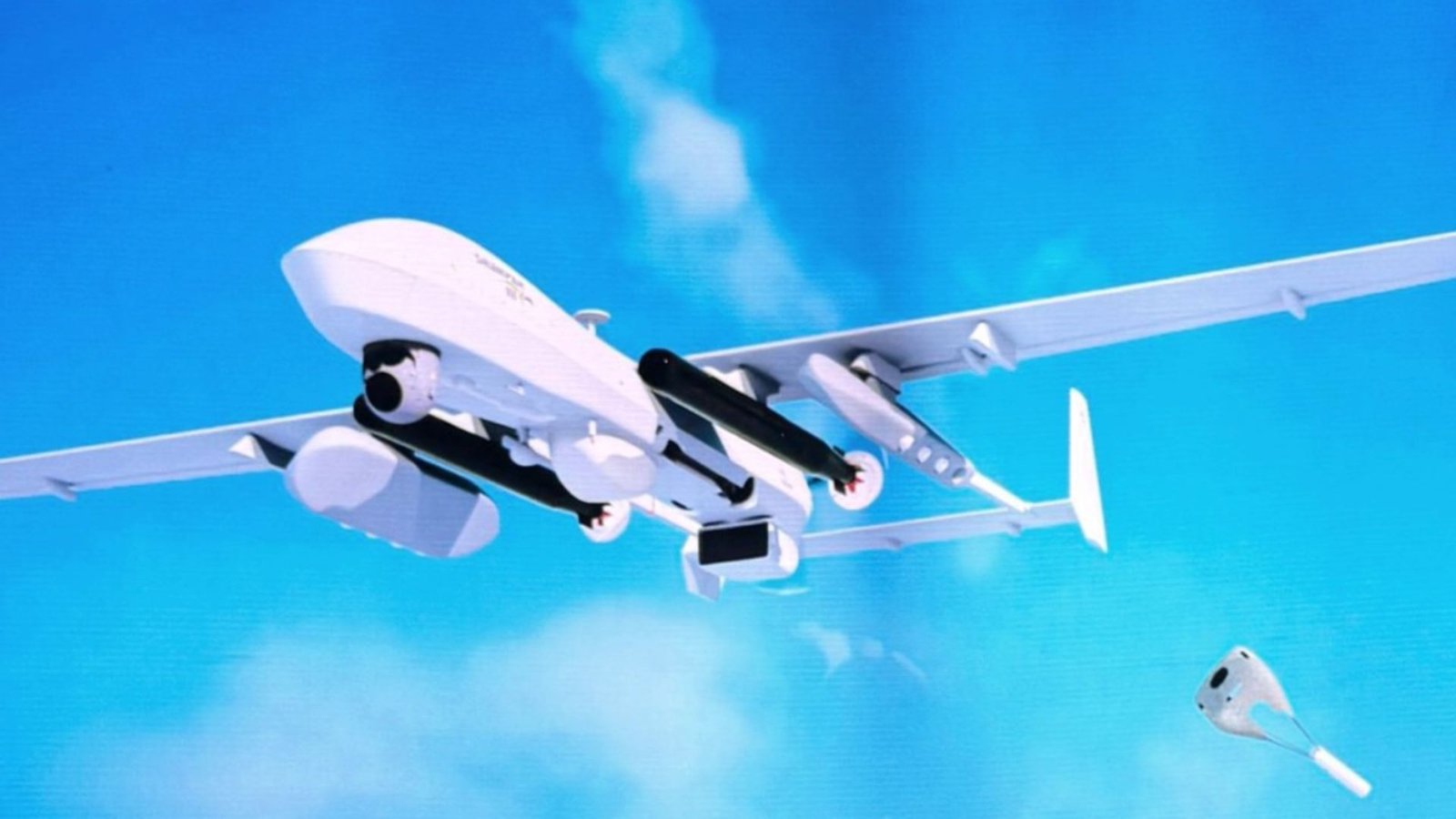
The National Engineering & Scientific Commission (NESCOM) is spearheading the development of the PN’s unmanned aerial vehicle (UAV), unmanned surface vessel (USV), and autonomous underwater vehicle (AUV) systems through the Shahpar-3, Muhassir, and Israr, respectively. That said, development for some of these drones (notably the Shahpar-3) is still ongoing, so the intended unmanned stack has yet to be deployed at scale. Likewise, the new-generation crewed platforms, such as the Sea Sultan LRMPA, have also yet to be inducted. Therefore, the programs needed for MUM-T, wide-scale sensor fusion, AI adoption, and, not least, mesh networking would all follow from these inductions. Not only do these areas constitute the PN’s primary focus areas in the short-to-medium term, but they are also more financially accessible for the PN to pursue than major platforms.
This demand tracker brief assesses how the PN’s stated requirements will translate into requirements for edge radios, drone-control software, sensor-fusion solutions, and other opportunities for domestic and foreign suppliers.
Mesh Networking at Sea
A mesh network is a radio network in which every node can send, receive, and relay traffic for other nodes, allowing data to reach its destination without passing through a central station. Militaries call these ‘mobile ad hoc networks’ (MANET) because the nodes move and the network forms itself wherever those nodes are.
Thus, if a node is destroyed, jammed, or moves out of range, the remaining ones route the traffic around it. At sea, the nodes can be ships, MPAs/LRMPAs, drones, helicopters, USVs, and shore-based stations. Each one extends the network; for example, a low-flying drone can relay signals from a USV well beyond the horizon of the surface ship controlling it.
