

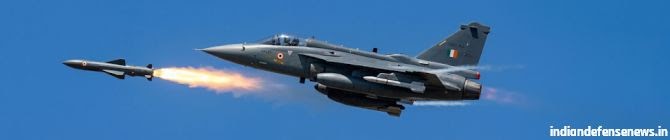
The BrahMos-NG represents a significant evolution in India’s supersonic cruise missile capability, designed to overcome the limitations of the original BrahMos in terms of size and compatibility with frontline fighter aircraft.
The DRDO has been working to produce a smaller, lighter, yet equally lethal missile that can be integrated across a wider range of platforms, thereby transforming the strike potential of the Indian Air Force.
The original BrahMos, weighing around 2.5–3 tons and measuring 8.4 metres in length, was too large for most Indian fighter jets, restricting its deployment primarily to the Su-30MKI fleet. The BrahMos-NG addresses this challenge by reducing its weight to approximately 1.3–1.6 tons and cutting its length to nearly 6 metres.
Despite this reduction in size, the missile retains its Mach 3.5 class speed, ensuring that its hallmark supersonic strike capability remains intact. This balance of compactness and lethality is central to the NG’s design philosophy.
A major technological enhancement planned for the BrahMos-NG is the incorporation of an Active Electronically Scanned Array (AESA) seeker. This will provide superior precision, improved resistance to electronic countermeasures, and enhanced target acquisition capability. The AESA seeker represents a generational leap over the current systems, aligning the missile with modern standards of precision-guided munitions.
The compatibility of BrahMos-NG with multiple fighter platforms is perhaps its most transformative feature. Unlike the original missile, which was limited to the Su-30MKI, the NG variant is designed to be carried by the TEJAS MK-1A and MK-2, Rafale, and the future Advanced Medium Combat Aircraft (AMCA).
This integration will effectively turn almost every major Indian fighter into a supersonic strike platform, dramatically expanding the Air Force’s ability to deliver precision strikes at long ranges.
Beyond air-launched variants, the NG is also being developed for land-based and submarine-launched roles. This multi-platform adaptability ensures that the missile will serve as a versatile weapon system across the tri-services, enhancing India’s deterrence posture and operational flexibility.
The submarine-launched version, in particular, will complement India’s growing undersea warfare capabilities, especially with the planned integration of Vertical Launch Systems on advanced Scorpene submarines.
The Indian Air Force has reportedly projected a requirement for around 400 BrahMos-NG missiles, with an estimated procurement value of nearly ₹8,000 crore. This scale of induction underscores the strategic importance of the missile and reflects the Air Force’s confidence in its role as a game-changer in strike operations.
By equipping a wide range of fighters with BrahMos-NG, the IAF will be able to conduct deep-penetration strikes, neutralise high-value targets, and impose significant costs on adversaries in any conflict scenario.
The move towards BrahMos-NG also aligns with India’s broader defence modernisation and indigenisation agenda. The missile’s reduced size and weight will simplify logistics, lower operational costs, and enable faster scaling of production.
Coupled with ongoing efforts to increase indigenous content in the BrahMos program, the NG variant will further reduce dependency on imported subsystems, making it more affordable and sustainable for long-term deployment.
In strategic terms, BrahMos-NG changes the strike equation for the Indian Air Force. By enabling a wider fleet of fighters to carry supersonic cruise missiles, India will possess a distributed strike capability that is harder to counter and more flexible in execution.
This development strengthens India’s deterrence posture, enhances its ability to project power across the Indo-Pacific, and reinforces its position as a leading missile power.
IDN (With Agency Inputs)
