

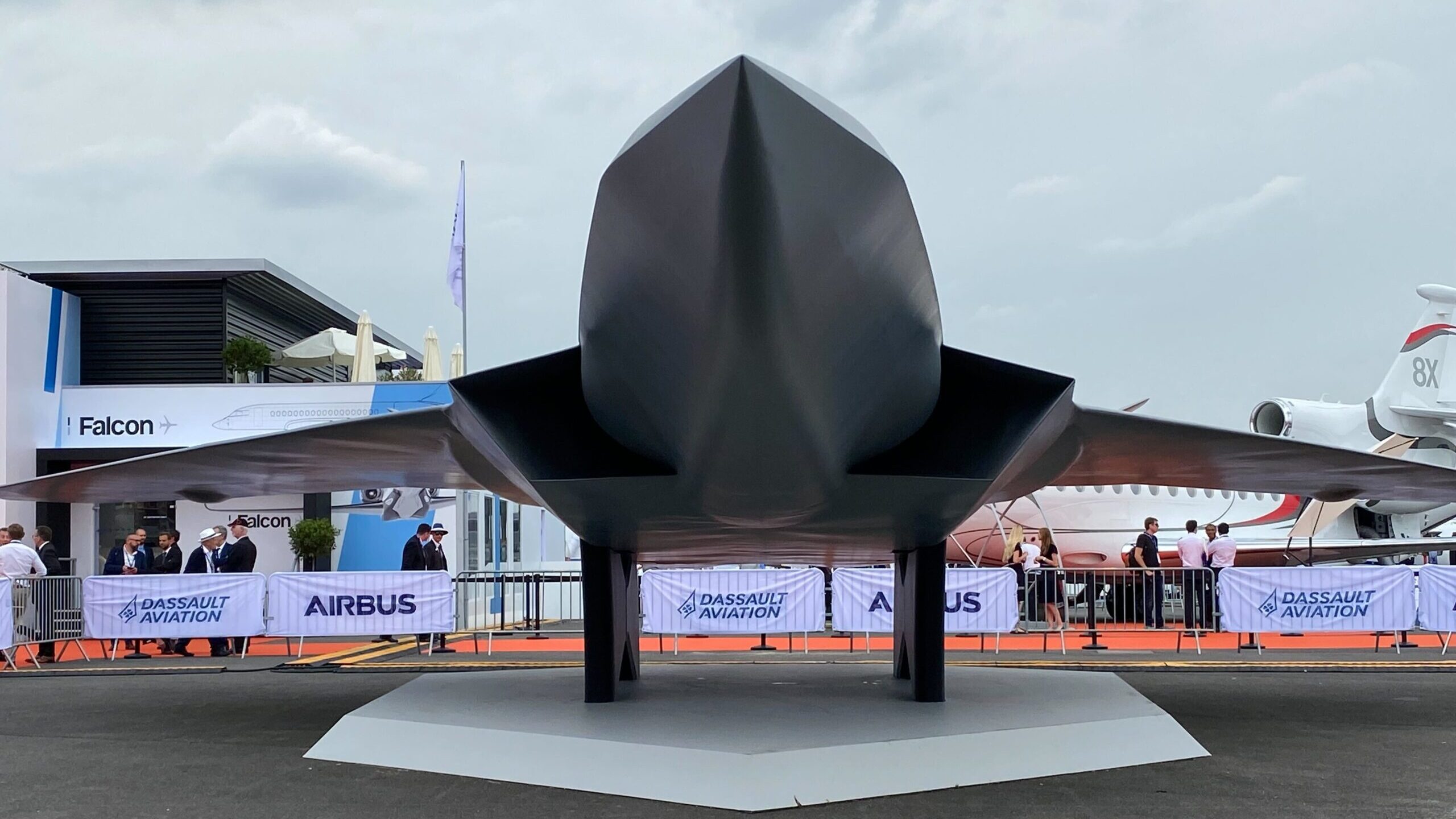
BELFAST — As the Berlin Air Show prepares to welcome over 100,000 visitors, what happens next for Europe’s troubled, trilateral Future Combat Air System (FCAS) program and a supporting future fighter jet component at death’s door is sure to be a central theme of the show.
Over 750 exhibitors from 37 countries are expected to display their equipment, according to the organizers, but the New Generation Fighter (NGF), the centerpiece of FCAS, is not scheduled to make an appearance. Its absence from the show comes as Germany and France continue to delay talks on how to proceed, amid a bitter NGF industrial dispute over workshare between partners Airbus and Dassault.
While an exact timeline for the meeting between Berlin and Paris is unclear, Airbus has floated the concept of a two-fighter aircraft solution in recent months, which would end joint cooperation with Dassault.
Adding to the narrative that collaboration between the two European giants is fizzling out and they are prepared to go their separate ways, Dassault CEO Eric Trappier told reporters in March, “We will find other partners if we need to.”
Besides the possibility of more FCAS drama, Berlin, and the region writ large, are facing tests from Washington. Deteriorating transatlantic relations embodied by President Donald Trump’s verbal attacks on NATO, unpredictable approach to Russia, criticism of European allies’ lack of intervention in Iran and plans to withdraw 5,000 troops from Germany may color the conference.
The decision to cut troop numbers came directly after German Chancellor Friedrich Merz said that the US is being “humiliated” by Iranian negotiators as Washington and Tehran struggle to agree on the terms of a peace deal. Merz is under significant pressure at home as his coalition government is struggling with deep-held hostility over an economic downturn and lack of a clear roadmap to resolve the issue.
Under his leadership, however, Germany is committed to becoming Europe’s most capable conventional army and will attempt to do so by becoming the continent’s largest defense spender, usurping both France and the UK in the process, before the end of the decade. Germany currently has a massive €377 billion ($438 billion) long-term rearmament plan, Politico reported, with various investments dedicated to US systems such as F-35 fifth-generation fighter jets, P-8A Poseidon maritime patrol aircraft, MQ-9B SeaGuardian drones, and Tomahawk cruise missiles.
Despite geopolitical difficulties, there are no indications that Berlin will shift course on buying American equipment, nor has Merz expressed any desire to do so. He is expected to open the air show on Wednesday, while Chief of the German Air and Space Force Holger Neumann will deliver a defense stage opening address, alongside Airbus Defence and Space CEO Michael Schoellhorn.
As for exhibitor highlights, Germany’s Heron TP long-range reconnaissance drone will be on display at the show for the first time, alongside Leonardo’s AW249 attack helicopter, which is also making its first international air show appearance.
Among notable flying displays, the Airbus Rapid and Cost-Efficient Rotorcraft (RACER) high-speed demonstrator will take to the skies. A derivative of the platform, under development as a civil aerospace aircraft supporting the European Research Clean Sky 2 project, could benefit NATO’s Next Generation Rotorcraft Capability (NGRC) program, according to the manufacturer.
