

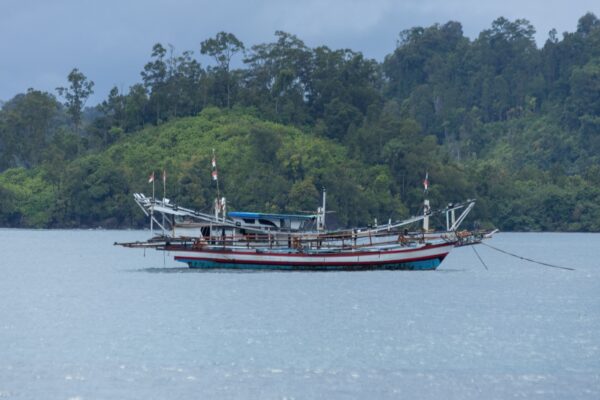
For years, Illegal, Unreported, and Unregulated (IUU) fishing has been treated primarily as an environmental and economic threat. Governments framed it as a problem of depleted fish stocks, lost state revenue, and maritime resource theft. Yet a far more dangerous transformation is unfolding across the Indo-Pacific’s vast maritime spaces. Increasingly, the same networks involved in illegal fishing are becoming logistical arteries for transnational drug trafficking.
Fishing vessels operating in poorly governed waters are now being used to transport methamphetamine, cocaine, heroin, ketamine, and precursor chemicals across international boundaries. The convergence between fisheries crime and narcotics trafficking is reshaping the political economy of maritime crime from the Indian Ocean to the Pacific.
This evolution reflects more than opportunistic smuggling. It signals the emergence of a hybrid maritime underworld where environmental crime, organized crime, corruption, and geopolitical instability increasingly overlap. Across the Indo-Pacific, criminal organizations are exploiting weak maritime governance, fragmented enforcement systems, vulnerable coastal economies, and congested sea lanes to create what could become one of the world’s most difficult transnational security challenges.
Why Fishing Vessels Are Ideal Smuggling Platforms
Modern drug trafficking networks prioritize flexibility, concealment, and low visibility. Fishing vessels offer all three.
Unlike container ships or commercial cargo vessels, fishing boats routinely operate in remote waters with limited oversight. Many spend days or weeks at sea, frequently cross maritime boundaries, and often possess legitimate reasons for irregular movement patterns. Smaller vessels may operate without advanced tracking systems, while larger industrial fishing fleets sometimes disable transponders or manipulate vessel identity data to avoid detection.
These operational characteristics make fishing vessels highly attractive to organized criminal groups seeking alternatives to increasingly monitored airports and land borders.
According to the United Nations Office on Drugs and Crime (UNODC), maritime trafficking routes are becoming increasingly important for transnational narcotics networks, particularly for synthetic drugs and precursor chemicals. As governments strengthen airport screening and customs surveillance, criminal organizations are shifting toward less regulated maritime corridors.
Fishing vessels are especially valuable because they can blend into legitimate maritime traffic. In busy coastal regions, authorities may struggle to distinguish between lawful fishing activity and covert trafficking operations. Refrigerated storage compartments, ice containers, fuel tanks, and hidden hull spaces provide additional concealment opportunities.
In several interdiction cases globally, narcotics shipments were transferred between vessels at sea using “mother ship” tactics long associated with arms smuggling and illegal fishing operations. These offshore transfers significantly reduce exposure to port inspections and customs enforcement.
The maritime environment itself further complicates enforcement. Vast ocean territories, overlapping jurisdictions, disputed waters, and inconsistent maritime governance create what security analysts increasingly describe as “gray zones” — spaces where criminal activity can thrive between the limits of state authority.
The Convergence of Fisheries Crime and Organized Crime
The relationship between IUU fishing and narcotics trafficking is not accidental. Both industries rely on remarkably similar operational ecosystems.
Illegal fishing networks already possess transnational logistical capabilities, access to corrupt port infrastructure, forged documentation systems, offshore financing channels, and experience evading maritime enforcement. Drug trafficking organizations can integrate into these existing systems with relatively low operational costs.
The convergence is part of a broader trend often referred to as “criminal convergence,” in which different illicit economies reinforce one another through shared infrastructure and protection networks.
A vessel engaged in illegal fishing may simultaneously participate in fuel smuggling, labor exploitation, wildlife trafficking, sanctions evasion, or narcotics transport. The same corrupt officials who facilitate illegal fishing licenses or fraudulent vessel registrations may also enable drug shipments to move through ports undetected.
This convergence is especially visible in regions where maritime governance remains weak or fragmented. Coastal corruption, limited naval resources, and inconsistent fisheries enforcement create ideal conditions for hybrid criminal enterprises.
The economics also align. Declining fish stocks and rising operational costs have increased financial pressure across many fishing sectors. Some fishing operators facing economic instability may view smuggling as a supplemental revenue source. Organized crime groups exploit these vulnerabilities by recruiting fishing crews, leasing vessels, or infiltrating maritime supply chains.
The result is a maritime shadow economy where legal and illegal activities increasingly overlap.
Synthetic Drugs Are Reshaping Maritime Trafficking
The global rise of synthetic drugs has accelerated the transformation of narco-maritime routes.
Unlike plant-based narcotics such as cocaine or heroin, synthetic drugs can be manufactured industrially at lower costs and in much larger quantities. This industrialization changes trafficking dynamics dramatically. Criminal organizations now require scalable logistical systems capable of moving bulk chemical shipments across regions with speed and flexibility.
Maritime transport provides exactly that capability.
UNODC has repeatedly warned that synthetic drug markets are expanding rapidly across Asia and the Pacific, with maritime trafficking playing an increasingly important role in regional distribution. Precursor chemicals used in drug production are also frequently transported through commercial and informal maritime networks.
Fishing vessels are particularly effective for transporting synthetic drugs because they operate within sectors already characterized by opaque supply chains and weak traceability systems. In many regions, fisheries monitoring still relies heavily on paper-based documentation and inconsistent vessel reporting requirements.
This opacity allows criminal organizations to conceal illicit cargo within otherwise legitimate seafood operations.
At the same time, advances in communication technology have made maritime trafficking more sophisticated. Encrypted messaging applications, satellite navigation systems, and dark-web financial transactions enable criminal networks to coordinate offshore transfers with growing precision.
The combination of industrial-scale synthetic drug production and flexible maritime logistics is transforming the geography of organized crime.
Maritime Disorder and the Indo-Pacific Security Challenge
The expansion of narco-sea routes poses a growing challenge for Indo-Pacific security architecture.
Traditionally, maritime security discussions in the region have focused on territorial disputes, naval modernization, piracy, and freedom of navigation. Yet transnational organized crime increasingly represents an equally destabilizing force.
Narco-maritime networks undermine state legitimacy by fueling corruption within customs agencies, fisheries departments, law enforcement institutions, and port authorities. In coastal regions already facing economic hardship, criminal economies can gradually become embedded within local livelihoods.
This dynamic creates long-term governance risks. Once organized crime becomes integrated into maritime economies, dismantling those networks becomes significantly more difficult.
The problem is compounded by the complexity of maritime jurisdiction. International waters, disputed maritime zones, and overlapping enforcement mandates create operational gaps that criminal organizations exploit effectively.
Moreover, narco-sea routes intersect with broader geopolitical tensions. Many of the world’s most strategically significant waterways — including the Strait of Malacca, the South China Sea, and parts of the Indian Ocean — are simultaneously major commercial corridors and vulnerable trafficking routes.
Weak maritime governance in these spaces creates opportunities not only for organized crime, but also for illicit financial flows, sanctions evasion, and covert geopolitical influence operations.
The issue therefore extends beyond narcotics enforcement. It reflects a deeper challenge involving governance, sovereignty, and the ability of states to control maritime spaces increasingly shaped by non-state actors.
Why Traditional Enforcement Is Struggling
Conventional anti-narcotics strategies are poorly adapted to the realities of maritime trafficking.
Most enforcement systems remain heavily focused on land borders, airports, and containerized cargo inspections. Fishing fleets, by contrast, operate within highly decentralized maritime environments that are extraordinarily difficult to monitor comprehensively.
Many coastal states also face institutional fragmentation. Fisheries authorities, coast guards, customs agencies, navies, and narcotics enforcement bodies often operate with limited intelligence-sharing mechanisms. Criminal organizations exploit these bureaucratic silos.
Resource limitations further complicate enforcement. Monitoring thousands of vessels across enormous maritime territories requires expensive surveillance infrastructure, advanced satellite systems, and sustained operational funding that many states struggle to maintain.
Corruption remains another major obstacle. Organized crime networks frequently leverage bribery and political protection to reduce enforcement risks. In some cases, criminal actors infiltrate legitimate maritime industries directly through shell companies, fraudulent vessel ownership structures, and port investments.
Even when interdictions occur, prosecutions are often difficult due to jurisdictional complexity and evidentiary challenges associated with crimes committed at sea.
As a result, maritime trafficking networks continue adapting faster than many enforcement systems.
Technology Alone Will Not Solve the Problem
Governments and international organizations are increasingly investing in maritime surveillance technologies, including satellite monitoring, artificial intelligence-based vessel analytics, automatic identification system (AIS) or Vessel Monitoring System (VMS) tracking, and predictive risk analysis.
These tools are improving the ability to identify suspicious vessel behavior, detect transshipment activity, and monitor dark fleets operating without active transponders.
Yet technological solutions have limitations.
Criminal organizations adapt rapidly to enforcement technologies. Some vessels deliberately manipulate AIS or VMS signals, engage in identity spoofing, or conduct covert transfers in areas with weak satellite coverage. Smaller vessels may avoid digital monitoring entirely.
More importantly, technology cannot address the underlying socioeconomic conditions driving criminal convergence at sea. Coastal poverty, declining fisheries, governance failures, and corruption continue to create fertile conditions for organized crime recruitment.
Without broader governance reform, surveillance systems alone may simply displace trafficking routes rather than dismantle criminal networks.
The Future of Narco-Maritime Networks
The expansion of narco-sea routes reflects a broader transformation in global organized crime.
As maritime commerce grows, fisheries decline, and geopolitical competition intensifies across the Indo-Pacific, criminal organizations are increasingly exploiting the ocean as a space of strategic opportunity. Fishing vessels — once symbols of subsistence and coastal livelihoods — are being repurposed into flexible logistical assets within transnational illicit economies.
This evolution demands a shift in how maritime security is understood.
IUU fishing can no longer be treated solely as an environmental issue. In many regions, it has become intertwined with narcotics trafficking, labor exploitation, corruption, financial crime, and geopolitical instability. The convergence of these threats creates security challenges that extend far beyond fisheries management.
The future of Indo-Pacific maritime stability may depend not only on naval deterrence or territorial control, but also on whether states can govern the vast gray zones where organized crime operates between the boundaries of law, sovereignty, and the sea.
