

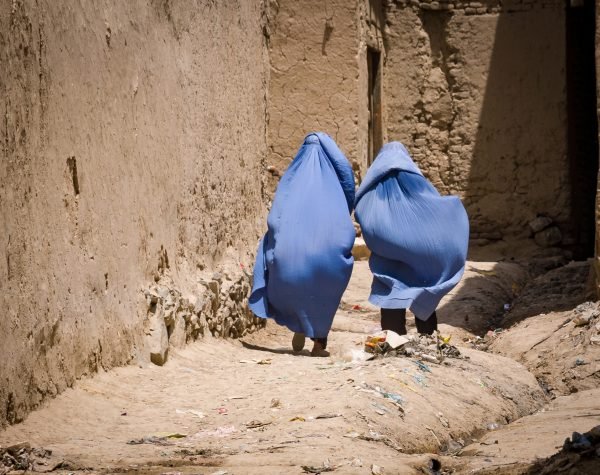
Five years ago, when the Taliban returned to power in Afghanistan, the world watched in shock as images emerged of desperate Afghans trying to escape a country whose future had suddenly changed. For Afghan women and girls, however, the fall of Afghanistan was the beginning of a systematic effort to remove them from public life and rob an entire generation of their future.
Today, girls have been banned from secondary schools and universities; women have been pushed out of workplaces; and restrictions on movement, expression, and participation in society have expanded. Afghanistan remains the only country in the world where girls and women are prohibited from accessing secondary and higher education. More than 2 million adolescent girls have been denied their right to continue learning.
But five years later, the most troubling question is how the world learned to live with the Taliban’s policies toward women and girls.
Since August 2021, the language surrounding Afghanistan has changed. After the Taliban takeover, the world demanded the restoration of the rights of Afghan women and girls. Five years later, much of the conversation has shifted toward how to engage with the Taliban while raising concerns about women’s rights. The U.N. and other international community actors have adopted a policy of “principled engagement,” arguing that dialogue is needed to address Afghanistan’s humanitarian crisis while continuing to call for an end to restrictions on women and girls.
Engagement and diplomacy are complicated realities. Afghanistan is facing a humanitarian crisis, and millions of Afghans depend on international assistance. But there is a dangerous line between engaging with a country’s oppressive regime and allowing the systematic exclusion of half the population to become normalized. Consequently, the Taliban’s strategy has focused on waiting for global attention to its treatment of women to decline. Policies that once triggered international outrage have become just another item on the long list of Afghanistan’s unresolved crises.
The Taliban understood that controlling women’s lives requires controlling their visibility and silencing their voices. The restrictions began with education, but they expanded into broader efforts to remove women’s presence from public spaces, workplaces, media, and decision-making. According to the U.N., there have been more than 79 decrees and directives directly restricting the rights of Afghan women and girls since the Taliban takeover, while over 400 additional measures have indirectly affected nearly every aspect of their lives.
As a result, Afghan women’s voices have all but disappeared from public narratives. Afghanistan’s media landscape has faced enormous pressure since 2021. Female journalists have been pushed out, media organizations have operated under increasing restrictions, and public discussions about women’s rights have narrowed. UNESCO has noted that restrictions on women’s participation in media have tightened, including limitations preventing women from speaking on the radio.
This raises an uncomfortable question for Afghanistan’s media institutions: Are they documenting the reality Afghan women face, or are they, intentionally or not, contributing to its normalization?
Speaking at the Jaipur Literature Festival in London on June 6, Saad Mohseni, chairman and chief executive officer of MOBY Group, Afghanistan’s largest private media company, described conditions in Afghanistan as “normal,” stating that “women can walk around cities and drive without covering their faces.”
Yet while these remarks were being made in London, reports from Herat indicated that Taliban authorities were detaining dozens of women for allegedly violating the hijab rules – even though many were reportedly fully covered. The contrast between these accounts highlights the danger of describing life in Afghanistan as “normal” while women continue to face arbitrary enforcement of ever-changing restrictions.
Media organizations operate under extraordinary pressure in authoritarian environments, and survival often requires making difficult compromises. But journalism is about ensuring that the voices of those most affected are heard. When women disappear from newsrooms, interviews, and public conversations, their exclusion becomes easier to ignore – and easier to accept.
But the Taliban’s attempt to erase Afghan women has not succeeded completely.
Across Afghanistan, women and girls have created alternative pathways to learning. They study via online platforms, home-based classrooms, and private initiatives. Teachers who once worked in schools have become educators in hidden classrooms. Students who lost access to formal education have searched for new ways to continue learning. Thus, technology has become more than a tool for Afghan girls, it has become a form of resistance.
These efforts demonstrate the courage and determination of Afghan women and girls who refuse to give up on education. They have created lifelines for learning when formal pathways have been taken away. But no alternative program can replace a functioning education system. A girl should not have to find a hidden classroom, secure a device, or overcome extraordinary barriers just to access a basic human right. Access to education for all should be guaranteed.
The consequences of excluding women from education will affect Afghanistan for generations. UNICEF has warned that continued restrictions on girls’ education will have devastating consequences for Afghanistan’s economy, healthcare system, and future workforce.
The Taliban may believe that limiting women’s education protects their vision of society. In reality, it is weakening the country. When a girl is denied education, she loses the chance to build her future; her family loses the hope of a daughter who could become a teacher, doctor, or leader; and Afghanistan loses the talent and potential of an entire generation of women.
The Taliban closed school doors, but Afghan women have continued searching for ways to open them.
In the last five years, the world has repeatedly praised Afghan women for their resilience. They have been called brave, determined, and inspirational. But their resilience should not provide an excuse for allowing this injustice to continue.
The world has a responsibility to take concrete actions: to keep alternative pathways to learning open while formal education remains restricted; to provide sustained support to Afghan-led education initiatives; to hold the Taliban accountable for violating the fundamental right to education; and to ensure that women’s rights remain central in diplomatic engagement and continue working toward the day when every Afghan girl can return to a safe and recognized education system.
