

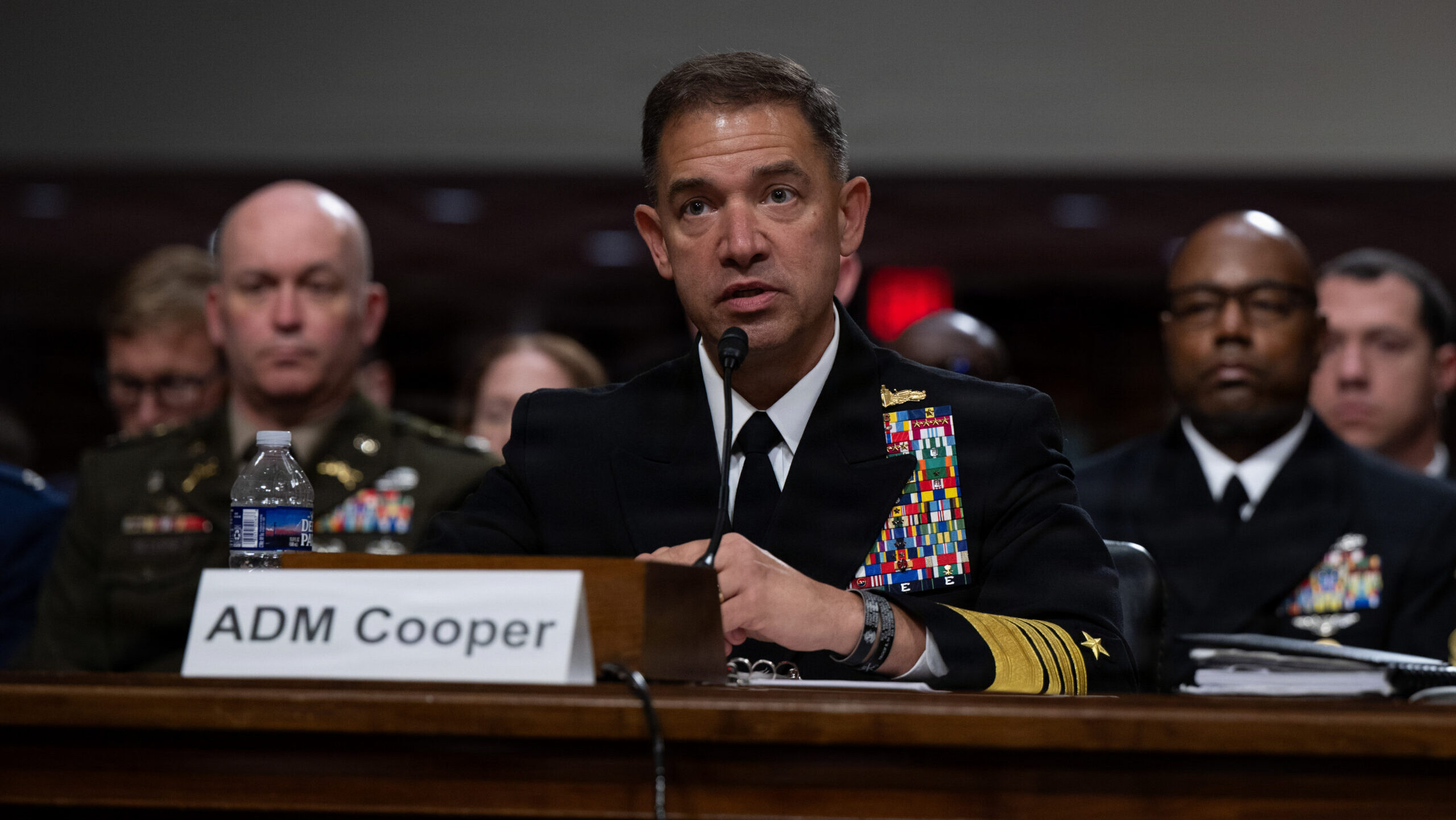
WASHINGTON — As the fragile ceasefire between the US and Iran continues to teeter, the man in charge of leading America’s military operations has sent a direct message to the forces under his command: “protecting civilian life” is paramount and a key part of their job.
A memo from US Central Command head Adm. Bradley Cooper, dated May 26 and distributed throughout CENTCOM, specifically calls out that “Protecting civilian life is part of our culture as a professional fighting force … It is embedded in how we plan, how we target, and how we fight.
“Every target nomination. Every strike. Every engagement,” the unclassified memo, which was viewed by Breaking Defense, continues. “At every echelon, from the campaign plan to the individual tactical decision, you will distinguish between those who fight and those who do not, applying force only against lawful military objectives, and exercise judgment before you employ your weapons.
“Our commitment to the law of armed conflict is not a constraint on our lethality,” Cooper wrote. “It is the source of our legitimacy, the reason our partners choose to stand with us, and a direct contributor to our operational effectiveness. A force that fights with discipline and fidelity to the law is more lethal, not less.”
The four-star admiral’s message goes on to emphasize that this standard is what sets the US apart from adversaries that opt to target civilians and create terror by targeting schools, hospitals and places of worship.
“We will never fight that way,” Cooper wrote.
When asked what prompted the memo, CENTCOM spokesman Navy Capt. Tim Hawkins told Breaking Defense it was a “general reminder to the force, one of many he has delivered to troops in multiple formats.”
The memo comes against a backdrop of comments from Defense Secretary Pete Hegseth that have downplayed or denigrated traditional brakes on armed conflict.
For instance, in a March 2 briefing, Hegseth promised “No stupid rules of engagement” would impact the Iran operation, and in a 2024 book he wrote about “academic rules of engagement which have been tying the hands of our warfighters for too long.” Then on March 13, Hegseth said, “We will keep pushing, keep advancing, no quarter, no mercy for our enemies.” That line of “no quarter” led to questions from lawmakers and legal experts about whether Hegseth was effectively calling for war crimes.
Similar concerns also cropped up in response to a series of President Donald Trump’s social media posts in early April threatening to attack Iranian bridges, power plants and other civilian targets.
“A whole civilization will die tonight, never to be brought back again. I don’t want that to happen, but it probably will,” Trump wrote in an April 7 post, before backing off later in the day.
Despite the declaration in early April of a ceasefire, Iran and the US have continued to exchange sporadic fire. The US has stuck Iranian missile sites and boats in recent days, while today, Trump asserted that Iran “shot down” an AH-64 Apache off the coast of Oman on Monday. (The crew from that helicopter was rescued, in part, due to an unmanned vessel.)
“The United States must, of necessity, respond to this attack,” Trump added.
