

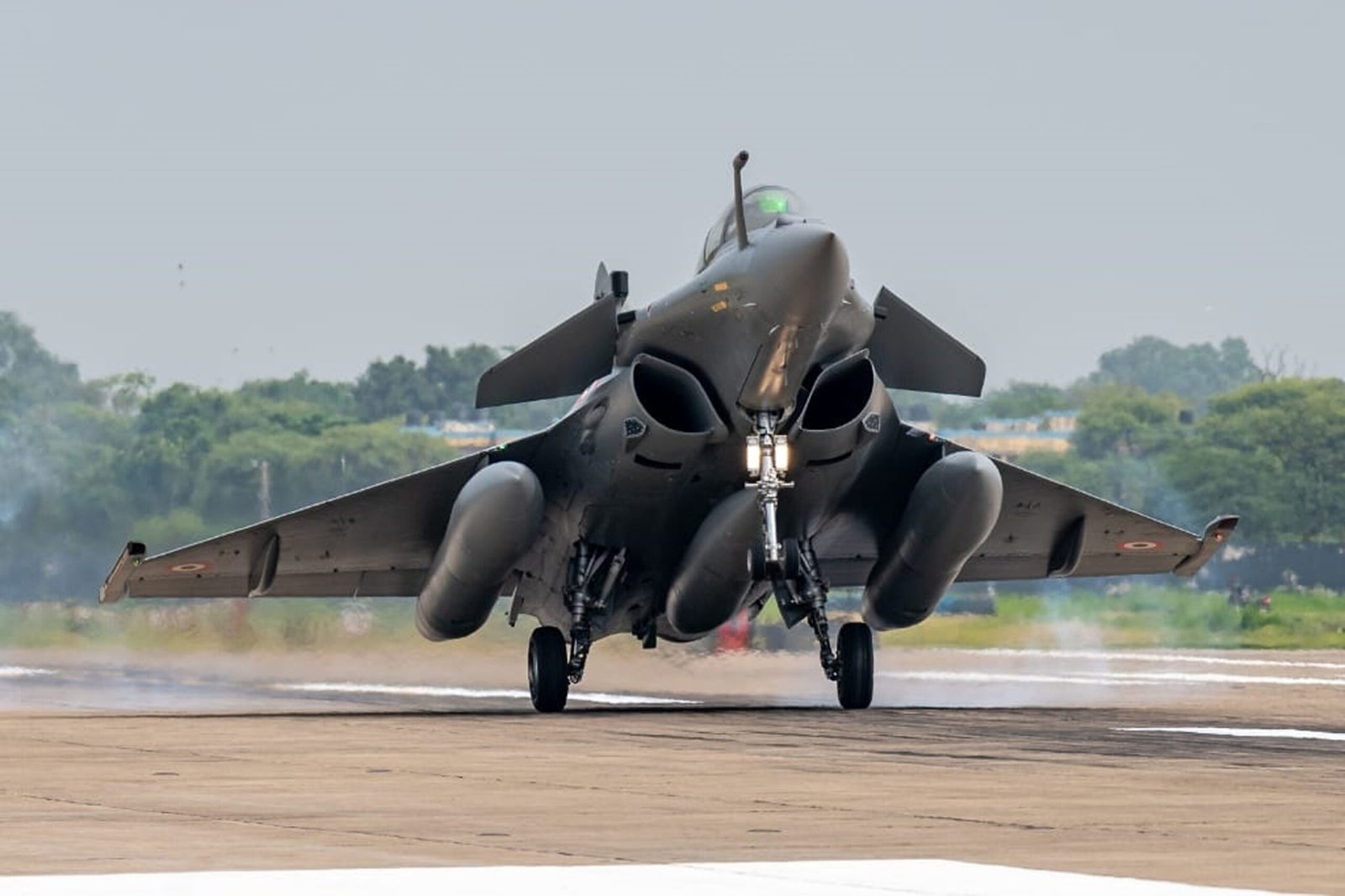
India has finalised the Letter of Request for 114 Dassault Rafale fighters — valued at ₹3.25 lakh crore (~$38B) — with dispatch to France expected within weeks. Nearly 90 aircraft would be manufactured in India, establishing the first Rafale production line outside France.
India has finalised the Letter of Request (LoR) for 114 Dassault Rafale multi-role fighter aircraft for the Indian Air Force (IAF) and is expected to formally dispatch the document to France within the next few weeks, marking one of the most significant procedural steps in India’s largest planned defence procurement program. The deal is valued at approximately ₹3.25 lakh crore (~$38 billion) and, if signed, would be the largest single Rafale order in history.
The LoR is a formal government-to-government communication used to initiate defence procurement under the Intergovernmental Agreement (IGA) framework — it specifies the required capabilities, quantities, and technical parameters India seeks. It is not, however, the Request for Proposal (RFP), which comes later. Once France receives the LoR and responds with details on pricing, availability, and logistical support, India will then issue the formal RFP inviting Dassault to submit sealed technical and commercial bids. The distinction matters for assessing the deal’s timeline: the LoR dispatch, CNC/PNC contract negotiations, and CCS approval all lie between now and contract signature.
India’s Defence Strategy, Capabilities, and Procurement Patterns
Analysis of India’s defence posture, including doctrine, acquisitions, and industrial integration.
Of the 114 aircraft, nearly 90 are planned to be manufactured in India through a partnership between Dassault Aviation and an Indian defence firm, with the remaining aircraft delivered in fly-away condition directly from France. This would establish the first Rafale production line outside of France — a significant industrial commitment that aligns with India’s Atmanirbhar Bharat framework and the draft Defence Acquisition Procedure 2026’s emphasis on IP ownership by Indian companies. The identity of the Indian production partner has not been publicly confirmed, though the existing Dassault Reliance Aerospace Limited (DRAL) joint venture at Nagpur — which currently holds approvals only for the Falcon business jet — and a second assembly facility at Hyderabad are both under discussion.
The Defence Acquisition Council (DAC) cleared the 114-aircraft proposal three months ago, after which the LoR was prepared. The LoR finalisation follows the IAF’s selection of the Rafale over competing Russian, European, and American platforms — a decision heavily influenced by the IAF’s existing operational experience with 36 Rafales acquired under the 2016 contract, which are based at Ambala and Hasimara.
The timeline remains ambitious. Contract signing is targeted by end of 2026, with deliveries expected to begin around 2030 if the contract is finalised by late 2026 or early 2027. However, the Contract Negotiation Committee (CNC) and Price Negotiation Committee (PNC) stage — where source code access, Interface Control Document (ICD) terms, indigenization schedules, offsets, and pricing are negotiated — still lies ahead and is the phase most likely to extend the timeline. The IAF has been the institutional driver at every stage of the process, from submitting the Statement of Case in September 2025 through securing the DAC AoN in February 2026 to the LoR finalisation now, and its institutional interest is to lock in the delivery schedule as quickly as possible.
The LoR dispatch is expected to coincide with a period of intensified Indo-French diplomatic engagement. Prime Minister Narendra Modi and IAF Chief Air Chief Marshal AP Singh are scheduled to visit France in June 2026, and Dassault CEO Éric Trappier has publicly stated his aim to sign the contract within the calendar year. Indian defence companies are already undergoing training at Dassault Aviation’s facilities in France — activity that typically begins after contract-level certainty, suggesting either informal pre-contract arrangements or very high confidence on both sides that the deal will close.
Quwa Pro
India’s Military-Industrial Trajectory, Explained
Monitoring India’s defence planning, procurement cycles, and military technology adoption.
Featured & Trusted By
