

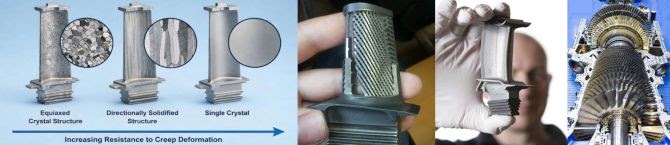
India’s Defence Research and Development Organisation has successfully perfected indigenous single crystal turbine blade technology, marking a decisive leap in the nation’s aerospace capabilities.
Developing these components requires absolute precision across a multi‑stage production line, and DRDO has demonstrated mastery in every critical stage of the process.
The production involves directional solidification within highly specialised vacuum casting furnaces. This is complemented by the use of complex internal ceramic cores that mould microscopic cooling passages, ensuring the blades can withstand extreme thermal and mechanical stresses.
The final stage demands precise surface coating finishes, which DRDO has also perfected, enabling the blades to meet the stringent requirements of military jet engines.
A particularly significant achievement lies in DRDO’s ability to design and cast highly complex internal ceramic cores. These cores allow the moulding of serpentine, microscopic internal cooling passages directly inside the single‑crystal blade. This innovation ensures superior cooling efficiency, which is indispensable for engines operating at very high temperatures.
India’s Defence Metallurgical Research Laboratory first achieved single‑crystal blade technology in 2021, but that milestone was specifically tailored for helicopter engines.
The recent breakthrough represents a massive evolutionary leap, defined by the operational environment, structural complexity, and structural scale of the components now being produced. This transition from rotary‑wing to advanced fighter jet engine applications underscores the scale of progress.
DRDO, working in collaboration with Indian industrial partners and academic research institutions, has perfected the thermal gradient pulling parameters. In addition, the organisation has redesigned the helical pigtail grain selectors, ensuring defect‑free multi‑stage casting yields.
These blades now meet the most demanding military aerospace tolerances, a feat that places India firmly within the elite group of nations capable of producing such advanced components.
The laboratory phase of the program has been successfully completed, and DRDO is actively transitioning the technology to domestic private‑sector defence firms. This step is crucial for scaling up production and integrating the blades into frontline fighter aircraft engines, thereby strengthening India’s self‑reliance in defence technology.
This achievement builds upon India’s earlier successes in single‑crystal technology but elevates them to a new level of complexity and application. It demonstrates not only scientific and engineering excellence but also the ability to industrialise one of the most challenging aerospace technologies.
The blades are now poised to support indigenous fighter jet programs, advanced UAV propulsion systems, and future combat aircraft engines.
By mastering this technology, India has secured a strategic advantage in aerospace engineering. It reduces dependence on foreign suppliers, enhances the credibility of its defence ecosystem, and ensures that future indigenous aircraft will be powered by engines incorporating world‑class components.
This breakthrough confirms India’s place in the exclusive club of nations with end‑to‑end mastery of single‑crystal turbine blade technology.
Agencies
